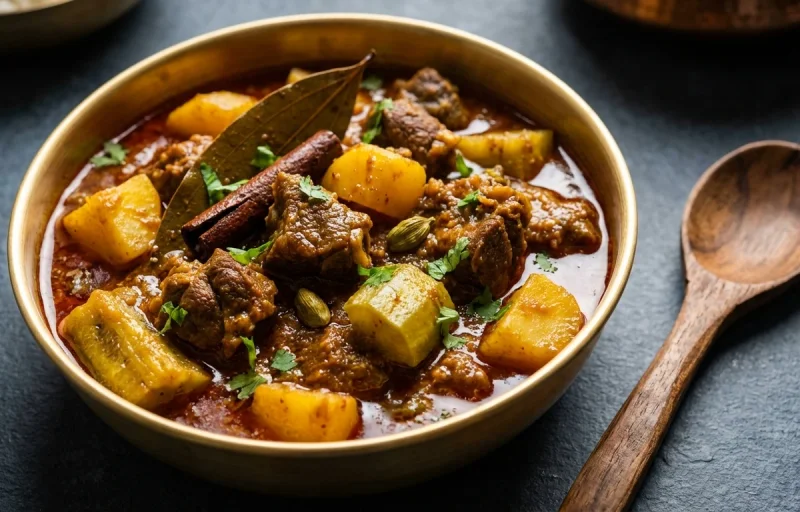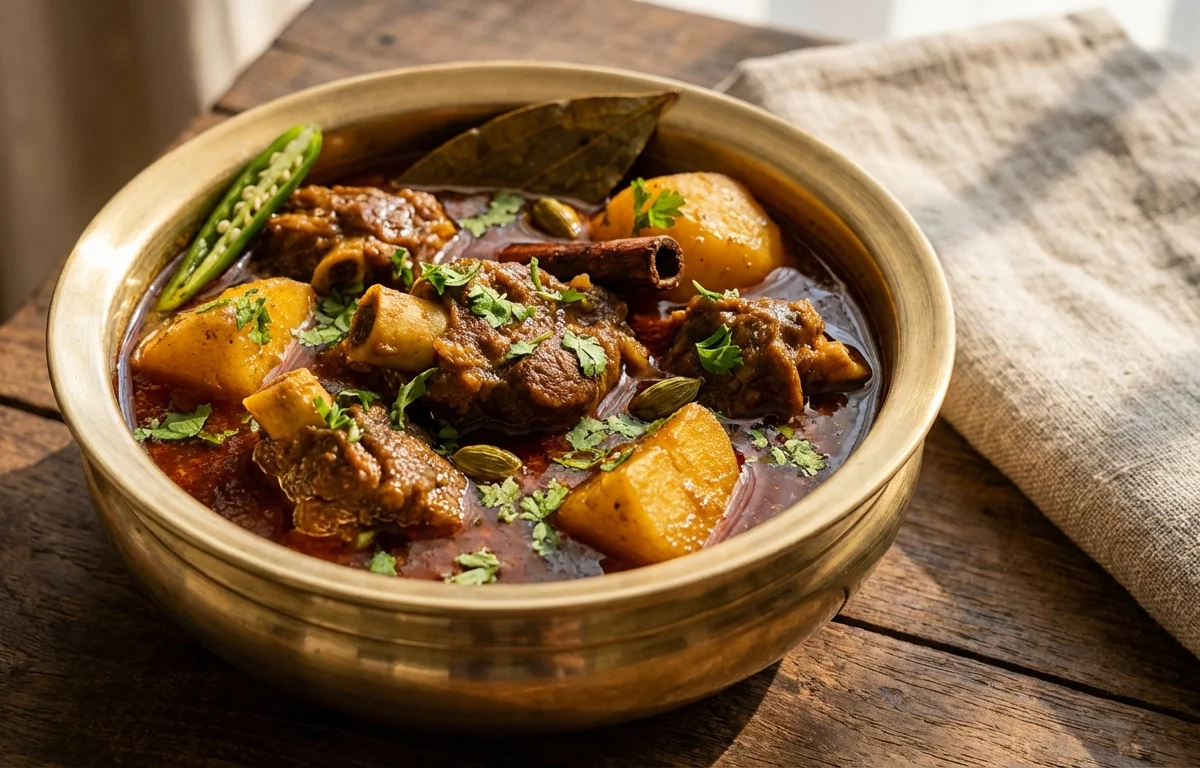
Mansa Jhola
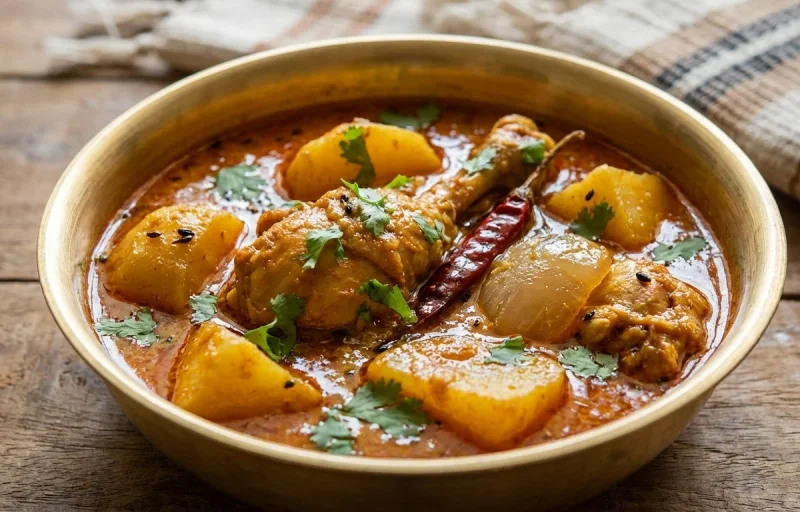
A light, rustic mutton curry from eastern India, this jhola-style preparation has a thin, peppery gravy built with onion, garlic, ginger, and warm spices. It is comforting, deeply savory, and especially good with plain rice.
For 4 servings
- prep · ~15 min
Prep the mutton and vegetables.
1.Wash the mutton and drain well.2.Slice the onion finely.3.Crush the garlic and ginger.4.Chop the tomatoes and peel the potatoes. - saute · ~6 min
Heat the oil and brown the potatoes.
1.Heat mustard oil in a pressure cooker until lightly smoking, then lower the heat.2.Add the potato halves and cook until lightly golden on the edges.3.Take the potatoes out and keep aside.TIPHeating mustard oil well first softens its sharp raw flavor. - saute · ~7 min
Cook the whole spices and onions.
1.Add bay leaf, cinnamon, green cardamom, cloves, and black peppercorns to the cooker.2.Stir for a few seconds until fragrant.3.Add the sliced onion and cook until light golden. - saute · ~7 min
Build the masala base.
1.Add crushed garlic and ginger and cook until the raw smell fades.2.Add chopped tomato and cook until soft.3.Add turmeric powder, red chili powder, coriander powder, cumin powder, and salt.4.Mix well and cook until the masala looks glossy.TIPKeep the heat medium so the powdered spices cook without burning. - saute · ~10 min
Coat the mutton in the masala.
Add the mutton pieces and stir well so every piece is coated in the onion-spice mixture. Cook for 8 to 10 minutes, stirring often, until the meat changes color and starts releasing its juices.
- pressure cook · ~20 min
Pressure cook the curry.
Return the potatoes to the cooker and pour in the water. Mix, close the lid, and pressure cook on medium heat for about 20 minutes, or until the mutton is tender.
TIPBone-in pieces give the jhola a fuller, richer broth. - simmer · ~9 min
Simmer to a light jhola consistency.
Let the pressure drop naturally, then open the cooker and check the seasoning. Simmer uncovered for 8 to 10 minutes so the gravy stays light but flavorful.
- garnish
Garnish with coriander leaves.
- serve
Serve hot with plain rice.
What to keep in mind.
7 tips from the recipe — small details that make a real difference to the final dish.
- 1Let the mustard oil reach a light smoke before cooking to remove its raw pungency without losing its character.
- 2Brown only the edges of the potato halves; over-frying can make them break apart after pressure cooking.
- 3Cook the onions just to light golden, not dark brown, so the jhola stays light in color and taste.
- 4After adding the mutton, bhuno it until it releases juices and the masala clings to the pieces; this deepens the broth.
- 5Use natural pressure release so the meat fibers relax and stay tender in the thin gravy.
- 6If the gravy feels too thick after cooking, add a splash of hot water and simmer briefly to restore the classic jhola texture.
- 7This curry tastes even better after a short rest, as the pepper, whole spices, and meat juices settle into the broth.
Adapt it for your goals.
Low-oil
Skip browning the potatoes and reduce the mustard oil slightly; the curry stays brothy and comforting with a lighter finish.
pepperyPeppery
Increase the crushed black peppercorns for a more pronounced heat, which suits the rustic Odia jhola style very well.
no potatoNo-potato
Leave out the potatoes for a more meat-forward broth if you want the mutton flavor to dominate the bowl.
stovetopStovetop
Make it in a heavy pot instead of a pressure cooker; simmer longer on low heat for a gentler, traditional slow-cooked finish.
Why this is on our healthy list.
Protein-Rich Main Dish
Bone-in mutton provides substantial protein, making this curry filling and satisfying when served with plain rice.
Aromatic Digestive Spices
Ginger, garlic, cumin, coriander, black pepper, clove, and cardamom add flavor while contributing warming spice complexity.
Moderate Oil Preparation
With only a small amount of mustard oil used for the whole pot, the curry gets richness without becoming greasy.
Frequently asked questions
Yes. Cook it covered in a heavy pot on low heat until the mutton is tender, adding hot water as needed; it will simply take longer.