Moolai Varuval
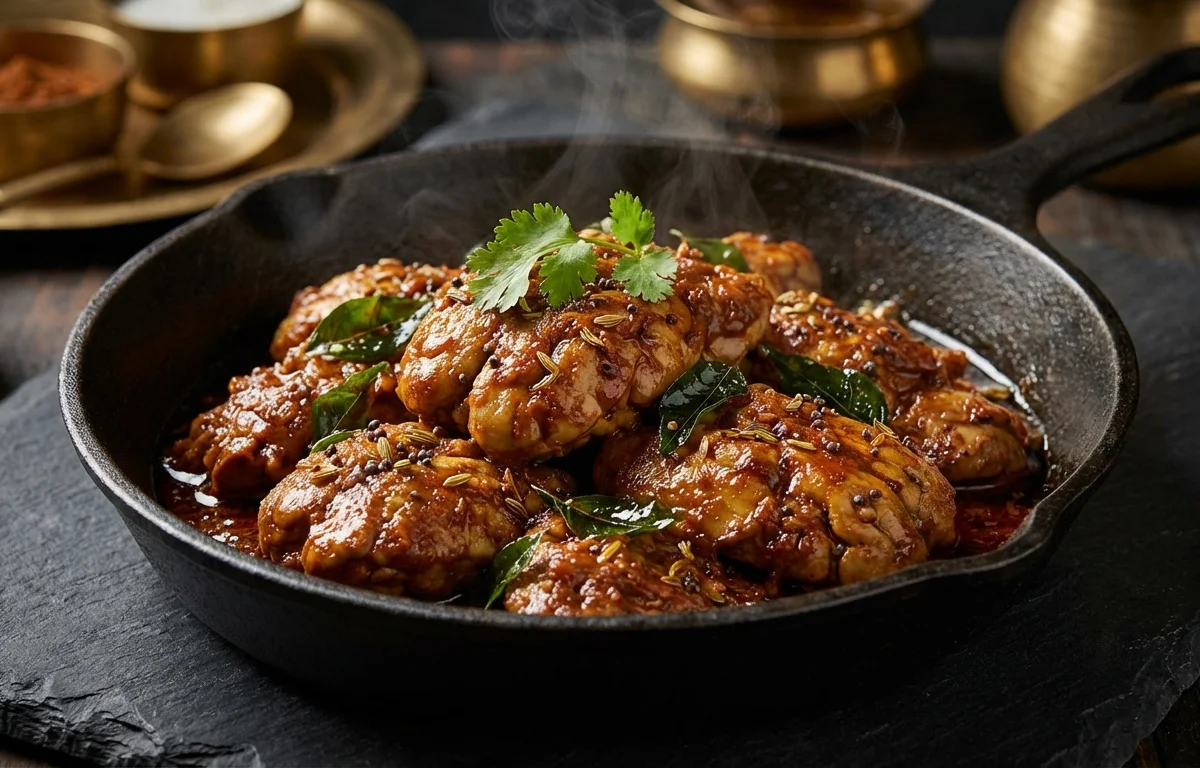
Soft goat brain gently poached, broken into tender pieces, then tossed with onion, ginger, garlic, black pepper, and warm spices. This South Indian favorite is rich, delicate, and best served hot with rice or parotta.
For 4 servings
- prep · ~5 min
Clean the goat brain gently.
Rinse the goat brain very gently under cold water. Remove any thin membrane or blood spots without breaking the flesh.
TIPHandle it lightly so the pieces stay intact and tender. - boil · ~8 min
Poach the goat brain.
1.Add water to a small pan and bring it to a gentle boil.2.Add the goat brain, turmeric powder, and salt.3.Cook on low heat until just set and firm, about 5 to 6 minutes.4.Lift it out carefully and let it cool slightly.TIPDo not overcook or the brain turns grainy and breaks up too much. - prep · ~3 min
Break the brain into large pieces.
Once cool enough to handle, break the poached goat brain into bite-size chunks with your fingers or a spoon. Keep the pieces slightly large so they do not disappear in the pan.
- saute · ~8 min
Cook the onion base.
1.Heat oil in a wide pan over medium heat.2.Add fennel seeds and curry leaves and let them sizzle for a few seconds.3.Add onion and green chili, then cook until the onion turns soft and lightly golden, 5 to 6 minutes.4.Add ginger-garlic paste and cook until the raw smell disappears, about 1 minute.TIPUse a wide pan so the brain can be mixed gently without mashing. - saute · ~5 min
Add tomato and spices.
1.Add tomato and cook until soft and pulpy, about 3 to 4 minutes.2.Add red chili powder, black pepper powder, coriander powder, garam masala, and salt.3.Mix well and cook for 1 minute until the masala smells fragrant. - mix · ~2 min
Fold in the goat brain.
Add the poached goat brain pieces to the pan. Toss very gently so the masala coats every piece without turning it mushy.
- saute · ~3 min
Cook the varuval briefly.
Cook on low heat for 2 to 3 minutes, turning once or twice gently, until the masala clings to the brain and the dish looks semi-dry.
TIPKeep the heat low at this stage so the texture stays soft. - garnish
Finish with cilantro.
- serve
Serve hot.
Serve Moolai Varuval hot as a side with rice, rasam rice, or parotta.
What to keep in mind.
7 tips from the recipe — small details that make a real difference to the final dish.
- 1Poach the brain at a gentle simmer, not a rolling boil, so it sets without turning grainy.
- 2Remove the thin membrane and blood spots patiently during cleaning to avoid any muddy taste.
- 3Let the poached brain cool slightly before breaking it, otherwise it will crumble too finely.
- 4Keep the pieces slightly large; they will break more as you toss them in the masala.
- 5Cook the onion until lightly golden, not deeply browned, so the delicate brain flavor still comes through.
- 6Use a flat spatula or spoon to fold the pieces into the masala instead of stirring vigorously.
- 7Serve immediately after the final 2 to 3 minutes on low heat, because extended cooking makes it dry and pasty.
Adapt it for your goals.
Pepper-forward
Increase black pepper slightly and reduce red chili for a more classic South Indian heat with sharper aroma.
dry varuvalDry-varuval
Cook the masala a little longer before adding the brain for a drier finish that pairs especially well with parotta.
mildMild
Use fewer green chilies and less red chili powder if you want the texture and richness of the brain to stand out more.
Why this is on our healthy list.
Rich in Protein
Goat brain contributes protein, making this a satisfying side dish despite its small serving size.
Aromatic Digestive Spices
Fennel, ginger, garlic, black pepper, and curry leaves add depth while bringing traditional spice elements used in savory South Indian cooking.
Herb-Boosted Freshness
Cilantro, curry leaves, onion, tomato, and green chili add plant ingredients and fresh aromatic balance to the rich main ingredient.
Frequently asked questions
It should look just set and feel firm enough to lift without falling apart, usually after about 5 to 6 minutes on low heat.