Mutton Paya
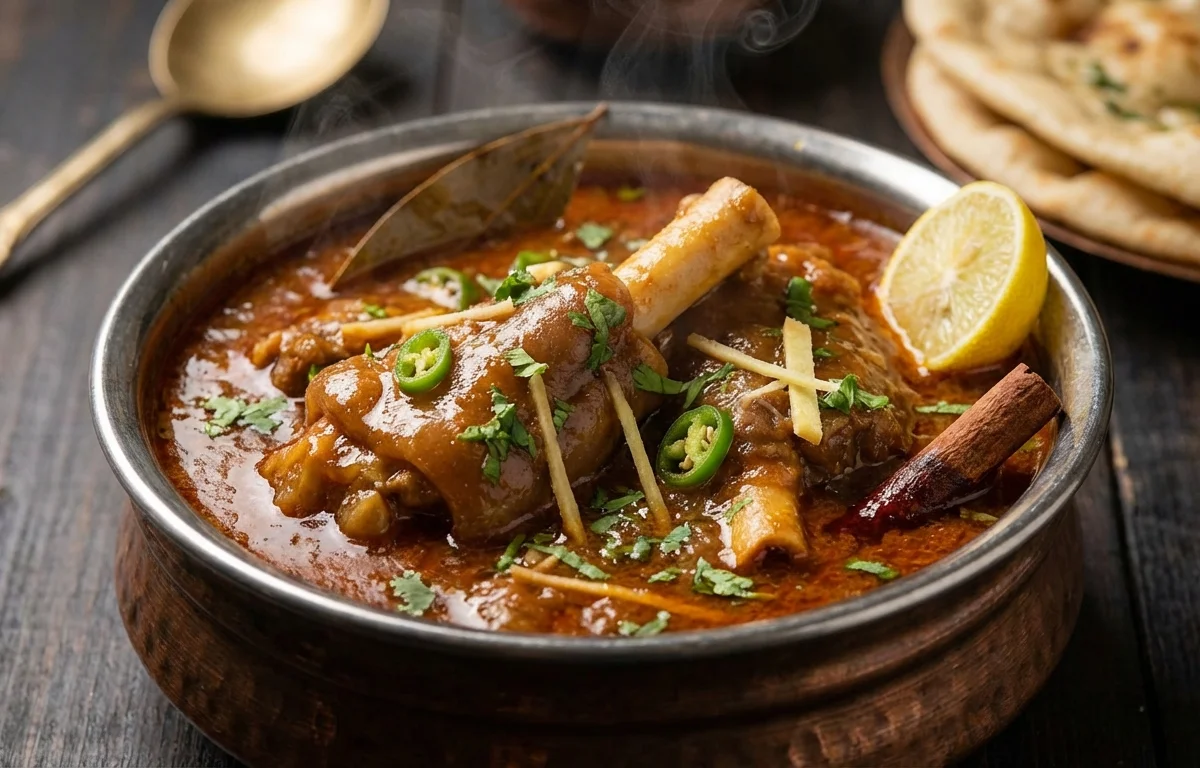
Slow-cooked mutton trotters turn silky and rich in this comforting paya. The broth gets deep flavor from browned onions, warming spices, and a gentle simmer that coaxes every bit of goodness into the bowl.
For 4 servings
- prep · ~10 min
Clean and ready the paya.
Rinse the mutton trotters well and drain. Keep the onions sliced, tomatoes chopped, green chilies slit, and coriander leaves ready.
- saute · ~8 min
Cook the whole spices and onions.
1.Heat oil in a pressure cooker over medium heat.2.Add bay leaf, cinnamon, green cardamom, cloves, and black peppercorns.3.Add sliced onions and cook until light golden, 6 to 8 minutes.TIPKeep the heat moderate so the onions brown evenly without burning the whole spices. - saute · ~8 min
Build the masala base.
1.Add ginger-garlic paste and green chilies, then cook for 1 minute.2.Add chopped tomatoes and cook until soft and pulpy, 5 to 6 minutes.3.Add coriander powder, cumin powder, turmeric powder, red chili powder, garam masala, and salt.4.Mix well and cook for 1 minute until the masala smells rich. - pressure cook · ~50 min
Pressure cook the paya.
Add the mutton trotters and stir to coat them well in the masala. Pour in water, lock the lid, and pressure cook on medium heat until the trotters are very tender, about 45 to 50 minutes.
TIPThe paya should be soft enough that the broth turns naturally silky from the collagen. - simmer · ~20 min
Simmer the broth until slightly thickened.
Open the cooker once the pressure drops naturally. Simmer uncovered for 15 to 20 minutes so the flavors meld and the broth reduces a little.
- garnish · ~1 min
Finish with coriander leaves and lemon juice.
- serve · ~1 min
Serve the mutton paya hot.
Ladle into katoris and serve hot with naan, kulcha, or steamed rice.
What to keep in mind.
7 tips from the recipe — small details that make a real difference to the final dish.
- 1Rinse the trotters thoroughly and drain well before cooking to keep the broth cleaner and less gamey.
- 2Stop the onions at light golden, not dark brown, so the paya stays rich without tasting bitter.
- 3Cook the tomatoes until the oil starts separating from the masala; this prevents a raw, sour finish.
- 4Let the pressure release naturally so the trotters keep tenderizing and the broth stays clear.
- 5After pressure cooking, the trotters should feel very soft and gelatinous; if not, add a little water and cook longer.
- 6Simmer uncovered at the end to concentrate the stock, but avoid a rapid boil or the broth can turn greasy.
- 7Paya tastes even better the next day; chill it, skim any set fat if you like, then reheat gently.
Adapt it for your goals.
Spicier
Add more slit green chilies or a little extra red chili powder for a hotter, more robust paya.
slow cookedSlow-cooked
Use a heavy pot instead of a pressure cooker and simmer gently for several hours for a traditional, deeply developed broth.
lighterLighter
Chill the cooked paya, remove the hardened fat from the top, and reheat for a cleaner, lighter bowl.
thicker brothThicker-broth
Simmer uncovered a bit longer after pressure cooking if you want a more concentrated, sticky, restaurant-style paya.
Why this is on our healthy list.
Rich, Nourishing Broth
Mutton trotters create a naturally gelatinous broth that feels satisfying and substantial without needing cream or thickeners.
Protein From Goat Trotters
This dish provides animal protein from the trotters, making it filling and suitable as a hearty main meal.
Spice-Forward Cooking
Ginger, garlic, black pepper, coriander, cumin, and turmeric add strong flavor so the broth tastes complex with modest oil.
Frequently asked questions
The trotters should be very tender and the broth should look slightly glossy and silky from released collagen.