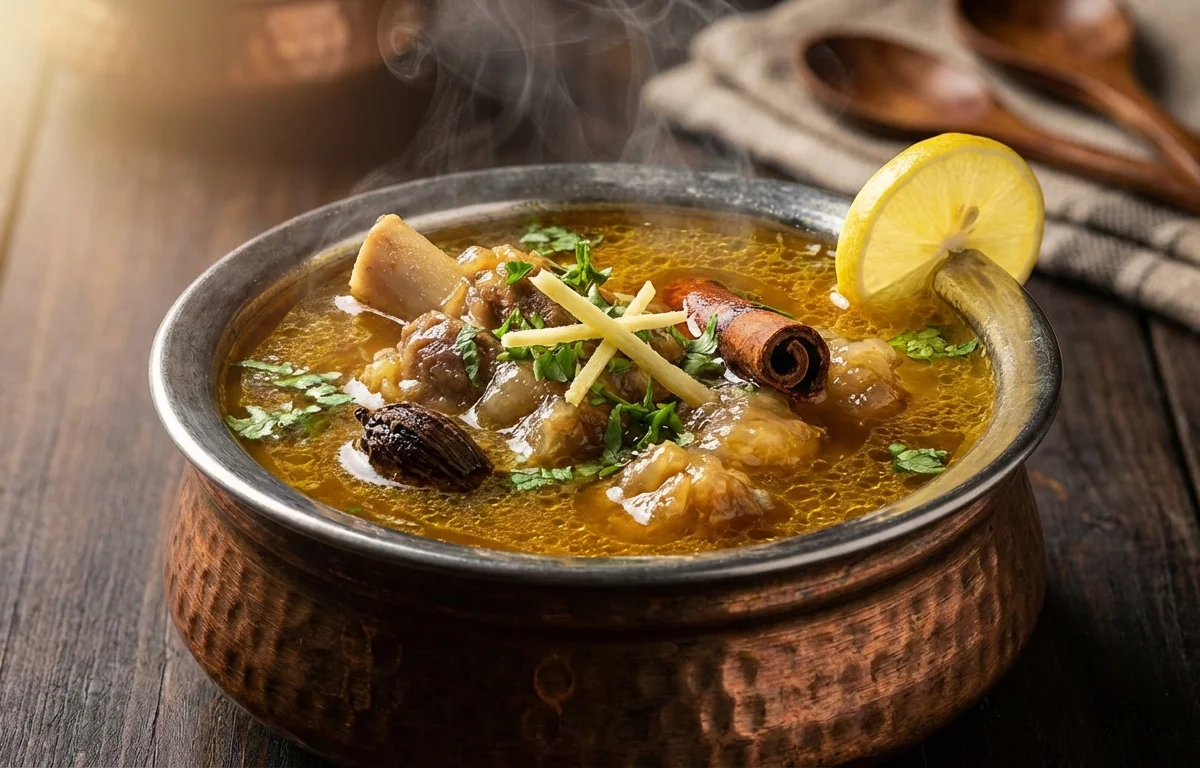
Mutton Paya Shorba
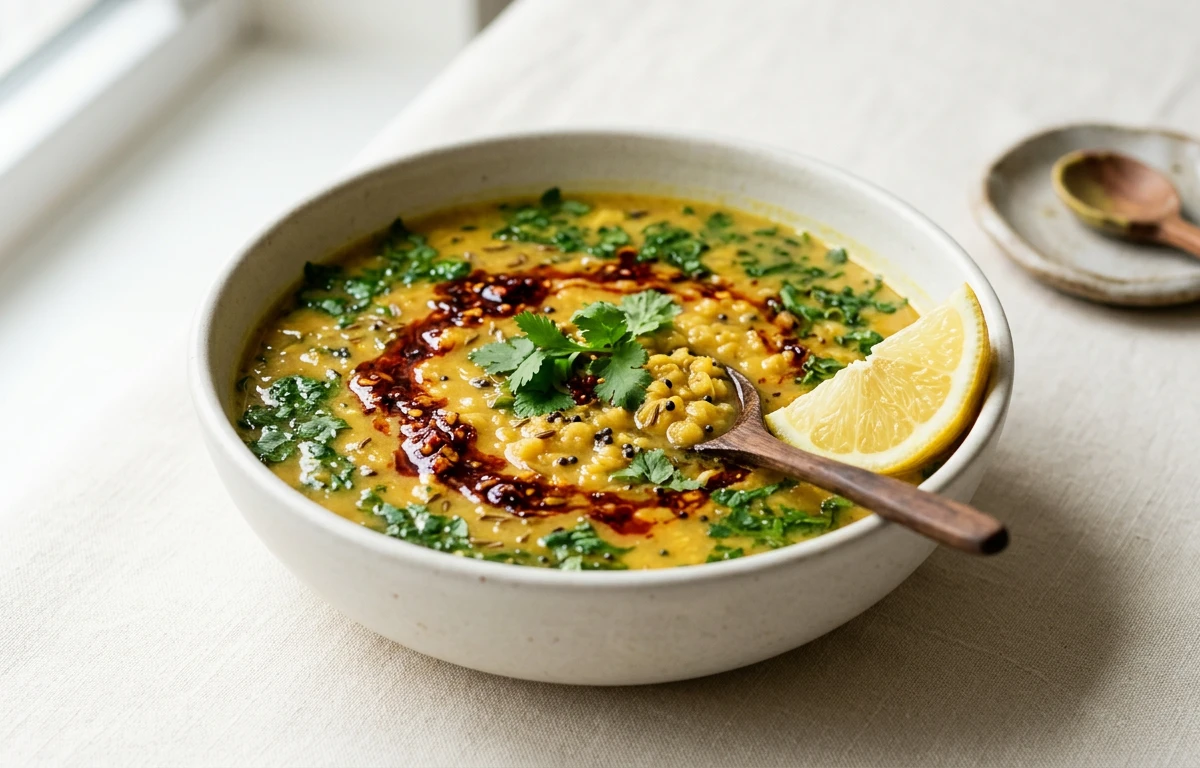
A deeply comforting broth made by slow-cooking mutton trotters with onions, ginger, garlic, and warming spices until the stock turns rich and silky. It is hearty, peppery, and especially good with naan or plain rice.
For 4 servings
- prep · ~10 min
Clean and ready the paya.
1.Rinse the mutton paya well under running water.2.Scrape and trim any remaining rough bits if needed.3.Set the cleaned paya aside while you prepare the masala.TIPClean paya well for a clear-tasting shorba without any strong smell. - saute · ~10 min
Cook the onion base.
1.Heat oil in a pressure cooker over medium heat.2.Add cumin seeds, black peppercorns, cloves, green cardamom, cinnamon, and bay leaf.3.Let the spices turn fragrant for 30 seconds.4.Add sliced onion and cook until light golden, 6 to 8 minutes.5.Add ginger-garlic paste and sauté until the raw smell fades, about 1 minute. - saute · ~6 min
Add tomato and spices.
1.Add chopped tomato and green chili.2.Stir in turmeric powder, red chili powder, coriander powder, and salt.3.Cook until the tomatoes soften and the masala looks glossy, 5 to 6 minutes.TIPMash the tomatoes with the spoon as they cook so the broth gets a smoother body. - pressure cook · ~75 min
Pressure cook the paya.
Add the cleaned mutton paya and mix well with the masala for 2 minutes. Pour in water, lock the cooker, and cook on medium-low heat for 60 to 75 minutes, or until the paya is very tender and the broth turns rich.
TIPLow, steady heat helps extract the natural gelatin from the trotters. - simmer · ~15 min
Simmer the shorba.
Let the pressure drop naturally and open the cooker. Add garam masala and simmer the shorba uncovered for 10 to 15 minutes to adjust the consistency; add a little more water if you want a thinner broth.
- garnish
Finish with coriander leaves and lemon juice.
- serve
Serve the paya shorba hot.
Ladle into katoris and serve hot with naan, kulcha, or plain rice.
What to keep in mind.
7 tips from the recipe — small details that make a real difference to the final dish.
- 1If the paya has a strong smell, soak briefly in salted water before rinsing and cooking.
- 2Brown the onions only to light golden; very dark onions can make the shorba taste bitter.
- 3After pressure cooking, the paya should feel very tender and the broth slightly sticky from released gelatin.
- 4Let the pressure drop naturally so the meat keeps softening gently and the stock stays clear.
- 5Skim excess fat after simmering if you want a cleaner, lighter-tasting shorba.
- 6This shorba tastes even better the next day, once the spices settle and the broth deepens.
- 7Reheat gently with a splash of water, as the broth can thicken noticeably after chilling.
Adapt it for your goals.
Extra-peppery
Increase black peppercorns and add a final pinch of freshly crushed pepper for a more old-style, warming shorba.
low oilLow-oil
Reduce the oil slightly and skim the surface after cooking for a lighter broth that still keeps the paya flavor.
nihari styleNihari-style
Add a little fennel and extra garam masala in the final simmer for a deeper, more aromatic North Indian finish.
boneless meat addedBoneless-meat-added
Add a few pieces of mutton along with the trotters if you want more meat in the bowl while keeping the gelatin-rich broth.
Why this is on our healthy list.
Protein-Rich Broth
Goat trotters contribute protein and make the shorba hearty and satisfying, especially when served as a light meal.
Naturally Gelatinous
Slow-cooked paya releases natural collagen and gelatin, which give the broth its comforting, silky texture.
Spice-Forward Warmth
Ginger, garlic, black pepper, cloves, and cumin add robust flavor while keeping the dish warming and deeply aromatic.
Fresh Herbal Finish
Coriander leaves and lemon juice brighten the rich broth and add freshness to balance the heavier meat stock.
Frequently asked questions
The trotters should be very tender, and the broth should look rich and slightly silky rather than watery.