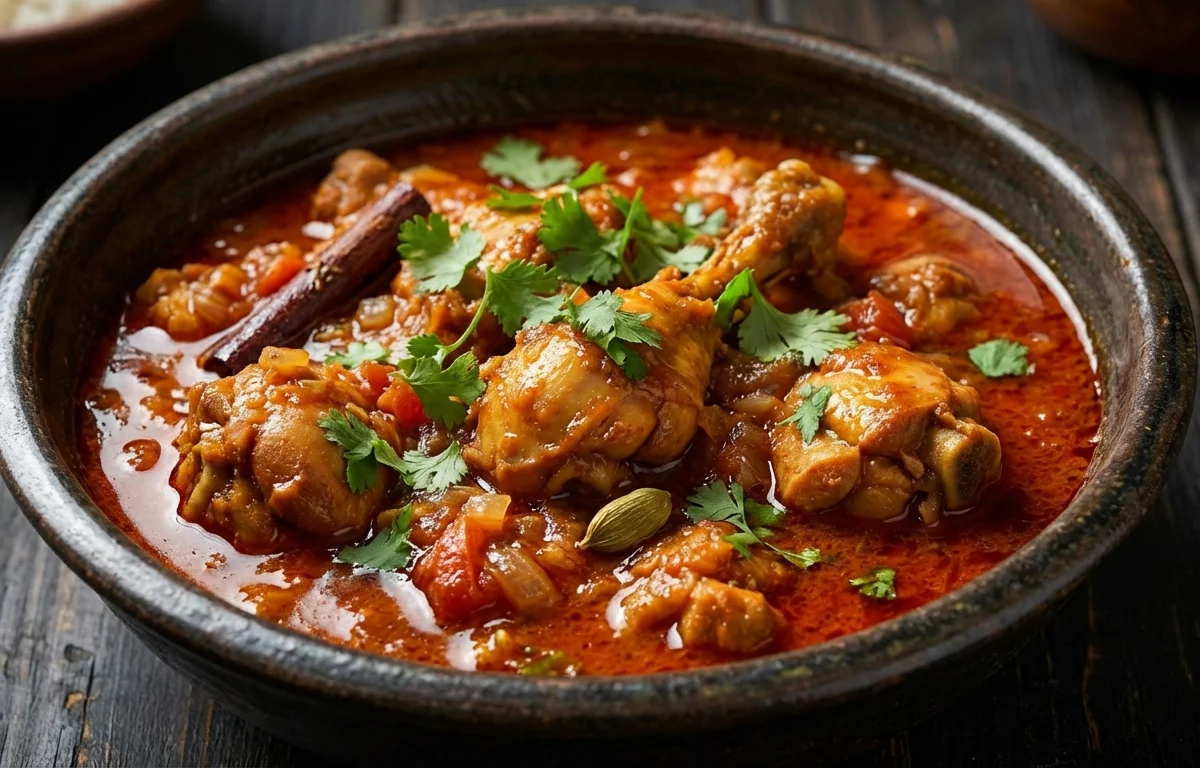
Natu Kodi Pulusu
A rustic Andhra country chicken curry with a tangy tamarind base, plenty of onions, and warm spices. It cooks into a rich, lightly thin gravy that tastes even better after resting for a few minutes.
For 4 servings
- prep · ~10 min
Soak the tamarind and prepare the chicken.
1.Soak tamarind in a little warm water for 10 minutes.2.Squeeze well and extract a smooth pulp; set it aside.3.Wash the chicken pieces and drain them well. - temper · ~2 min
Make the tempering.
1.Heat oil in a heavy pot over medium heat.2.Add mustard seeds and let them crackle.3.Add cumin seeds, fenugreek seeds, and curry leaves.4.Cook for a few seconds until fragrant.TIPKeep the heat moderate once the fenugreek goes in so it does not turn bitter. - saute · ~8 min
Cook the onions and green chilies.
1.Add sliced onions and slit green chilies.2.Cook until the onions turn soft and light golden.3.Stir in the ginger-garlic paste and cook until the raw smell fades. - saute · ~5 min
Build the masala base.
1.Add chopped tomatoes and cook until they soften.2.Add turmeric powder, red chili powder, coriander powder, garam masala, and black pepper.3.Mix well and cook for 2 minutes so the spices bloom. - saute · ~10 min
Coat the chicken in the masala.
Add the chicken and salt, then toss well so every piece is coated. Cook over medium-high heat for 8 to 10 minutes, stirring often, until the chicken loses its raw look and releases some juices.
- simmer · ~5 min
Add tamarind pulp and water.
Pour in the tamarind extract and water, then mix well. Bring the curry to a steady simmer.
- simmer · ~30 min
Cook the pulusu until the chicken is tender.
Cover and simmer on low heat, stirring now and then, until the chicken is fully cooked and the gravy turns rich and slightly reduced. Country chicken can take longer than regular chicken, so cook until tender.
TIPIf the gravy thickens too soon, add a splash of hot water and continue cooking until the meat softens. - garnish
Finish with coriander leaves.
Sprinkle chopped coriander leaves over the curry and switch off the heat.
- rest · ~5 min
Let the curry rest for 5 minutes.
- serve
Serve hot.
Serve Natu Kodi Pulusu hot with rice, ragi sangati, or chapati.
What to keep in mind.
7 tips from the recipe — small details that make a real difference to the final dish.
- 1Use a heavy pot so the onion-tomato masala cooks evenly and the pulusu does not catch at the bottom.
- 2Do not let fenugreek seeds darken too much in the tempering, or the gravy will taste bitter.
- 3Cook the chicken in the masala until it loses its raw color before adding water; this gives the curry deeper flavor.
- 4If using country chicken, allow extra simmering time and add small splashes of hot water as needed until tender.
- 5Strain the tamarind extract if it feels fibrous, so the gravy stays smooth and lightly thin.
- 6Rest the pulusu for at least 5 minutes after cooking; the tamarind, spice, and chicken flavors settle noticeably.
- 7This curry tastes even better the next day, so it is a great make-ahead dish for rice or ragi sangati.
Adapt it for your goals.
Spicier
Increase green chilies or red chili powder for a hotter, more fiery Andhra-style pulusu.
low oilLow-oil
Reduce the oil slightly and cook the onions a bit longer over medium heat; good if you want a lighter everyday curry.
broiler chickenBroiler-chicken
Use regular chicken for a quicker version; it will cook faster than country chicken and give a slightly softer texture.
more tangyMore-tangy
Add a little extra tamarind extract if you enjoy a sharper pulusu that pairs especially well with plain rice.
Why this is on our healthy list.
Protein-Rich Main Dish
Chicken makes this curry satisfying and protein-rich, helping turn it into a filling meal with rice or chapati.
Spice-Based Flavoring
Most of the taste comes from spices, curry leaves, ginger, garlic, and tamarind rather than heavy cream or butter.
Includes Aromatic Herbs
Curry leaves, coriander leaves, ginger, and garlic add aroma and plant compounds along with the savory flavor.
Frequently asked questions
Yes. Regular chicken works well, but it cooks faster and becomes tender sooner, so reduce the simmering time and check often.