
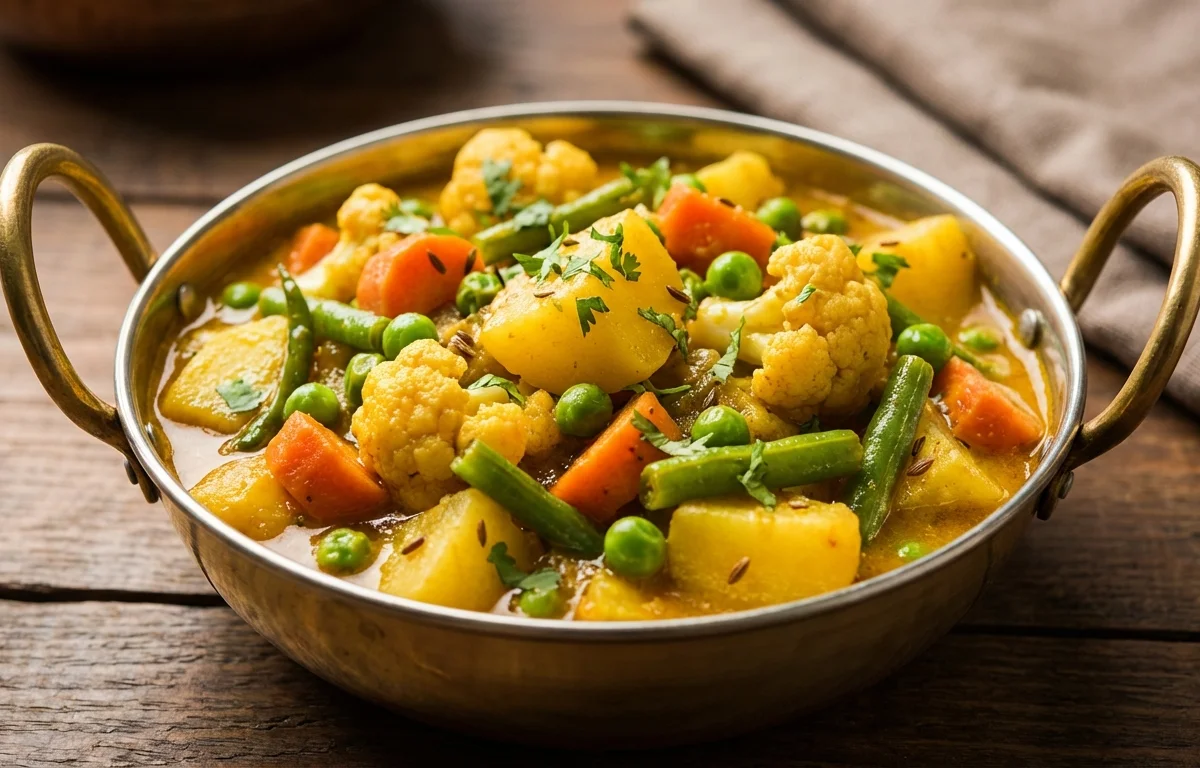
Panchmel Sabzi
A homestyle Rajasthani mixed vegetable curry made with five everyday vegetables, warm spices, and a simple onion-tomato masala. It cooks into a cozy, lightly spiced sabzi that goes beautifully with roti or paratha.
For 4 servings
- prep · ~10 min
Prepare the vegetables.
1.Peel and cube the potato and bottle gourd.2.Cube the eggplant into medium pieces.3.Trim the cluster beans and cut them into small pieces.4.Chop the onion and tomato, then finely chop the ginger and slit the green chilies. - saute · ~8 min
Make the masala base.
1.Heat oil in a kadai over medium heat.2.Add cumin seeds and asafoetida and let them sizzle for a few seconds.3.Add onion, ginger, and green chili, then cook until the onion turns light golden.4.Add tomato and cook until soft and pulpy.TIPKeep the heat medium so the spices bloom without burning. - saute · ~4 min
Add the spices and vegetables.
1.Stir in turmeric powder, red chili powder, coriander powder, garam masala, and salt.2.Add potato, cluster beans, bottle gourd, eggplant, and green peas.3.Mix well so the masala coats all the vegetables evenly.4.Cook for 3 to 4 minutes, stirring now and then. - simmer · ~15 min
Cover and cook the sabzi.
Pour in water, mix once, cover, and cook on low heat until the vegetables are tender but not mushy. Stir once or twice during cooking so nothing sticks to the pan.
TIPIf the pan looks dry before the vegetables are done, add 1 to 2 tbsp more water. - garnish · ~1 min
Finish with dry mango powder and coriander leaves.
Sprinkle in dry mango powder and chopped coriander leaves, then mix gently for 1 minute so the flavors come together.
- serve
Serve the Panchmel Sabzi hot.
What to keep in mind.
7 tips from the recipe — small details that make a real difference to the final dish.
- 1Cut the potato, bottle gourd, and eggplant into similar-sized cubes so all the vegetables finish cooking together.
- 2Add the eggplant only after the masala is ready and coat it well to keep it from turning soggy.
- 3Cluster beans can stay slightly firm longer than the other vegetables, so chop them smaller than the potato pieces.
- 4Keep the covered simmer on low heat; high heat can make the bottom catch before the gourds release moisture.
- 5Add amchur only at the end so its tang stays bright and does not dull during cooking.
- 6This sabzi tastes even better after a short rest, when the potatoes absorb the onion-tomato masala.
- 7Reheat with a splash of water and gentle stirring so the softer vegetables do not break apart.
Adapt it for your goals.
No-onion-no-garlic
Skip onion and rely on tomato, ginger, hing, and a little extra coriander powder for a simpler satvik-style panchmel sabzi.
low oilLow-oil
Use less oil and add a spoonful of water while bhunoing the masala; good if you want a lighter everyday sabzi.
spicierSpicier
Increase green chili and red chili powder for a sharper heat that pairs especially well with plain phulka.
dry styleDry-style
Use slightly less water and cook uncovered at the end to make a drier sabzi suited for lunchboxes and travel.
Why this is on our healthy list.
Mixed Vegetable Variety
Using five different vegetables brings a wider range of plant nutrients, textures, and natural flavors into one dish.
Fiber-Rich Meal
Cluster beans, peas, eggplant, and bottle gourd contribute fiber that makes this sabzi filling and satisfying with roti.
Moderate and Balanced
The curry gets body from vegetables and masala rather than cream, making it a lighter homestyle option.
Digestive Spice Support
Cumin, ginger, hing, and coriander are traditional spices often used to make mixed vegetable dishes feel easier to digest.
Frequently asked questions
Yes. Panchmel sabzi is flexible, so you can swap in seasonal vegetables like carrots or cauliflower, but keep a mix of firm and soft vegetables for the best texture.



.webp)
.webp)
.webp)