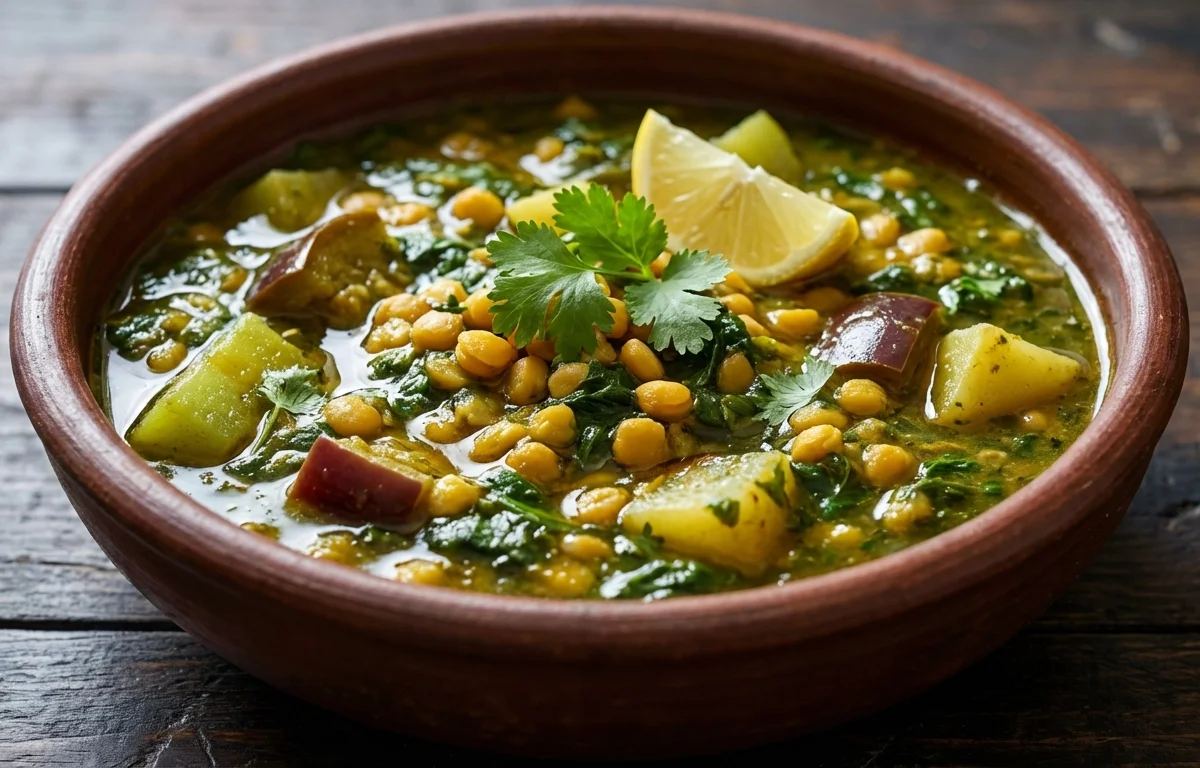
Sai Bhaji
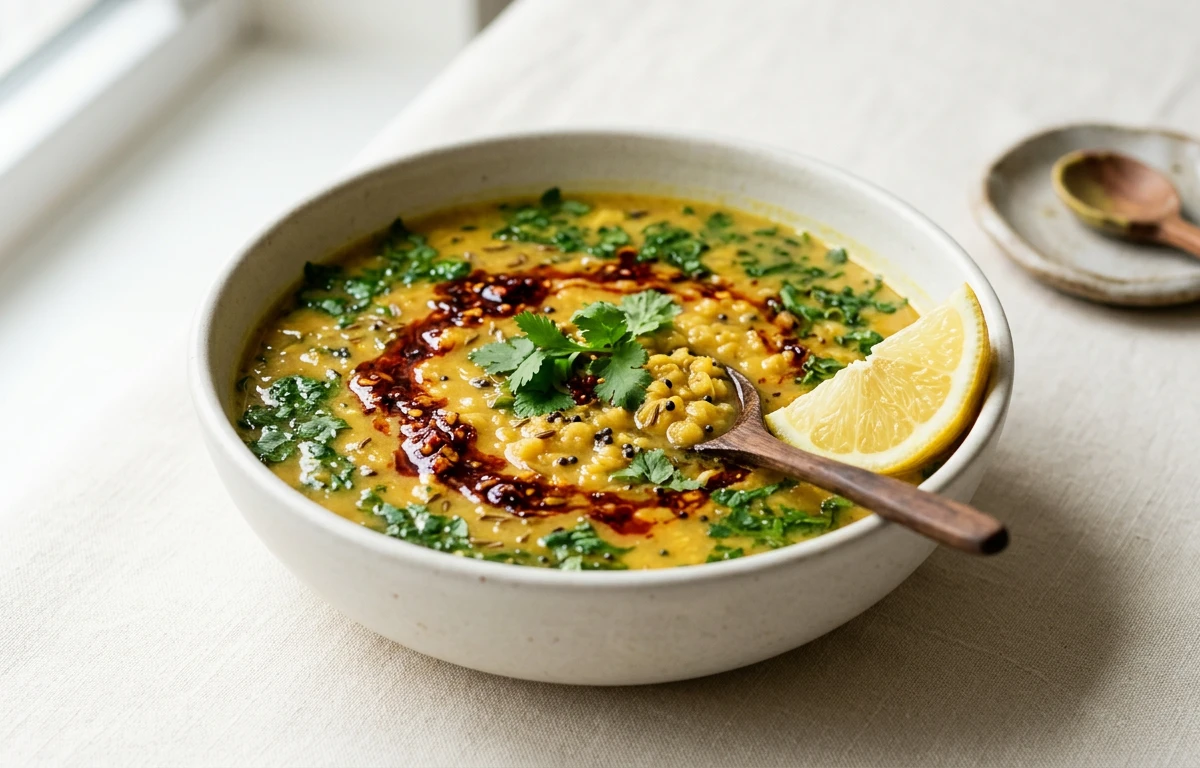
A comforting Sindhi mix of greens, lentils, and vegetables simmered together until soft and hearty. Gentle spices, plenty of spinach, and a touch of tamarind give this wholesome dish its earthy, homestyle character.
For 4 servings
- prep · ~20 min
Prep the greens, vegetables, and lentils.
1.Wash and soak the chana dal for 30 minutes, then drain.2.Roughly chop the spinach, sorrel leaves, dill leaves, and fenugreek leaves.3.Chop the onion and tomatoes.4.Cube the potato and eggplant, and slit the green chilies.5.Chop the ginger and garlic.TIPKeep the greens loosely packed while measuring so the bhaji stays balanced and not overly dense. - pressure cook · ~20 min
Pressure cook everything until very soft.
1.Add the soaked chana dal, spinach, sorrel leaves, dill leaves, fenugreek leaves, onion, tomato, potato, eggplant, green chili, ginger, and garlic to a pressure cooker.2.Add turmeric powder, red chili powder, salt, and water.3.Close the cooker and cook on medium heat for 4 whistles, or until the lentils and vegetables are completely soft.TIPSai Bhaji should cook down fully, so let the vegetables soften well rather than keeping them chunky. - mix · ~3 min
Mash the bhaji until combined.
Open the cooker once the pressure drops naturally. Mash the mixture with the back of a ladle or a masher until the lentils, greens, and vegetables blend into a coarse, thick bhaji.
- temper · ~1 min
Make the cumin tempering.
Heat the ghee in a small pan over medium heat. Add cumin seeds and let them sizzle for 20 to 30 seconds until fragrant.
TIPDo not let the cumin darken too much or the tempering can taste bitter. - simmer · ~7 min
Finish the bhaji with tempering and tamarind.
Pour the tempering into the mashed bhaji. Add tamarind paste, mix well, and simmer for 5 to 7 minutes until the flavors come together and the bhaji is thick but spoonable.
- serve
Serve hot.
Serve Sai Bhaji hot as part of a meal with rice, phulka, or Sindhi koki.
What to keep in mind.
7 tips from the recipe — small details that make a real difference to the final dish.
- 1Soaking the chana dal helps it soften at the same rate as the greens and root vegetables in the cooker.
- 2Let the pressure drop naturally before opening so the dal finishes cooking and the bhaji stays creamy.
- 3Mash while the mixture is still hot; the potato and eggplant break down more easily and give the bhaji body.
- 4If the bhaji looks watery after mashing, simmer uncovered for a few extra minutes until it turns thick and spoonable.
- 5Add tamarind only after pressure cooking, or the acidity can slow down the chana dal from softening well.
- 6Do not over-brown the cumin in ghee; lightly crackled seeds keep the final tempering fragrant rather than bitter.
- 7This dish tastes even better after a short rest, as the dill, methi, sorrel, and tamarind meld into a deeper flavor.
Adapt it for your goals.
Vegan
Replace the ghee with oil for the tempering to keep the dish fully plant-based without changing its overall character.
no onion no garlicNo-onion-no-garlic
Skip onion and garlic for a satvik-style version; increase ginger slightly so the bhaji still tastes warm and savory.
milderMilder
Reduce or omit the green chilies and red chili powder if you want the tangy greens and cumin to be more prominent.
thicker styleThicker-style
Use a little less water or simmer longer after mashing for a denser bhaji that pairs especially well with phulka or koki.
Why this is on our healthy list.
Leafy Green Richness
Spinach, sorrel, dill, and fenugreek bring a wide mix of plant nutrients and herbs into one comforting dish.
Plant Protein and Fiber
Chana dal adds satisfying protein and fiber, making the bhaji more filling than a greens-only preparation.
Vegetable-Dense Meal
With greens, tomato, potato, eggplant, onion, ginger, and garlic, this dish delivers variety from many whole vegetables.
Gentle on Added Fat
Only a small tempering of ghee is used, so most of the body and flavor come from cooked vegetables and dal.
Frequently asked questions
Yes. Simmer everything in a covered pot until the chana dal and vegetables are very soft, then mash and finish with the tempering and tamarind.