Valache Birde
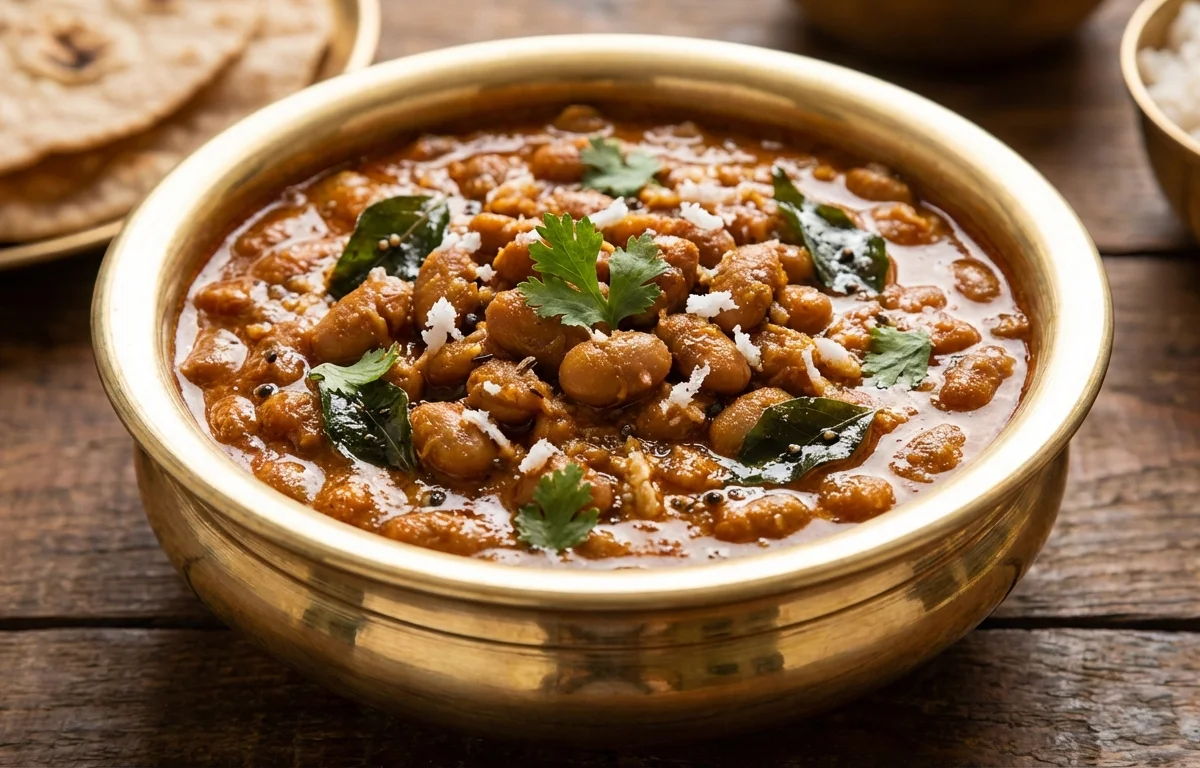
A comforting Maharashtrian curry made with sprouted field beans, fresh coconut, and a gentle goda masala base. It has a rustic, home-style taste with a light tang and enough gravy to pair beautifully with bhakri or rice.
For 4 servings
- prep · ~20 min
Soak and sprout the field beans.
Wash the field beans well and soak them overnight in plenty of water. Drain, tie them in a clean cloth or keep covered in a sprouting container for 8 to 12 hours, until short sprouts appear.
- pressure cook · ~15 min
Pressure cook the sprouted beans.
Add the sprouted field beans, 2 cups water, and 0.25 tsp salt to a pressure cooker. Cook until tender but not mushy, about 3 to 4 whistles, then let the pressure drop naturally.
TIPField beans should hold their shape. Overcooking makes the curry pasty. - mix · ~6 min
Grind the coconut masala.
1.Heat 1 tsp oil in a pan over medium heat.2.Add ginger, garlic, and one green chili; sauté for 1 minute.3.Add grated coconut and cook lightly for 2 to 3 minutes without dark browning.4.Cool slightly, then grind with a little water into a smooth paste. - saute · ~10 min
Cook the base.
1.Heat the remaining oil in a pan.2.Add mustard seeds and let them crackle.3.Add cumin seeds and asafoetida, then stir for a few seconds.4.Add onion and cook until soft and light golden, 5 to 6 minutes.5.Add the remaining green chili and tomato, then cook until the tomato softens.TIPKeep the heat medium so the spices bloom without burning. - saute · ~4 min
Add the masalas and coconut paste.
Stir in turmeric powder, red chili powder, and goda masala. Add the ground coconut paste and cook for 3 to 4 minutes, stirring often, until the mixture smells rich and well blended.
- simmer · ~10 min
Simmer the birde.
1.Add the cooked field beans with their cooking liquid to the pan.2.Pour in the remaining 1 cup water and mix well.3.Add the remaining salt, jaggery, and tamarind paste.4.Bring to a gentle simmer and cook uncovered for 8 to 10 minutes until the gravy comes together. - garnish
Garnish with cilantro.
- serve
Serve hot with bhakri or steamed rice.
What to keep in mind.
7 tips from the recipe — small details that make a real difference to the final dish.
- 1Sprout the field beans only until short tails appear; long sprouts can turn the birde slightly bitter.
- 2After pressure cooking, the beans should press soft between fingers but still look whole in the gravy.
- 3Do not brown the coconut deeply while sautéing; pale roasting keeps the curry's classic mild sweetness.
- 4Cook the coconut paste for a few minutes before adding beans so the raw coconut smell disappears fully.
- 5Add tamarind and jaggery near the end, then simmer gently to balance the sour-sweet notes without dulling them.
- 6If the gravy thickens on standing, loosen it with hot water before serving because coconut continues to absorb liquid.
- 7This curry tastes even better after 30 minutes of rest, when the goda masala settles into the bean gravy.
Adapt it for your goals.
No-onion-no-garlic
Skip onion and garlic, increase ginger and hing slightly, for a satvik-style version that still keeps the coconut-goda masala character.
spicierSpicier
Add an extra green chili or a little more red chili powder if you want a sharper heat to offset the sweet coconut base.
thinner gravyThinner-gravy
Use a bit more hot water while simmering for a more pourable birde that pairs especially well with steamed rice.
jainJain
Omit onion, garlic, and ginger; rely on coconut, green chili, tomato, hing, and goda masala for a Jain-friendly adaptation.
Why this is on our healthy list.
Rich in Plant Goodness
Field beans provide plant-based protein and fiber, making this curry hearty and satisfying when served with bhakri or rice.
Fiber From Sprouted Beans
Sprouted field beans and the onion-tomato base contribute fiber that supports a filling, balanced meal.
Natural Aromatics and Spices
Ginger, garlic, chili, turmeric, and cumin add depth of flavour along with traditional spice benefits in everyday cooking.
Healthy Fats From Coconut
Fresh coconut adds richness and texture, helping the curry feel satisfying even with a modest amount of oil.
Frequently asked questions
Yes, but the texture and flavour will be less traditional. Unsprouted beans usually take longer to cook and may taste heavier.



.webp)