
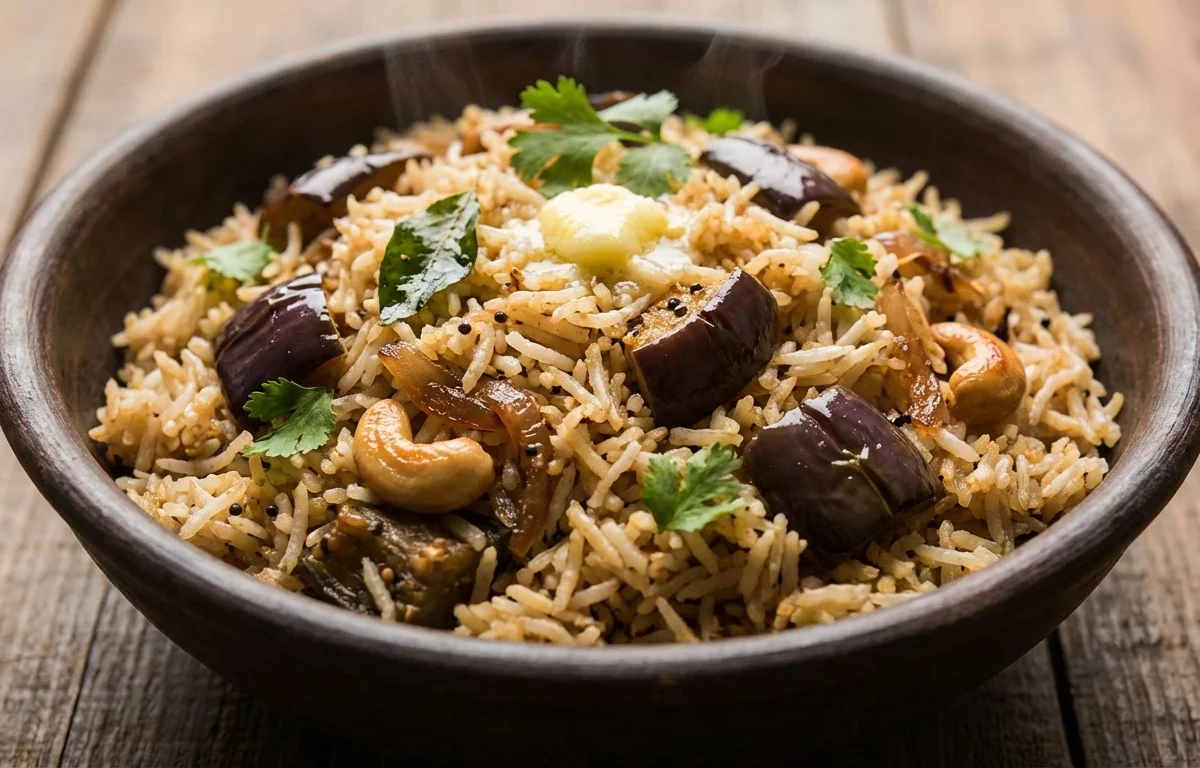
Vangi Bhaat
Fragrant spiced rice with tender brinjal, slow-cooked with a freshly ground masala of coconut, coriander seeds, and dried red chilies. This classic Karnataka one-pot dish is tangy, mildly spiced, and deeply comforting — perfect for a weekday lunch or festive spread.
For 4 servings
- prep
Wash and soak the rice.
Wash basmati rice under running water until water runs clear. Soak in enough water for 15 minutes, then drain completely.
TIPSoaking softens the grains and helps them cook evenly without breaking. - saute · ~2 min
Saute the masala spices.
Heat a small pan over medium heat. Dry roast coriander seeds, dried red chilies, cinnamon stick, and cloves until fragrant and lightly browned, about 1-2 minutes. Remove from heat and let cool.
- mix
Grind the vangi bhaat masala.
Add the roasted spices and grated fresh coconut into a mixer jar. Add a splash of water and grind to a smooth paste. Set aside.
- saute · ~5 min
Cook the brinjal.
Heat oil in a pressure cooker over medium heat. Add brinjal cubes and sauté for 4-5 minutes until they soften and start to brown. Remove and set aside.
TIPDon't crowd the pan; the brinjal needs room to sear rather than steam. - temper · ~2 min
Make the tempering in the same cooker.
Add ghee to the same pressure cooker. Once hot, add mustard seeds and let them splutter. Add cumin seeds, urad dal, chana dal, and curry leaves. Sauté until dals turn golden.
- saute · ~4 min
Build the aromatic base.
Add sliced onion and sauté until soft and translucent, about 3 minutes. Stir in turmeric powder and sauté for 30 seconds.
- saute · ~3 min
Combine brinjal with masala paste.
Return the sauteed brinjal to the cooker. Add the ground coconut-spice paste and cook for 2-3 minutes, stirring constantly, until the raw smell disappears and oil starts to separate.
TIPCook the paste well; undercooked masala can taste raw and gritty. - mix
Add rice, water, and seasonings.
Stir in the drained rice, tamarind paste, jaggery, and salt. Gently mix to coat every grain with the masala. Pour in water and bring to a boil.
- pressure cook · ~10 min
Pressure cook the vangi bhaat.
Close the pressure cooker lid and cook on medium heat for 2 whistles. Turn off the heat and let the pressure release naturally for 10 minutes before opening the lid.
TIPNatural release keeps the grains intact and fluffy; quick release can make the rice mushy. - garnish
Fluff, garnish, and serve hot.
Open the cooker and gently fluff the rice with a fork. Garnish with freshly chopped coriander leaves. Serve hot.
What to keep in mind.
7 tips from the recipe — small details that make a real difference to the final dish.
- 1Soak the basmati rice for exactly 15 minutes; this ensures each grain stays separate and fluffy after pressure cooking.
- 2Use small, firm purple brinjals (eggplants) — they hold their shape better and have fewer seeds, reducing bitterness.
- 3Dry roast the masala spices until fragrant but not burnt; over-roasting can make the dish taste bitter.
- 4Cook the ground coconut-spice paste until oil separates — this step eliminates raw flavors and deepens the masala.
- 5Let the pressure release naturally for 10 minutes before opening the lid; quick release can turn the rice mushy.
- 6Gently fluff the rice with a fork after cooking — stirring with a spoon breaks the delicate grains.
- 7Store leftovers in an airtight container in the fridge for up to 2 days; reheat with a splash of water in a pan.
Adapt it for your goals.
Vegan
Replace ghee with 1 extra tablespoon of oil. The dish remains just as aromatic and flavorful, catering to a plant-based diet.
Low OilLow-Oil
Reduce oil to 1 tablespoon and use a non-stick pan for sautéing. This lightens the dish without sacrificing the tempering's crunch.
Brinjal FreeBrinjal-Free
Substitute brinjal with 300g of cubed potatoes or cauliflower. This variation works well for those who dislike eggplant or want a different vegetable texture.
Protein PackedProtein-Packed
Add 1/2 cup of boiled chickpeas or paneer cubes along with the brinjal. This increases the protein content, making it a more filling one-pot meal.
Gluten FreeGluten-Free
The recipe is naturally gluten-free — just ensure the tamarind paste and jaggery are certified gluten-free. This is ideal for those with celiac disease or gluten sensitivity.
Why this is on our healthy list.
Rich in Dietary Fiber
Brinjal provides a good amount of fiber, supporting digestion and promoting a feeling of fullness.
Heart-Healthy Fats
Fresh coconut in the masala contains medium-chain triglycerides, which may support healthy cholesterol levels.
Good Source of Antioxidants
Brinjal is rich in anthocyanins (especially in the purple skin), which help fight oxidative stress.
Digestive Aid from Spices
Cumin, mustard seeds, and curry leaves naturally stimulate digestive enzymes, aiding digestion.
Low-Glycemic Carbohydrates
Basmati rice has a moderate glycemic index, and the combination of fiber from brinjal and spices helps slow sugar absorption.
Frequently asked questions
Yes, but adjust the water ratio to 1:1.75 (rice to water) and reduce soaking time to 10 minutes; basmati gives the fluffiest texture.


