
beverage_ingredient
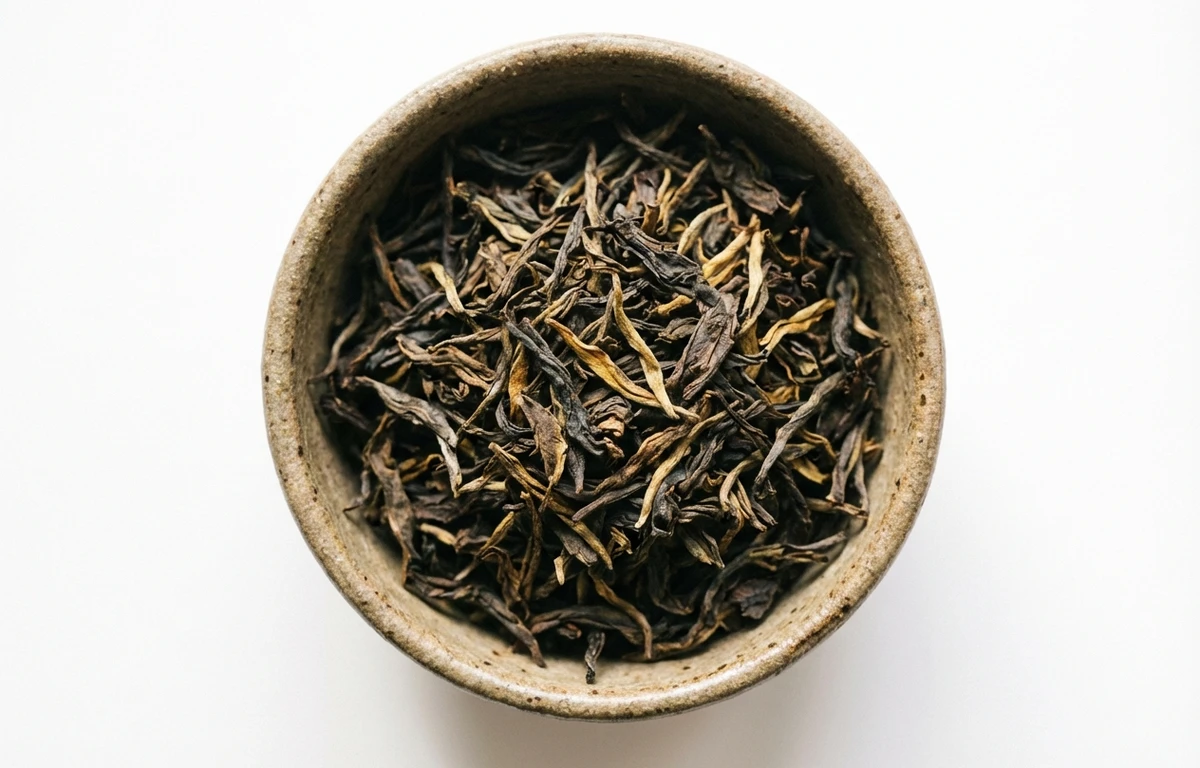
Assam Black Tea Leaves.
VegetarianVeganGluten-freeDairy-freeNut-freePeanut-freeSoy-freeEgg-freeShellfish-freeHoney-freeAlcohol-freeFermented
ALSO KNOWN AS
Assam teaAssam chaiKadak chai patti
SERVING
CALORIES
334
PROTEIN
20g
CARBS
58g
FAT
2.0g
FIBER
35g
NUTRITION PROFILE · per 100 g
Everything in this ingredient.
MACRONUTRIENTS
Calories334kcal—
Protein20g40%
Carbohydrates58g21%
Fiber35g125%
Sugar0g0%
Total fat2.0g3%
Saturated fat0.50g3%
Trans fat0g—
Cholesterol0mg0%
Water5.0g—
MINERALS
Sodium3.0mg0%
Potassium2160mg46%
Calcium430mg33%
Iron17mg94%
Magnesium250mg60%
Phosphorus300mg24%
Zinc3.0mg27%
Copper1.5mg167%
Manganese50mg2174%
Selenium1.0µg2%
VITAMINS
Vitamin A0µg0%
Vitamin C0mg0%
Vitamin D0µg0%
Vitamin E0mg0%
Vitamin K700µg583%
Thiamin (B1)0.10mg8%
Riboflavin (B2)1.2mg92%
Niacin (B3)6.5mg41%
Pantothenic acid (B5)1.0mg20%
Vitamin B60.60mg35%
Folate (B9)30µg8%
Vitamin B120µg0%
%DV based on a 2,000 cal diet. Source: USDA FoodData Central. A dash in the %DV column means there’s no established Daily Value for that nutrient.
MEASUREMENT CONVERSIONS
How much is what.
1 cup90g
1 tablespoon6g
1 teaspoon2g
1 oz28.4g
1 lb453.6g
HEALTH BENEFITS
Why eat it.
- ✓Rich in antioxidants like theaflavins and catechins
- ✓May improve heart health by lowering LDL cholesterol
- ✓Contains caffeine and L-theanine for improved focus
- ✓Supports gut health by promoting beneficial bacteria
- ✓May help reduce blood pressure when consumed regularly
COOKING TIPS
In the kitchen.
- 1Use water just below boiling (95°C/203°F) to avoid scorching the leaves
- 2Steep for 3-5 minutes; longer steeping increases bitterness and tannins
- 3Ideal for robust milk teas (Masala Chai) due to its strong, malty flavor
STORAGE
Keep it fresh.
- Store in an airtight container to prevent moisture and odor absorption
- Keep in a cool, dark place away from direct sunlight
- Avoid storing near strong-smelling spices or chemicals
FAQ
Frequently asked questions.
How long do Assam tea leaves last?
When stored in an airtight container in a cool, dark place, they maintain peak flavor for 18-24 months.
Can I freeze tea leaves to keep them fresh?
It is not recommended as condensation can form when the container is opened, damaging the leaves' quality.
How do I identify high-quality Assam tea?
Look for 'golden tips' in the dry leaves and a distinct malty, honey-like aroma.
What is the best substitute for Assam tea?
Ceylon black tea or English Breakfast blends are the closest substitutes for their strength and body.
How much caffeine is in a cup of Assam tea?
Assam is a high-caffeine tea, typically containing 40-60mg per 8oz cup depending on steeping time.
Is Assam tea fermented?
Yes, black tea undergoes full oxidation, which is traditionally referred to as fermentation in tea processing.
Does brewed Assam tea have calories?
Brewed tea using only water has negligible calories (approx. 2 kcal per cup). The 334 kcal value refers to the dry leaves themselves.
What is the difference between First Flush and Second Flush?
First flush is lighter and floral, while the Second Flush is more full-bodied and famous for its 'malty' flavor.
SAME CATEGORY



















