
Nut Seed
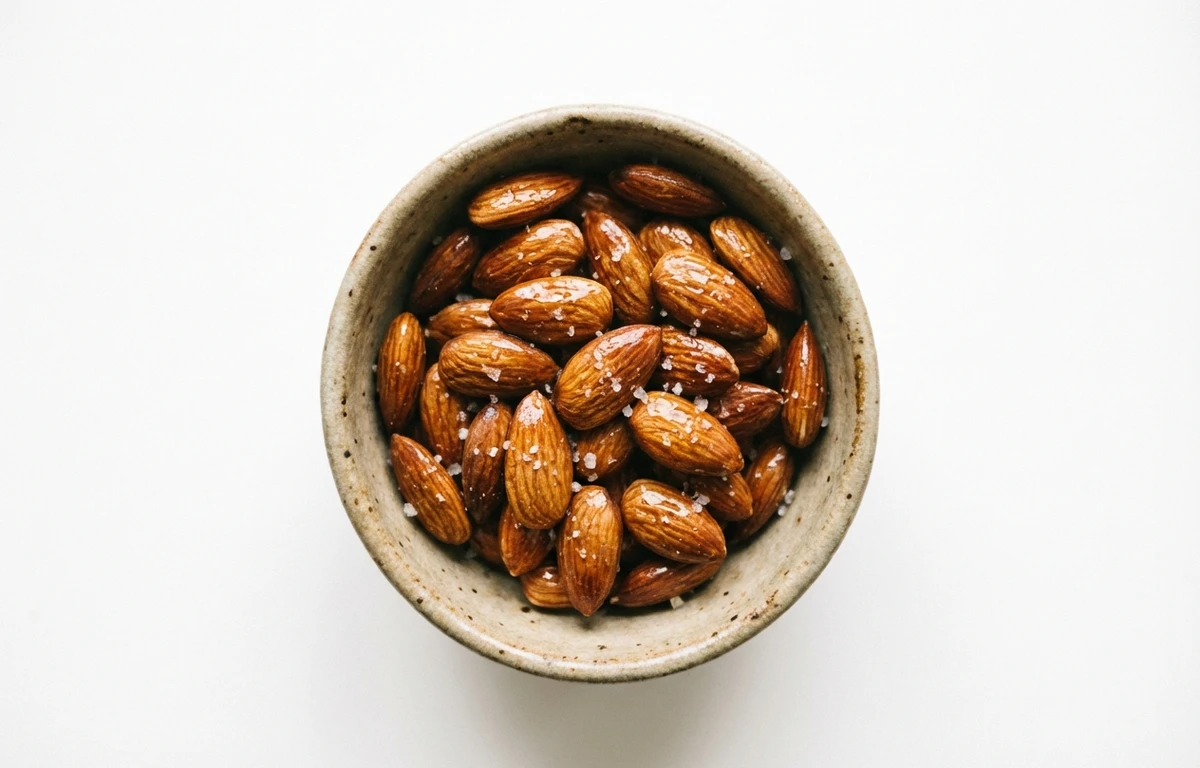
oil roasted salted almonds.
VegetarianVeganGluten-freeDairy-freeNut-freePeanut-freeSoy-freeEgg-freeShellfish-freeHoney-freeAlcohol-free
ALSO KNOWN AS
oil roasted salted badam
SERVING
CALORIES
607
PROTEIN
21g
CARBS
19.8g
FAT
54.1g
FIBER
10.8g
NUTRITION PROFILE · per 100 g
Everything in this ingredient.
MACRONUTRIENTS
Calories607kcal—
Protein21g42%
Carbohydrates19.8g7%
Fiber10.8g39%
Sugar4.8g10%
Total fat54.1g69%
Saturated fat4.2g21%
Trans fat0g—
Cholesterol0mg0%
Water2.1g—
MINERALS
Sodium450mg20%
Potassium705mg15%
Calcium264mg20%
Iron3.7mg21%
Magnesium268mg64%
Phosphorus481mg38%
Zinc3.1mg28%
Copper1.0mg111%
Manganese2.2mg96%
Selenium4.1µg7%
VITAMINS
Vitamin A0µg0%
Vitamin C0mg0%
Vitamin D0µg0%
Vitamin E26.2mg175%
Vitamin K0µg0%
Thiamin (B1)0.20mg17%
Riboflavin (B2)1.1mg85%
Niacin (B3)3.6mg23%
Pantothenic acid (B5)0.50mg10%
Vitamin B60.10mg6%
Folate (B9)50µg13%
Vitamin B120µg0%
%DV based on a 2,000 cal diet. Source: USDA FoodData Central. A dash in the %DV column means there’s no established Daily Value for that nutrient.
MEASUREMENT CONVERSIONS
How much is what.
1 cup150g
1 tablespoon9.6g
1 teaspoon3.2g
1 oz28.4g
1 lb453.6g
1 ml0.7g
1 liter650g
1 piece1.2g
HEALTH BENEFITS
Why eat it.
- ✓High in Vitamin E which acts as a powerful antioxidant
- ✓Rich in monounsaturated fats for heart health
- ✓Good source of magnesium which helps regulate blood pressure
- ✓High fiber and protein content promotes satiety
- ✓Contains manganese for bone health and metabolism
COOKING TIPS
In the kitchen.
- 1Chop and use as a crunchy topping for salads or yogurt
- 2Pulse in a food processor to create a savory nut crust for fish or poultry
- 3Add to homemade trail mixes for a salty-savory element
STORAGE
Keep it fresh.
- Store in an airtight container in a cool, dry place to prevent rancidity
- Refrigerate for up to 6 months to extend freshness
- Keep away from direct sunlight and heat sources
FAQ
Frequently asked questions.
How long do oil roasted salted almonds last?
When stored in an airtight container in a cool, dry pantry, they last 3-4 months. In the refrigerator, they can last up to 6 months.
Can I freeze oil roasted salted almonds?
Yes, they freeze very well. Store them in a freezer-safe bag for up to 1 year to maintain maximum freshness.
What is the difference between dry roasted and oil roasted?
Dry roasted almonds are heated without added fats, while oil roasted almonds are cooked in oil, which slightly increases the calorie and fat content but enhances flavor.
Are these suitable for a keto diet?
Yes, they are excellent for keto as they are high in healthy fats and low in net carbs.
What can I use as a substitute for salted roasted almonds?
Roasted cashews, roasted pecans, or roasted macadamia nuts are the best substitutes for a similar texture and flavor profile.
How can I tell if the almonds have gone bad?
Rancid almonds will have a sharp, sour, or paint-like smell and a bitter, unpleasant taste.
Are oil roasted almonds vegan?
Generally yes, as they are typically roasted in vegetable oils. However, always check the label for any honey or dairy-based seasonings.
Why is the sodium content high?
The sodium is high because salt is added after roasting to enhance flavor. If you are on a low-sodium diet, look for 'unsalted' varieties.
Can I use these to make almond butter?
Yes, you can blend them to make a savory, salted almond butter, though the oil used in roasting will make the butter slightly thinner.
Are they gluten-free?
Naturally, almonds are gluten-free. However, some commercial roasting facilities may process wheat, so check for cross-contamination warnings if you have Celiac disease.



















