
Other
sea crab.
VegetarianVeganGluten-freeDairy-freeNut-freePeanut-freeSoy-freeEgg-freeShellfish-freeHoney-freeAlcohol-freeKosher
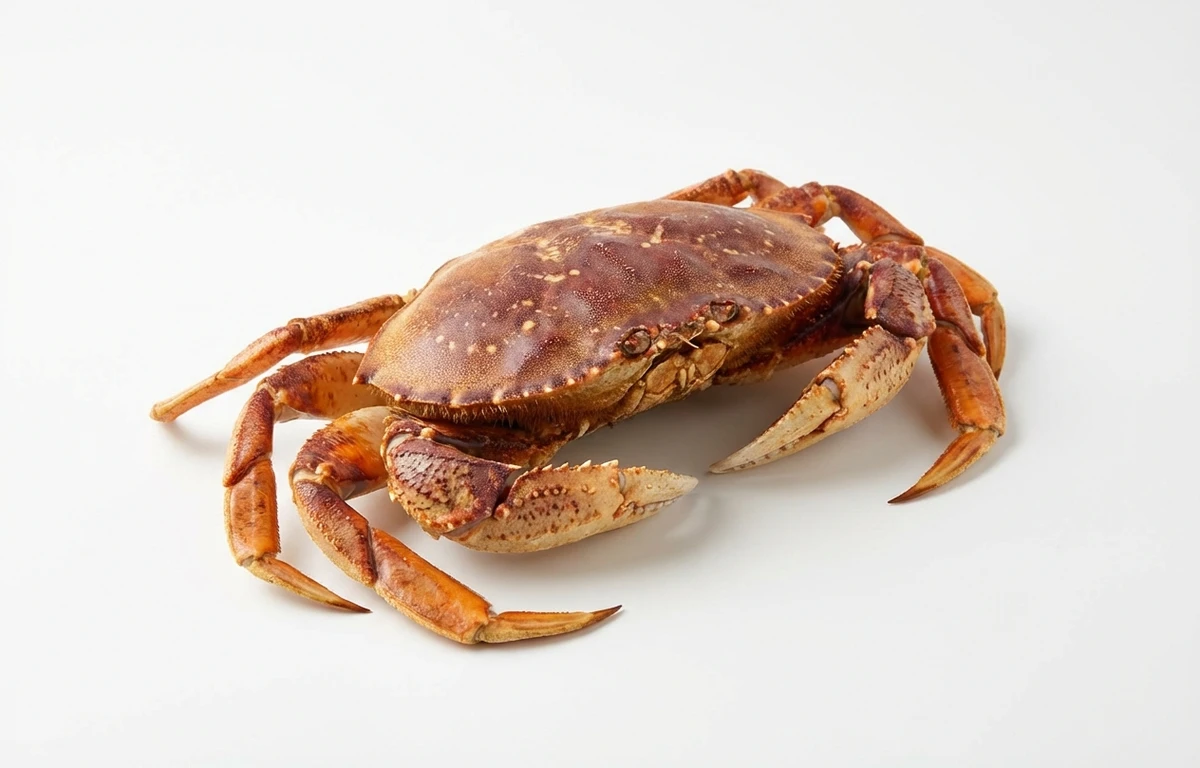
SERVING
CALORIES
68
PROTEIN
15.4g
CARBS
0g
FAT
0.60g
FIBER
0g
This ingredient is flagged as naturally gluten-free. Per 100 g, it provides 1.1 µg of vitamin K.
NUTRITION PROFILE · per 100 g
Everything in this ingredient.
MACRONUTRIENTS
Calories67.6kcal—
Protein15.4g31%
Carbohydrates0g0%
Fiber0g0%
Sugar0g0%
Total fat0.60g1%
Saturated fat0.13g1%
Trans fat0g—
Cholesterol23.2mg8%
Water79.7g—
MINERALS
Sodium313mg14%
Potassium252mg5%
Calcium333mg26%
Iron0.98mg5%
Magnesium80mg19%
Phosphorus193mg15%
Zinc3.1mg28%
Copper0.84mg93%
Manganese0.16mg7%
Selenium37.7µg69%
VITAMINS
Vitamin A5.0µg1%
Vitamin C0mg0%
Vitamin D0.73µg4%
Vitamin E2.1mg14%
Vitamin K1.1µg1%
Thiamin (B1)0.05mg4%
Riboflavin (B2)0.06mg5%
Niacin (B3)0.97mg6%
Pantothenic acid (B5)1.5mg31%
Vitamin B6117mg6882%
Biotin (B7)774µg2580%
Folate (B9)0µg0%
%DV based on a 2,000 cal diet. Source: USDA FoodData Central. A dash in the %DV column means there’s no established Daily Value for that nutrient.
MEASUREMENT CONVERSIONS
How much is what.
1 oz28.4g
1 lb453.6g
1 piece800g
HEALTH BENEFITS
Why eat it.
- ✓Excellent source of high-quality, lean protein, essential for muscle building and repair.
- ✓Provides a significant amount of Vitamin B12, crucial for nerve function and the formation of red blood cells.
COOKING TIPS
In the kitchen.
- 1The most common methods for cooking whole crabs are steaming or boiling. Steam for 15-20 minutes or boil for 10-15 minutes, until the shell turns bright orange-red.
- 2Avoid overcooking crab meat, as it will become tough and rubbery. The meat is done when it is opaque and firm.
- 3The delicate, sweet flavor of crab pairs well with simple ingredients like melted butter, lemon juice, garlic, and fresh herbs such as parsley or dill.
- 4When making crab cakes, use a minimal amount of binder (like breadcrumbs or crushed crackers) to let the flavor and texture of the crab be the main focus.
STORAGE
Keep it fresh.
- Store live crabs in a cool, damp environment (e.g., a cooler with damp newspaper) for up to 24 hours. Do not store them in standing water.
- Refrigerate cooked crab meat in an airtight container and consume within 2-3 days for optimal freshness and safety.
- For longer storage, freeze cooked crab meat in freezer-safe bags or containers for up to 3 months.
FAQ
Frequently asked questions.
How much protein is in sea crab?
Sea crab is a potent protein source, containing approximately 15.36 grams of high-quality protein per 100-gram serving. This makes it an ideal food for muscle repair and maintenance with very little accompanying fat.
Is sea crab keto-friendly?
Yes, sea crab is perfectly keto-friendly as it contains 0g of carbohydrates. While it is naturally low in fat, it is often served with melted butter or oil-based sauces, which helps meet the high-fat requirements of a ketogenic diet.
Is sea crab gluten-free?
Natural, unprocessed sea crab is 100% gluten-free. However, consumers should be careful with 'imitation crab' (surimi) or prepared crab cakes, as these often contain wheat-based starches or breadcrumbs as fillers.
How do you cook sea crab?
The most common methods are steaming or boiling for 10 to 20 minutes depending on the size of the crab. You can also grill or bake them. Once the shell turns a bright orange-red and the meat is opaque, the crab is fully cooked.
What does sea crab taste like?
Sea crab has a delicate, sweet, and slightly salty flavor profile. The texture is firm yet flaky, and it is generally considered to have a 'cleaner' and less 'fishy' taste than many other types of seafood.
How do you know if sea crab is fresh?
Fresh crab should have a mild, briny scent like the ocean; any strong 'fishy' or ammonia-like smell is a sign of spoilage. If buying live, the crab should be active and its legs should move when touched.
How long does cooked sea crab last in the fridge?
Cooked sea crab should be stored in an airtight container and kept in the refrigerator for no more than 3 to 5 days. For longer storage, the meat can be frozen for up to 3 months, though the texture may become slightly more fibrous.



















