
Loading...
Also known as: Bavarian Sweet Mustard, Weisswurstsenf, Bayerischer Süßer Senf
Per 100g
Nutrition data source: USDA FoodData Central
Common measurement equivalents in grams
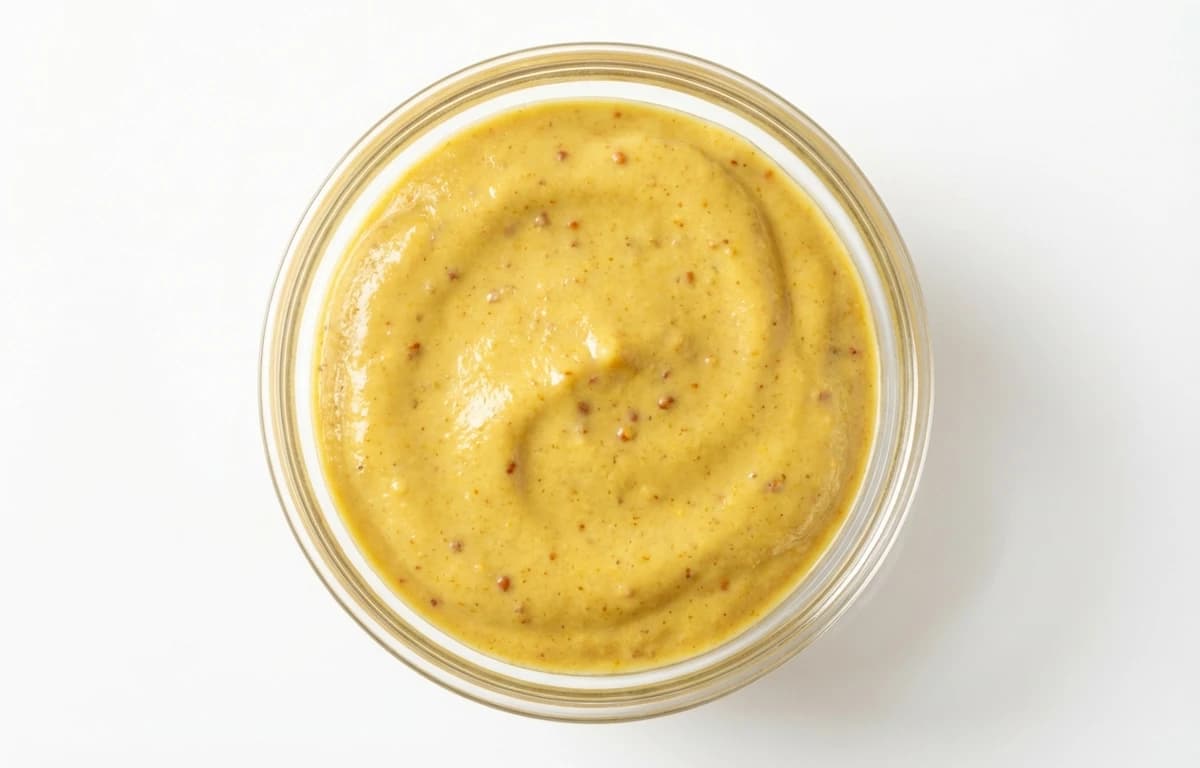
It is made from coarsely ground, partially roasted mustard seeds and sweetened with sugar or honey, giving it a grainy texture and a mild, sweet flavor compared to the sharp heat of yellow or Dijon mustard.
When kept refrigerated, it typically maintains its best quality for 6 to 12 months.
Most traditional brands are naturally gluten-free, but you should always check the label for added thickeners or malt vinegar which may contain gluten.
A mix of whole-grain mustard and honey or brown sugar (in a 2:1 ratio) is the closest alternative.
Freezing is not recommended as it can cause the ingredients to separate and ruin the characteristic grainy texture.
Most commercial brands use sugar and are vegan-friendly, but some artisanal versions use honey, so vegans should check the ingredient list.
It is the essential accompaniment for Bavarian Weisswurst, Leberkäse (meatloaf), and soft pretzels.
Like most condiments, it is relatively high in sodium (approx. 1200mg per 100g), so it should be used in moderation by those on low-sodium diets.
Sweet German Mustard is a versatile ingredient found in cuisines around the world. With 200 calories per 100g and 6 grams of protein, it's a nutritious addition to many dishes.
Explore more ingredients in the condiment category with complete nutrition information.
View all condiment →Discover 1 recipes featuring sweet german mustard with step-by-step instructions.
Browse recipes →Explore more ingredients similar to Sweet German Mustard.
The most-searched ingredients on CraftMyMeals.