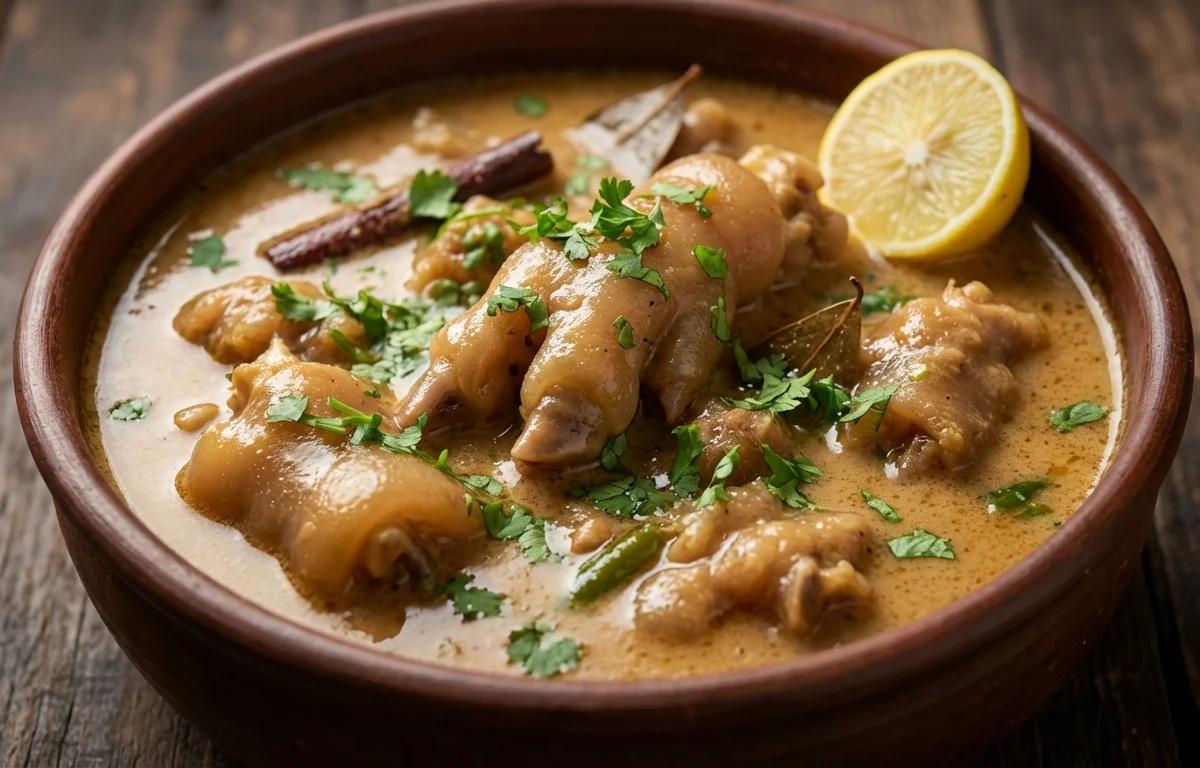
Aattukal Paya
A slow-cooked South Indian mutton trotters soup with a rich, silky broth and gentle spice. The marrow, onions, coconut, and whole spices give it deep flavor, making it perfect with idiyappam, dosa, or parotta.
For 4 servings
- prep · ~15 min
Clean the trotters and prep the aromatics.
1.Rinse the mutton trotters several times under running water.2.Scrape and clean them well if needed, then drain fully.3.Slice the onion, chop the tomato, chop the ginger, peel the garlic, and slit the green chili.TIPWell-cleaned trotters give a cleaner broth and better flavor. - roast · ~5 min
Roast the coconut and whole spices.
1.Heat a small pan over low heat.2.Add the grated coconut, fennel seeds, cumin seeds, and black peppercorns.3.Roast gently until the coconut turns light golden and smells nutty.4.Cool slightly.TIPKeep the heat low so the coconut browns evenly and does not taste bitter. - mix · ~3 min
Grind the roasted mixture.
Blend the roasted coconut mixture with a little water to a smooth paste and keep it aside.
- saute · ~10 min
Cook the onion base.
1.Heat oil in a pressure cooker over medium heat.2.Add cinnamon, cloves, green cardamom, and bay leaf.3.Add the sliced onion and sauté until soft and lightly golden.4.Add ginger, garlic, and green chili and cook until fragrant. - saute · ~7 min
Add the tomato and spice powders.
1.Add the chopped tomato and cook until it softens.2.Add turmeric powder, red chili powder, coriander powder, and salt.3.Mix well and cook until the masala looks glossy. - pressure cook · ~55 min
Pressure cook the trotters.
Add the cleaned mutton trotters, ground coconut paste, and water. Mix well, cover, and pressure cook on medium heat for 45-50 minutes until the trotters are very tender and the broth turns rich.
TIPTrotters need long cooking to release gelatin and soften fully. - simmer · ~12 min
Simmer the paya to finish.
Open the cooker after the pressure drops. Simmer the paya uncovered for 10-12 minutes to bring the broth together and adjust with a little more water if it looks too thick.
- garnish · ~1 min
Finish with coriander leaves and lemon juice.
Stir in the chopped coriander leaves and lemon juice just before serving for a fresh lift.
- serve
Serve the paya hot.
Ladle into katoris and serve hot with idiyappam, dosa, appam, or parotta.
What to keep in mind.
6 tips from the recipe — small details that make a real difference to the final dish.
- 1If the cleaned trotters still smell strong, blanch them briefly, drain, and then start the masala for a cleaner broth.
- 2Roast the coconut only to light golden; dark coconut can make the paya taste bitter and muddy the color.
- 3After pressure cooking, the trotters should feel jelly-soft around the joints; if not, cook a little longer before simmering.
- 4Simmer uncovered at the end so the broth turns silky and the fat rises slightly, which is the right paya texture.
- 5Add lemon juice only after switching off the heat to keep its fresh sharpness bright in the rich broth.
- 6Paya tastes even better the next day; chill it, skim any set fat if you like, then reheat gently with a splash of water.
Adapt it for your goals.
Extra-peppery
Increase black peppercorns and finish with freshly crushed pepper for a hotter, more traditional pepper-forward paya.
no coconutNo-coconut
Skip the coconut for a lighter, clearer broth that highlights the gelatin-rich trotters and whole spices.
stovetop slow cookedStovetop-slow-cooked
Cook covered on low heat instead of pressure cooking for a more gradual extraction of marrow and collagen if you prefer old-style paya.
Why this is on our healthy list.
Collagen-Rich Broth
Goat trotters release gelatin during long cooking, giving the soup a naturally rich body associated with collagen-heavy cuts.
Aromatic Digestive Spices
Ginger, garlic, cumin, fennel, and pepper bring warmth and robust flavor while keeping the dish spice-led rather than cream-heavy.
Whole-Food Fats and Flavor
Fresh coconut adds richness and texture, helping the broth feel satisfying without relying on dairy.
Frequently asked questions
They should be very tender, with the skin and connective tissue feeling soft and gelatinous, and the broth should look rich and slightly sticky.