Awadhi Subz Biryani
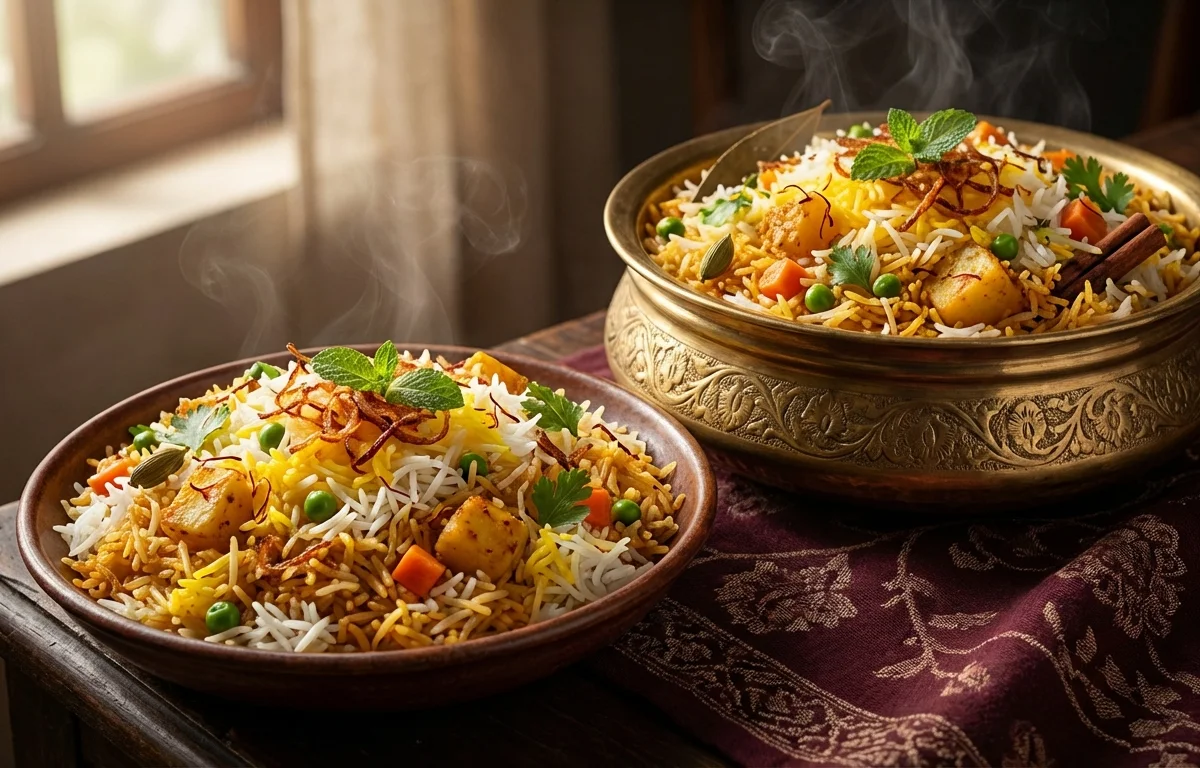
Fragrant, long-grain basmati rice layered with spiced mixed vegetables and cooked on dum. This Lucknow-style vegetable biryani is subtly aromatic, slow-steamed to bring out delicate flavors of saffron, rose water, and whole spices—a regal vegetarian centerpiece from the royal kitchens of Awadh.
For 4 servings
- prep
Soak the rice and prep the vegetables.
1.Wash basmati rice in 3-4 changes of water until water runs clear.2.Soak rice in enough water to cover for 30 minutes, then drain.3.Peel and cube the potatoes. Dice carrots, bell pepper, and cauliflower into even pieces.4.Slice onions thinly. Chop tomatoes, mint, and coriander leaves. - boil · ~6 min
Parboil the rice.
1.Bring 4 cups of water to a rolling boil in a large saucepan.2.Add 1 pinch salt, bay leaf, green cardamom, cloves, and cinnamon stick.3.Add drained rice and cook until 70% done—grains should still have a slight bite (5-6 minutes).4.Drain immediately and spread on a plate to cool.TIPDon't cook the rice fully now—it will finish cooking during dum. Slightly underdone is perfect. - fry · ~12 min
Fry the onions until golden.
1.Heat oil in a pan over medium heat.2.Add sliced onions and fry until deep golden brown and crisp (10-12 minutes), stirring often.3.Remove half the fried onions and set aside for layering.TIPStir constantly during the last few minutes to prevent burning. Crisp onions are key to the texture. - saute · ~15 min
Build the vegetable gravy.
1.To the remaining fried onions in the pan, add ginger paste and garlic paste. Sauté until raw smell disappears (1 minute).2.Add slit green chilies, turmeric powder, red chili powder, and coriander powder. Stir for 30 seconds.3.Add chopped tomatoes and cook until soft and oil separates (3-4 minutes).4.Add cubed potatoes, carrots, cauliflower, peas, and bell pepper. Mix well.5.Whisk yogurt and pour over vegetables. Add 0.25 cup water and 1 pinch salt. Stir gently.6.Cover and cook on low heat until vegetables are just tender (8-10 minutes). Turn off heat. - prep · ~10 min
Prepare the saffron milk and aromatic waters.
1.Warm 2 tablespoons milk gently (do not boil).2.Add saffron strands and let steep for 10 minutes until deep golden.3.Keep rose water and kewra water measured and ready. - assemble
Layer the biryani for dum.
1.Smear 1 tablespoon ghee on the bottom of a heavy-bottomed pot.2.Spread half the vegetable gravy as the first layer.3.Top with half the parboiled rice. Sprinkle half the reserved fried onions, half the chopped mint, and half the coriander leaves.4.Drizzle half the saffron milk, 0.5 teaspoon rose water, and 0.5 teaspoon kewra water.5.Repeat with remaining gravy, rice, fried onions, herbs, saffron milk, rose water, and kewra water.6.Sprinkle garam masala on top. Dot with remaining 1 tablespoon ghee.TIPWork gently—don't press or compact the rice. Fluffy grains need air pockets. - steam · ~30 min
Seal and cook on dum.
1.Mix wheat flour with a little water to form a stiff dough. Roll into a long rope.2.Press the dough rope around the lid edge to seal the pot airtight.3.Place the pot on a tawa or griddle over the lowest possible flame.4.Cook undisturbed for 25-30 minutes. You'll smell the aroma when it's ready.TIPNever open the lid during dum—steam is what cooks the rice to fluffy perfection. Trust the fragrance. - rest · ~5 min
Rest the biryani.
Turn off the heat. Let the sealed pot rest for 5 minutes—this allows the flavors to settle and the steam to redistribute evenly through the rice.
TIPRushing this rest can make the rice sticky when you open the pot. - serve
Open and serve the biryani.
1.Break the dough seal gently with a knife.2.Open the lid away from your face—hot steam will escape.3.Use a flat spatula to fluff the biryani, gently mixing layers from bottom to top.4.Spoon into bowls, making sure each serving gets vegetables and rice from every layer.
What to keep in mind.
7 tips from the recipe — small details that make a real difference to the final dish.
- 1Soak basmati rice for exactly 30 minutes to ensure each grain stays separate and elongates properly during cooking.
- 2Parboil the rice to 70% doneness—the grain should snap when bent but have a white, uncooked core.
- 3Fry the onions until deep golden brown, not just light gold, for that signature Awadhi sweetness and texture.
- 4Use a heavy-bottomed pot or Dutch oven for dum to distribute heat evenly and prevent burning at the bottom.
- 5Never lift the lid during the 25-minute dum cooking—the trapped steam is essential for fluffy, fully cooked rice.
- 6Let the biryani rest for 5 minutes after dum before opening to allow steam to settle and layers to firm up.
- 7Gently fluff the biryani with a wide spatula from bottom to top just before serving to mix layers without breaking grains.
Adapt it for your goals.
High-protein
Add 1 cup of paneer cubes (lightly fried in ghee) or 1 cup of boiled chickpeas to the vegetable gravy for a protein boost that still honors the Awadhi flavor profile.
low oilLow-oil
Reduce ghee to 1 tablespoon and use a non-stick pan for the vegetable gravy; skip the oil for frying onions and instead roast them in a dry pan until caramelized for a lighter version.
veganVegan
Replace yogurt with 1/4 cup of cashew cream (soaked cashews blended with water) and use coconut oil or vegan butter instead of ghee. Skip the milk for saffron and use 2 tablespoons of hot water.
jainJain
Omit potatoes, onions, and garlic. Use asafoetida (hing) in the tadka for umami, and replace onion garnish with toasted cashews. The gravy can be made with pumpkin, plantain, and paneer (if permitted).
Why this is on our healthy list.
Rich in Dietary Fiber
The mix of vegetables—carrots, peas, cauliflower, and bell peppers—provides a hearty dose of fiber that supports digestion and helps maintain steady energy levels.
Antioxidant-Rich Spices
Turmeric, saffron, and whole spices like cinnamon and cloves contain active compounds that have anti-inflammatory and antioxidant properties, contributing to overall wellness.
Supports Hydration
The vegetable gravy is cooked with yogurt and a small amount of water, creating a moist dish that contributes to daily fluid intake and helps keep the body hydrated.
Low in Saturated Fat
When made with a balance of ghee and oil, this biryani contains modest amounts of saturated fat, and most of the fat comes from heart-friendly oils used in the vegetable preparation.
Frequently asked questions
Basmati is essential for authentic Awadhi biryani because of its fragrance and ability to stay separate. Regular long-grain rice will become sticky and won't absorb the aromatics properly.