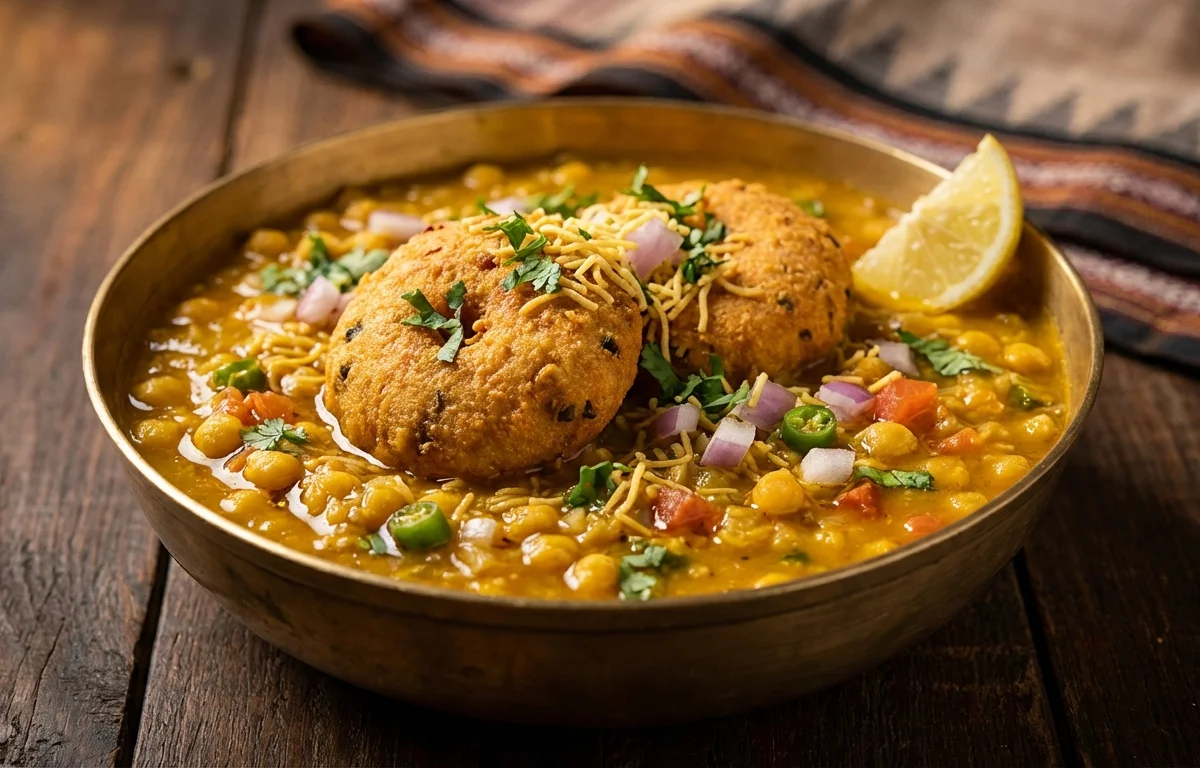
Bara Ghuguni
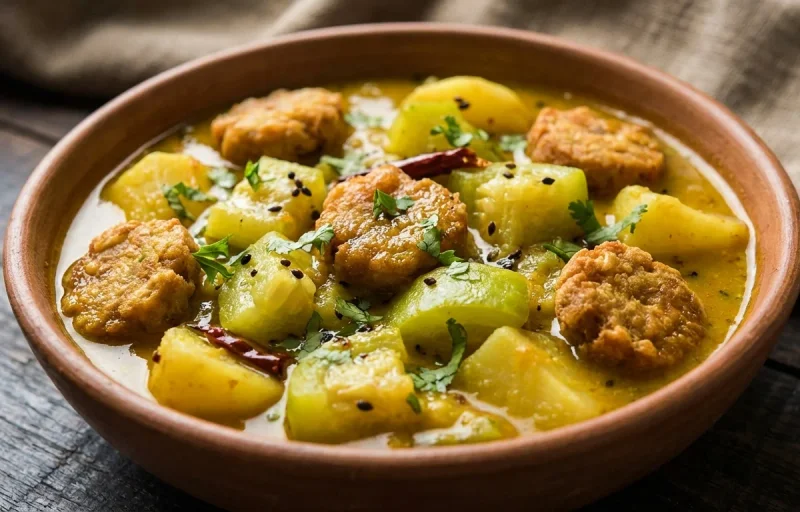
A beloved Odisha street food with soft urad dal bara soaked in hot yellow peas ghuguni. The contrast of fluffy fritters, lightly spiced gravy, onion, and fresh herbs makes every bite comforting and lively.
For 4 servings
- prep · ~480 min
Soak the white peas and urad dal.
Rinse the white peas and urad dal well in separate bowls. Soak both overnight in plenty of water, then drain before cooking.
- pressure cook · ~25 min
Cook the white peas until tender.
1.Add soaked white peas to a pressure cooker with 3 cups water and 0.25 tsp salt.2.Cook on medium heat until the peas are soft but still holding shape, about 4 to 5 whistles.3.Let the pressure release naturally and lightly mash a few peas for body.TIPDo not overcook the peas into a paste; ghuguni tastes best with a mix of whole and lightly broken peas. - mix · ~7 min
Grind the batter for the bara.
1.Add the drained urad dal to a grinder with 1 green chili and very little water.2.Grind to a thick, smooth batter.3.Mix in 1 pinch turmeric powder, 1 pinch asafoetida, 1 pinch baking soda, and 1 pinch salt.4.Beat the batter for 2 to 3 minutes until light and airy.TIPKeep the batter thick so the bara hold shape and puff nicely in the oil. - fry · ~15 min
Fry the bara.
1.Heat oil for frying in a kadai over medium heat.2.Drop small portions of batter into the hot oil.3.Fry until golden and cooked through, turning as needed, about 4 to 5 minutes per batch.4.Remove and drain the bara.TIPUse medium heat throughout; high heat browns the outside too fast and leaves the center heavy. - saute · ~12 min
Build the ghuguni base.
1.Heat 2 tbsp oil in a pan.2.Add cumin seeds and bay leaf and let them sizzle for a few seconds.3.Add chopped onion and cook until lightly golden, 5 to 6 minutes.4.Add ginger, garlic, and 1 chopped green chili and cook for 1 minute.5.Add tomato and cook until soft and pulpy, 4 to 5 minutes. - simmer · ~13 min
Cook the ghuguni.
1.Add red chili powder, coriander powder, cumin powder, remaining turmeric powder, and the remaining salt.2.Mix well and cook the spices for 30 seconds.3.Add the cooked white peas with their cooking liquid and 1 cup water.4.Simmer for 10 to 12 minutes until the gravy is lightly thick and flavorful.5.Finish with garam masala and lemon juice.TIPGhuguni should be spoonable, not watery. Simmer a little longer if it looks thin. - assemble · ~3 min
Assemble the bara ghuguni.
1.Place 2 to 3 bara in each serving bowl.2.Ladle hot ghuguni over the bara so they soften slightly.3.Top with the remaining chopped onion, green chili, and coriander leaves. - serve
Serve immediately.
What to keep in mind.
7 tips from the recipe — small details that make a real difference to the final dish.
- 1Beat the urad batter until it looks lighter and slightly fluffy; that aeration is what gives bara a soft center.
- 2Use very little water while grinding the dal, or the batter will spread in oil instead of puffing.
- 3Fry one test bara first; if it turns dense, beat the batter again before frying the rest.
- 4Mash only a small portion of the cooked white peas so the ghuguni stays textured, not pasty.
- 5Pour the ghuguni over bara just before serving so they soften slightly without turning soggy.
- 6Keep the ghuguni a little looser in the pan than you want in the bowl, because the bara will absorb some gravy.
- 7If making ahead, store bara and ghuguni separately and reheat the ghuguni well before assembly.
Adapt it for your goals.
No-garlic
Skip the garlic and rely on ginger, asafoetida, cumin, and onion for a lighter, satvik-style flavor profile.
extra spicyExtra-spicy
Add more chopped green chili to the garnish and a little extra red chili powder in the ghuguni for a sharper street-food kick.
low oilLow-oil
Make smaller bara and shallow-fry or appe-pan cook them; the texture is a bit different but still good with the ghuguni.
matar ghuguniMatar-ghuguni
Use yellow peas instead of white peas for a more common street-style ghuguni variation with a slightly earthier taste.
Why this is on our healthy list.
Legume-Rich Meal
Both white peas and urad dal make this dish hearty and naturally rich in plant-based protein and fiber.
Fiber From Peas and Aromatics
White peas, onion, tomato, and fresh coriander help make the dish more filling and supportive of digestion.
Spice-Forward Flavor
Ginger, garlic, cumin, coriander, and chili bring strong flavor, so the ghuguni tastes satisfying without needing heavy cream or rich sauces.
Frequently asked questions
Yes. Yellow peas work well and are often used for ghuguni; the taste will be slightly earthier but the method stays almost the same.