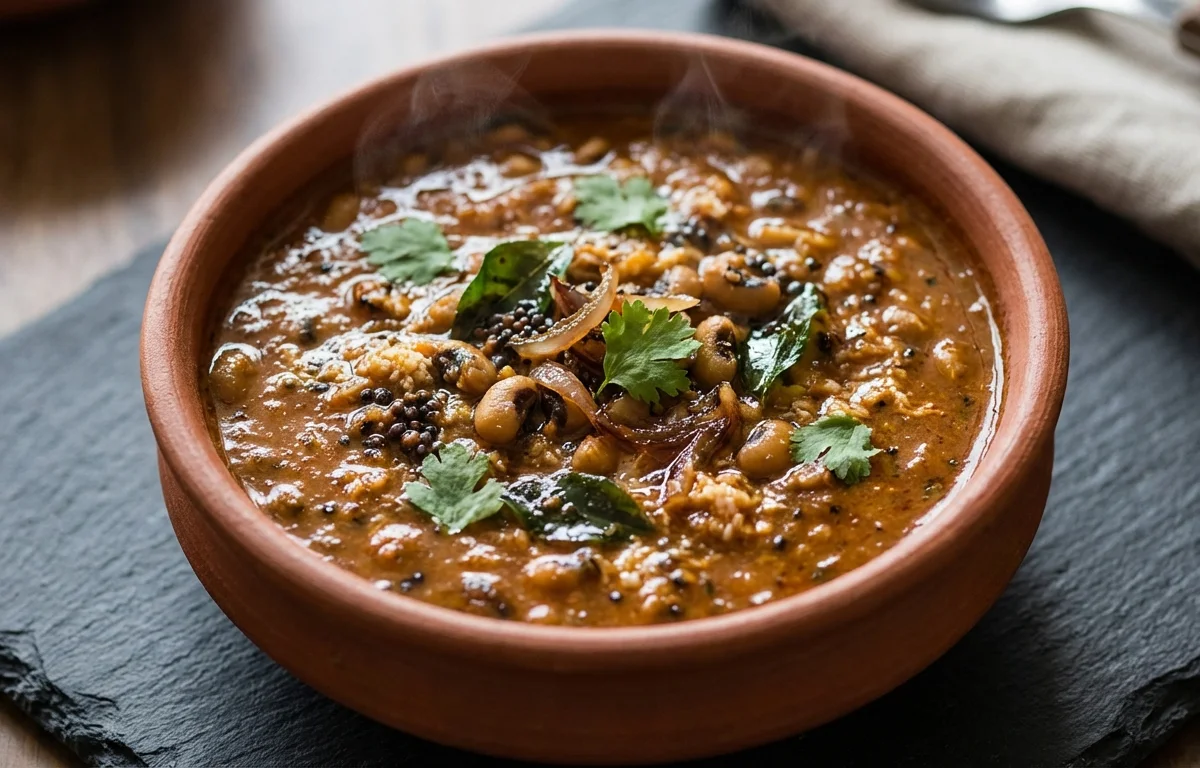
Chawli Ambat
A homestyle coastal curry made with chawli and fresh coconut, gently spiced and finished with a light tang. It is comforting, earthy, and perfect with plain rice as part of a simple Indian meal.
For 4 servings
- prep · ~480 min
Soak the chawli.
Rinse the chawli well and soak it in enough water overnight or for at least 8 hours. Drain before cooking.
- boil · ~30 min
Cook the chawli until tender.
Add the soaked chawli to a pot with 2 cups water and cook until soft but not mushy, about 25 to 30 minutes. Keep the cooking liquid aside.
TIPThe beans should hold their shape. Overcooked chawli can make the curry pasty. - mix · ~3 min
Grind the coconut masala.
1.Add grated coconut, coriander seeds, cumin seeds, garlic, red chili powder, turmeric powder, tamarind paste, and 1 cup water to a grinder.2.Grind to a smooth, pourable paste.3.Scrape down the sides once or twice so the masala turns even and creamy. - simmer · ~10 min
Simmer the chawli with the ground masala.
Pour the ground masala into the cooked chawli along with the reserved cooking liquid and salt. Bring to a gentle simmer and cook for 8 to 10 minutes, stirring now and then, until the curry smells fragrant and lightly thickens.
TIPKeep the heat medium-low once the coconut masala is added so it does not split or catch at the bottom. - temper · ~5 min
Make the tempering.
1.Heat oil in a small pan over medium heat.2.Add mustard seeds and let them splutter.3.Add curry leaves and chopped onion.4.Cook the onion until soft and lightly golden, about 4 to 5 minutes. - assemble · ~1 min
Add the tempering to the ambat.
Pour the hot tempering over the simmering chawli curry and mix well. Let it bubble for 1 more minute so the flavors come together.
- serve
Serve hot with plain rice.
What to keep in mind.
7 tips from the recipe — small details that make a real difference to the final dish.
- 1Cook the soaked chawli just until tender; split or mushy beans will make the ambat heavy instead of pleasantly earthy.
- 2Reserve the chawli cooking liquid and use it in the curry for deeper bean flavor and a more natural body.
- 3Grind the coconut masala very smooth so the curry turns creamy rather than grainy.
- 4Once the coconut paste goes in, keep the heat low and stir occasionally to prevent sticking and oil separation.
- 5Add tamarind gradually if your paste is very sharp; the finish should be lightly tangy, not sour.
- 6Let the curry rest for 10 minutes after tempering so the onion, curry leaves, and mustard flavor settles into the ambat.
- 7This tastes even better the next day; reheat gently with a splash of water so the coconut base loosens without splitting.
Adapt it for your goals.
No-onion
Skip the onion in the tempering for a simpler, lighter version that still keeps the coconut, tamarind, and curry leaf character.
spicierSpicier
Increase the red chili powder slightly or add a dried red chili to the tempering if you want a warmer, more robust Goan-style heat.
thinner curryThinner-curry
Add a little extra hot water for a more pourable ambat that pairs especially well with steamed rice.
pressure cookerPressure-cooker
Cook the soaked chawli in a pressure cooker to save time while still keeping the rest of the recipe and flavor profile the same.
Why this is on our healthy list.
Bean-Based Protein and Fiber
Chawli provides plant protein and fiber, making this curry filling and well suited for a simple rice-and-curry meal.
Naturally Plant-Based
The dish relies on black-eyed peas, coconut, spices, and a simple tempering, making it a wholesome vegan curry option.
Digestive Spice Support
Cumin, coriander, garlic, and curry leaves add flavor while also being traditional ingredients often used to make bean dishes feel lighter.
Frequently asked questions
Yes. Use cooked canned black-eyed peas, rinse them well, and simmer them briefly with the ground masala since they are already tender.