Dhaagey Wara Teewan
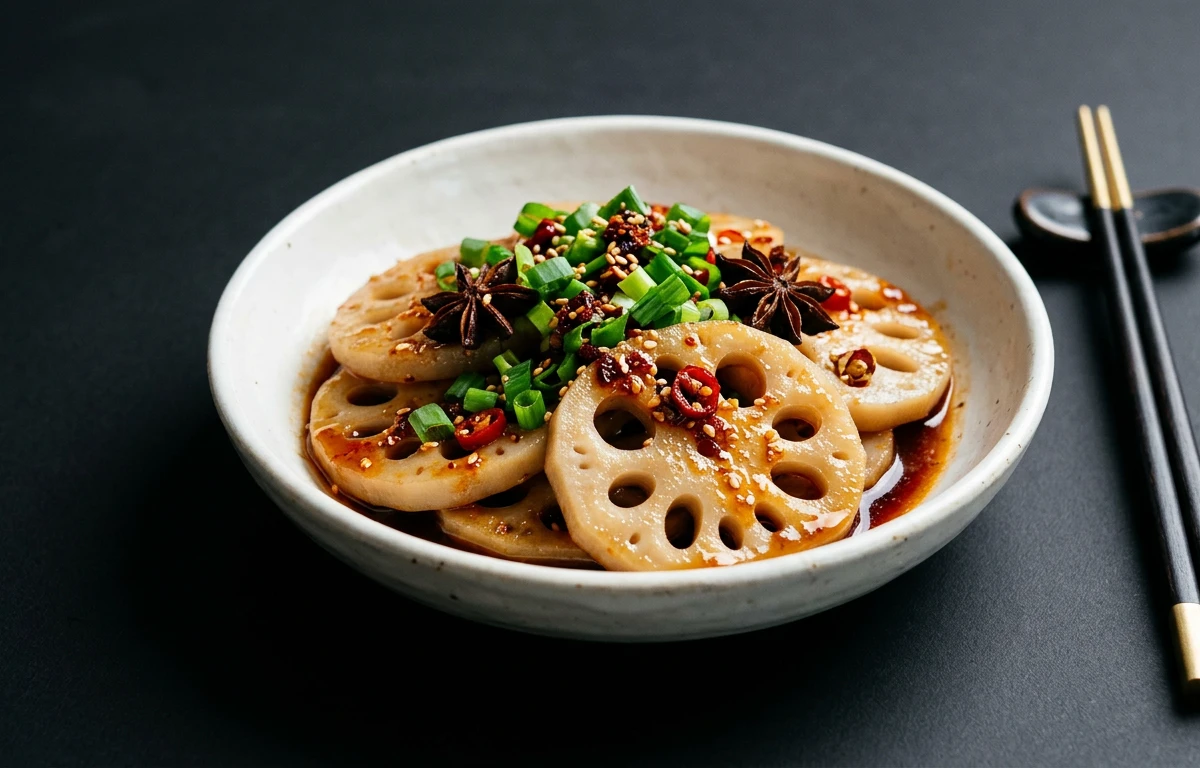
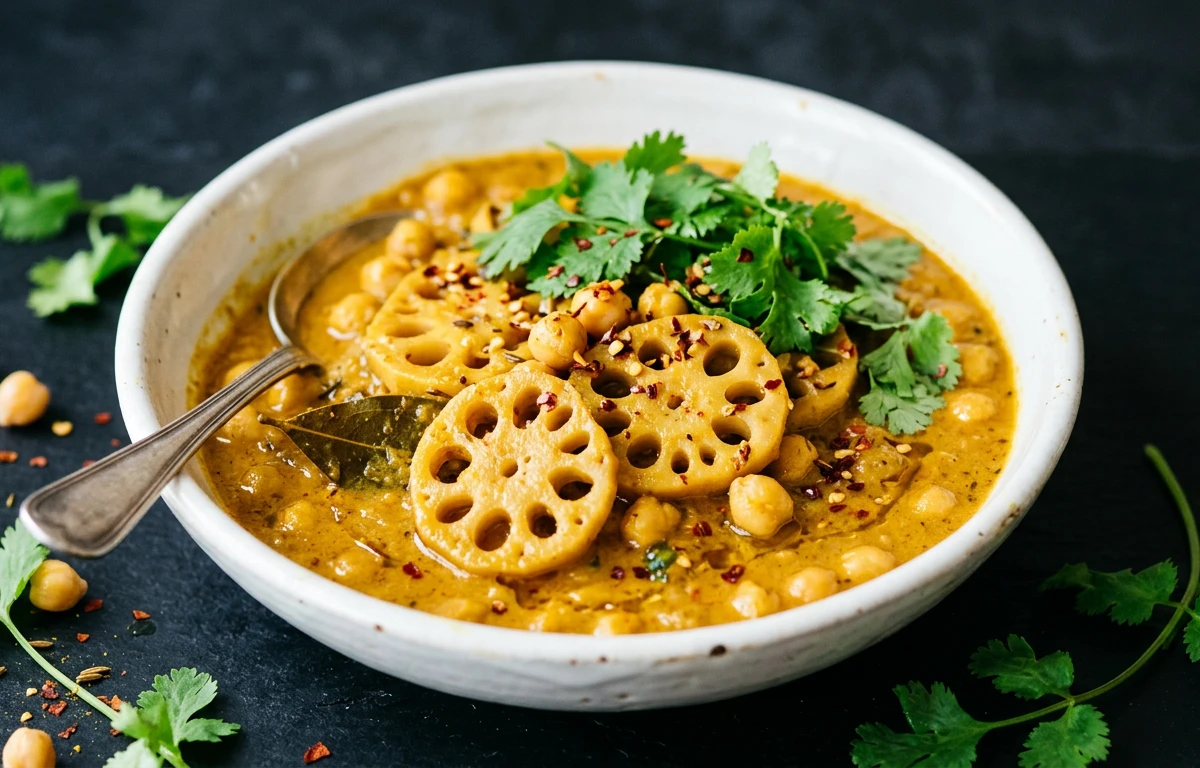
Tender lotus stem discs simmered in a creamy, spice-infused yogurt gravy. A traditional Kashmiri Pandit dish where the lotus stems release delicate threads (dhaagey) when pulled apart, giving the curry its poetic name. Fragrant with fennel, ginger, and a whisper of asafoetida.
For 4 servings
- prep · ~15 min
Prepare the lotus stems.
1.Peel the lotus stems and slice into thin, even rounds about half an inch thick.2.Wash the slices thoroughly under running water to remove any mud.3.Place slices in a pressure cooker with half a cup of water and a pinch of salt.4.Pressure cook for 2 whistles, then let the pressure release naturally.TIPLook for lotus stems that feel firm and heavy for their size — soft stems turn mushy when cooked. - mix · ~2 min
Whisk the yogurt until completely smooth.
Whisk the yogurt vigorously until it becomes silky and lump-free. Gradually stir in the remaining 1 cup of water to thin it slightly.
- temper · ~3 min
Make the tempering.
1.Heat ghee in a heavy-bottomed pan over medium heat until shimmering.2.Add cumin seeds and let them splutter for 30 seconds.3.Sprinkle in asafoetida, then immediately add ginger powder and fennel powder.4.Drop in green cardamom, black peppercorns, and cloves. Sauté until fragrant, about 1 minute.TIPKeep the heat at medium — high heat burns the ground spices and makes the dish bitter. - simmer · ~20 min
Cook the spiced yogurt base.
1.Pour the whisked yogurt-water mixture into the pan with the tempering.2.Stir continuously in one direction and bring to a gentle simmer.3.Add salt and the boiled lotus stem slices.4.Simmer on low heat, stirring often, until the gravy thickens and coats the lotus stems, about 15 to 20 minutes.TIPStir gently and always in the same direction — this prevents the yogurt from curdling in the gravy. - rest · ~5 min
Rest the curry for 5 minutes.
Take the pan off the heat and let the curry rest for 5 minutes. The flavors deepen and the lotus stems absorb more spice from the gravy.
- garnish
Garnish with fresh coriander leaves and serve hot.
Transfer the Dhaagey Wara Teewan to a serving bowl. Scatter chopped coriander leaves on top. Serve hot with steamed rice.
What to keep in mind.
6 tips from the recipe — small details that make a real difference to the final dish.
- 1Look for lotus stems that feel firm and heavy — soft or spongy stems turn mushy when pressure-cooked.
- 2Stir the yogurt gravy continuously in one direction while simmering to prevent curdling and ensure a silky texture.
- 3Let the pressure release naturally after cooking lotus stems; a quick release can cause them to split and lose their shape.
- 4Rest the finished curry for 5 minutes off the heat so the lotus stems absorb the spiced yogurt gravy more deeply.
- 5Use full-fat, thick yogurt for the best creamy body — low-fat yogurt can split and produce a watery gravy.
- 6If the gravy looks too thin after simmering, continue cooking on low heat until it coats the back of a spoon — do not add a slurry.
Adapt it for your goals.
Vegan
Replace yogurt with a thick vegan curd (coconut or cashew-based) and use plant-based butter or oil instead of ghee. The gravy will be slightly less tangy but still creamy and aromatic.
low oilLow-oil
Reduce ghee to 1 tablespoon and dry-roast the whole spices (cumin, cardamom, cloves, peppercorns) before grinding, then add them directly to the yogurt base instead of tempering. This cuts fat while keeping the spice character.
nutty teewanNutty teewan
Add 2 tablespoons of almond paste or cashew paste along with the yogurt for a richer, nuttier gravy that pairs beautifully with the lotus stems.
Why this is on our healthy list.
Rich in Dietary Fiber
Lotus stems provide a good amount of fiber, which aids digestion and promotes a feeling of fullness.
Probiotic from Yogurt
The yogurt base supplies live cultures that support gut health and improve nutrient absorption.
Low in Calories
This dish is naturally low in calories and uses minimal oil (ghee), making it a light yet satisfying main course.
Frequently asked questions
Yes, but thaw them completely and reduce the pressure-cooking time to just one whistle, as frozen stems are more tender and can turn mushy.