
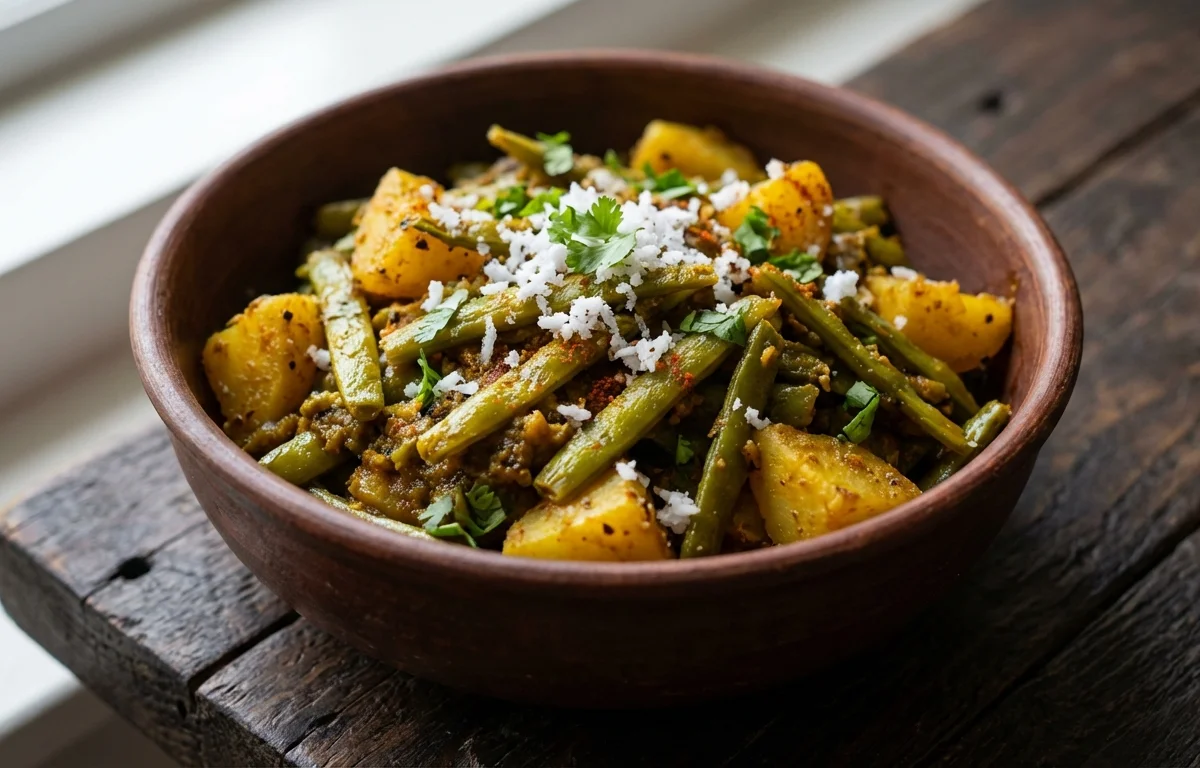
Gawar Patata Sabzi
A homestyle Gujarati sabzi made with cluster beans and potatoes, gently spiced and cooked until tender. It has an earthy, slightly sweet-bitter flavor that goes beautifully with roti, dal, and plain rice.
For 4 servings
- prep · ~15 min
Prepare the gawar and potatoes.
1.Trim both ends of the gawar and pull away any tough strings.2.Chop the gawar into small even pieces so it cooks evenly.3.Peel the potato and dice it into small cubes. - temper · ~1 min
Make the tempering.
1.Heat oil in a kadai over medium heat.2.Add mustard seeds and let them splutter.3.Add cumin seeds and asafoetida and cook for a few seconds until fragrant.TIPKeep the heat medium so the seeds crackle without burning. - saute · ~3 min
Cook the vegetables with the spices.
1.Add the potato and gawar to the pan and mix well.2.Add turmeric powder, red chili powder, coriander powder, and salt.3.Stir for 2 to 3 minutes so the vegetables are coated well in the masala. - simmer · ~20 min
Cover and cook until tender.
Add water and mix once. Cover the pan and cook on low heat until the gawar and potatoes are tender, stirring once or twice so nothing sticks to the bottom.
TIPIf the sabzi looks dry before the vegetables soften, sprinkle in a little more water. - saute · ~3 min
Finish the sabzi.
Remove the lid and add jaggery and lemon juice. Cook uncovered for 2 to 3 minutes until the moisture dries up and the sabzi turns lightly coated and semi-dry.
- garnish
Garnish with cilantro.
- serve
Serve hot with roti or dal rice.
What to keep in mind.
7 tips from the recipe — small details that make a real difference to the final dish.
- 1String the gawar well before chopping; any tough fibers will stay chewy even after simmering.
- 2Cut the potatoes slightly smaller than the gawar so both vegetables finish cooking at the same time.
- 3After adding the dry spices, stir for a couple of minutes to coat the vegetables before adding water; this deepens the masala flavor.
- 4Cook covered on low heat, not high, so the gawar softens without the potatoes breaking apart.
- 5Add the jaggery and lemon only at the end to keep the sweet-tangy balance bright and prevent the potatoes from turning mushy.
- 6For the right Gujarati-style texture, let the final moisture dry until the sabzi looks semi-dry and lightly clings to the vegetables.
- 7This sabzi tastes even better after 15 to 20 minutes of resting, when the gawar absorbs the sweet, spicy, and tangy seasoning.
Adapt it for your goals.
Low-oil
Use less oil and a splash more water while cooking; it keeps the sabzi lighter but still soft and nicely coated.
spicierSpicier
Increase red chili powder or add chopped green chilies in the tempering for a sharper heat that suits roti meals well.
no onion no garlic fasting styleNo-onion-no-garlic fasting-style
This recipe is already onion- and garlic-free, making it a simple satvik-style sabzi for everyday meals.
peanutty gujaratiPeanutty-gujarati
Add a spoonful of coarse roasted peanut powder near the end for nuttiness and a slightly richer, more textured finish.
Why this is on our healthy list.
Fiber-Rich Vegetables
Cluster beans and potatoes provide satisfying bulk and fiber, making this sabzi filling and well suited to a simple home-style meal.
Plant-Based Everyday Dish
Made entirely from vegetables, spices, and oil, this sabzi fits easily into vegetarian meals with roti, dal, or rice.
Digestive Spice Support
Cumin, asafoetida, and coriander are traditional spices often used in Gujarati cooking to add flavor and make bean-based dishes feel easier to digest.
Frequently asked questions
Cluster beans need proper trimming and string removal first. Chop them small and cook covered on low heat with enough moisture until fully tender.



.webp)
.webp)
.webp)