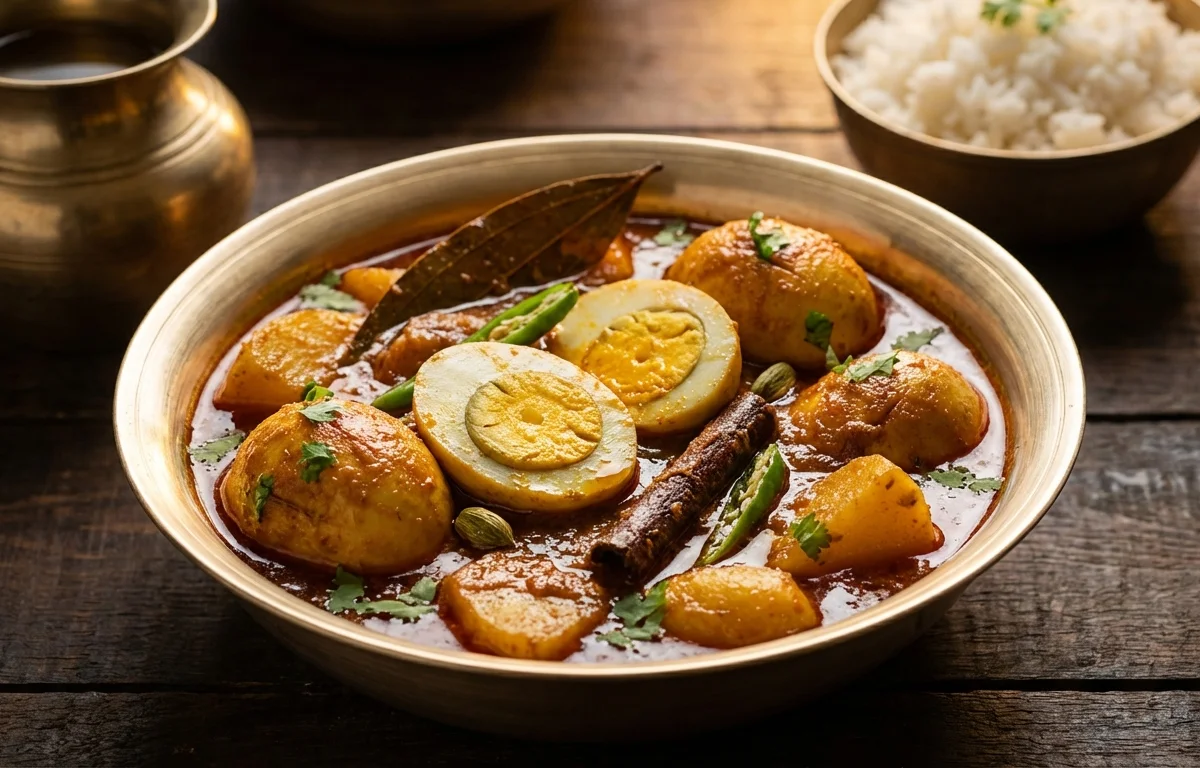
Hanser Dimer Kosha
Rich, slow-cooked duck eggs in a deeply spiced onion-tomato gravy. This bold Bengali delicacy layers whole boiled duck eggs with a dark, caramelized masala paste and warm garam masala for a rustic, intensely flavorful curry.
For 4 servings
- prep
Boil and peel the duck eggs.
Boil the duck eggs until hard, about 10-12 minutes. Cool, peel them carefully, and prick lightly with a fork.
- fry · ~5 min
Fry the boiled eggs until golden.
1.Heat 2 tbsp mustard oil in a pan until it smokes lightly.2.Reduce heat to medium, add the boiled eggs, and fry until golden brown, turning occasionally (3-4 min).3.Remove eggs and set aside.TIPPrick the eggs to prevent bursting. Frying gives a chewy, flavorful outer layer. - temper · ~1 min
Temper the spices.
1.In the same pan, add 1 bay leaf, cumin seeds, and the remaining 1 tbsp oil if needed.2.Sauté over medium heat until the cumin crackles (30 sec). - saute · ~15 min
Caramelize the onions.
1.Add sliced onions and sauté on medium heat until deep golden brown (12-15 min).2.Stir continuously to avoid burning. Sprinkle a pinch of salt to help the onions release moisture.TIPThe deep brown color of the onion is key to the dark 'kosha' gravy. Don't rush this step. - saute · ~10 min
Cook the masala paste.
1.Add ginger paste and garlic paste. Sauté until the raw smell disappears (1-2 min).2.Add chopped tomatoes, green chilies, turmeric, red chili powder, and coriander powder.3.Cook until the tomatoes break down and the oil separates from the spices (6-8 min). - saute · ~8 min
Fry the masala with a splash of water.
1.Add 2 tbsp warm water and fry the spice paste for 2-3 minutes until it darkens and turns glossy.2.Repeat this process 2-3 times to develop a deep, rich color and aroma.TIPThis is the 'bhuna' or 'koshano' technique—adding water in small splashes and frying repeatedly intensifies the flavor. - simmer · ~12 min
Add the fried eggs and water. Simmer the curry.
1.Gently place the fried eggs into the pan, turning them to coat with the masala.2.Pour in the remaining warm water and bring to a gentle simmer.3.Cover and cook on low heat for 10-12 minutes, turning the eggs once halfway through. - garnish
Finish with garam masala and serve.
1.Sprinkle garam masala on top just before taking off the heat.2.Let the curry rest for 5 minutes before serving with steamed rice or paratha.TIPThe curry tastes even better after an hour as the eggs absorb the gravy.
What to keep in mind.
6 tips from the recipe — small details that make a real difference to the final dish.
- 1Prick the boiled duck eggs with a fork before frying to prevent them from bursting in hot oil.
- 2Let the mustard oil heat until it just begins to smoke to mellow its pungency, a classic Bengali step.
- 3Caramelize the onions until deep golden brown; this is the foundation of the dark 'kosha' gravy.
- 4Splash warm water into the masala 2-3 times and fry until glossy to build layers of flavor.
- 5Add garam masala only at the very end to preserve its volatile aromatics, never boil it.
- 6Rest the curry for 5-10 minutes off heat before serving so the eggs absorb the thick gravy.
Adapt it for your goals.
Chicken Egg Kosha
Replace duck eggs with 8 hen's eggs. Duck eggs have a higher yolk-to-white ratio and firmer texture; hen's eggs will be more delicate and cook faster, so reduce the simmer by 3-4 minutes.
Low Oil VersionLow-Oil Version
Reduce mustard oil to 1.5 tbsp and use a non-stick pan. Omit the initial egg frying step; add hard-boiled eggs directly to the masala. The gravy will be lighter but still deeply spiced.
Vegan SubstituteVegan Substitute
Swap duck eggs for 10-12 small boiled baby potatoes (peeled and pricked). Fry them until golden in mustard oil. The potato version, called 'Alur Dom Kosha', is a classic Bengali vegan alternative with a creamy interior.
Extra Spicy KoshaExtra Spicy Kosha
Add 2-3 dried red chillies broken into the tempering and increase slit green chillies to 4. Stir in 1/2 tsp kashmiri red chilli powder for colour without overwhelming heat.
Why this is on our healthy list.
Rich in High-Quality Protein
Duck eggs are an excellent source of complete protein, providing all essential amino acids needed for muscle repair and satiety.
Good Source of Iron
Duck eggs contain more iron than chicken eggs, which supports healthy red blood cell production and oxygen transport.
Contains Antioxidant Spices
Turmeric, cumin, coriander, and ginger in this dish offer antioxidant and anti-inflammatory compounds, traditionally valued in Bengali cooking.
Mustard Oil for Heart Health
Mustard oil is rich in monounsaturated and polyunsaturated fats and contains omega-3 fatty acids, beneficial when used in moderation.
Frequently asked questions
Pricking the eggs allows steam to escape during frying, preventing the shells from cracking and the whites from bursting out of the yolk cavity.