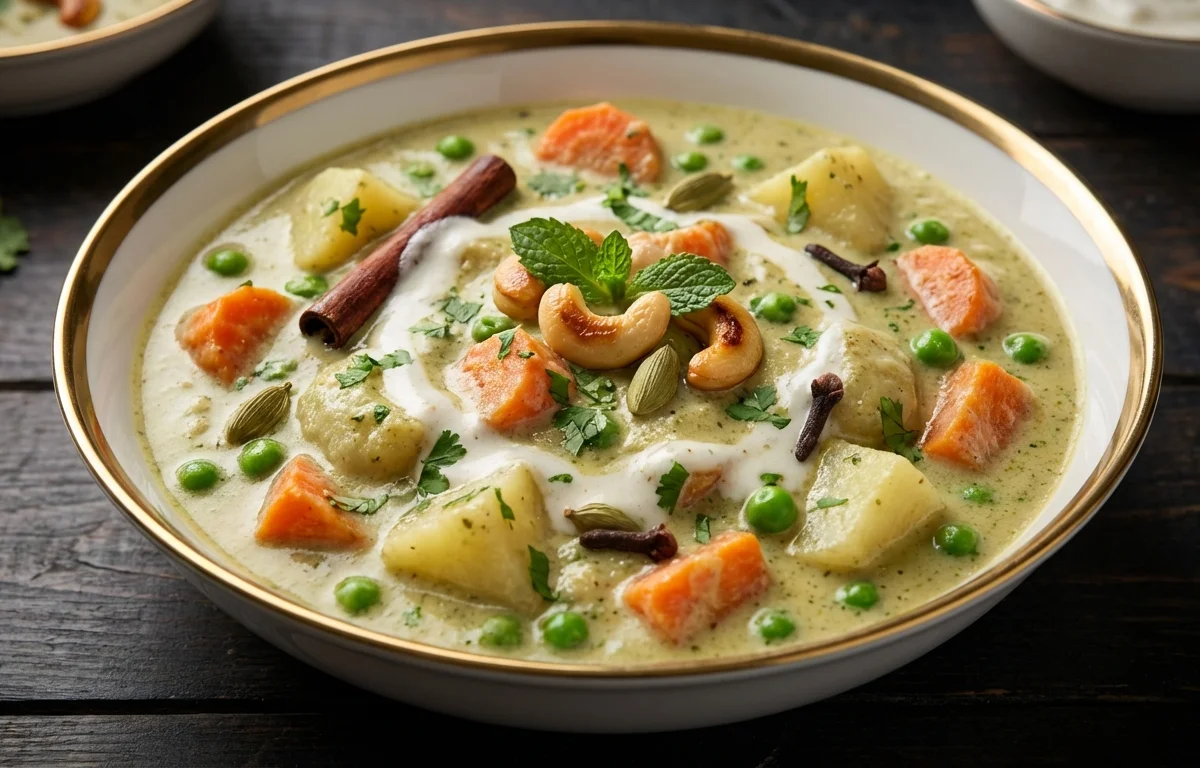
Hyderabadi Vegetable Kurma
A fragrant Hyderabadi-style mixed vegetable kurma with a silky coconut, poppy seed, and cashew gravy. Mildly spiced and rich without being heavy, it pairs beautifully with biryani, pulao, roti, or parotta.
For 4 servings
- prep · ~15 min
Soak the poppy seeds and prep the vegetables.
1.Soak the poppy seeds in a little water for 15 minutes.2.Peel and cube the potato and carrot.3.Cut the green beans and separate the cauliflower into small florets.4.Slice the onions and chop the tomatoes, ginger, and garlic.TIPSmall, even vegetable pieces cook at the same rate and give the kurma a neater finish. - boil · ~8 min
Cook the vegetables until just tender.
1.Bring water to a boil in a pot.2.Add potato, carrot, green beans, green peas, and cauliflower.3.Cook 6 to 8 minutes until the vegetables are just tender but still hold their shape.4.Drain if needed and keep the vegetables aside.TIPDo not overcook the vegetables or they will break down once simmered in the gravy. - saute · ~5 min
Cook the masala ingredients.
1.Heat 1 tsp oil in a pan over medium heat.2.Add fresh coconut, cashews, fennel seeds, ginger, garlic, and green chili.3.Sauté for 2 to 3 minutes until the coconut smells nutty and the raw smell fades.4.Add half of the chopped onion and cook 2 minutes more. - mix · ~3 min
Grind the kurma paste.
Cool the sautéed mixture slightly, then blend it with the soaked poppy seeds and a little water to a smooth, thick paste.
TIPA smooth paste gives the kurma its signature silky texture, so grind well. - saute · ~7 min
Build the gravy base.
1.Heat the remaining oil in a pan.2.Add cumin seeds, cloves, green cardamom, cinnamon, and bay leaf.3.Let the spices sizzle for a few seconds until fragrant.4.Add the remaining onion and cook until light golden, 5 to 6 minutes.TIPKeep the heat medium so the whole spices flavor the oil without burning. - saute · ~6 min
Cook the tomatoes and spice powders.
1.Add chopped tomato and cook until soft and pulpy, 4 to 5 minutes.2.Add turmeric powder, red chili powder, coriander powder, and salt.3.Mix well and cook for 1 minute. - simmer · ~5 min
Add the ground paste and simmer the gravy.
Add the ground kurma paste and cook for 2 minutes, stirring often. Pour in the measured water and bring the gravy to a gentle simmer.
- mix · ~2 min
Stir in the yogurt.
Lower the heat and add the whisked yogurt slowly, stirring continuously so it blends smoothly into the gravy.
TIPLow heat helps keep the yogurt from splitting. - simmer · ~8 min
Finish the kurma with the vegetables.
1.Add the cooked vegetables to the gravy.2.Sprinkle in garam masala and mix gently.3.Cover and simmer for 6 to 8 minutes so the vegetables absorb the flavors. - garnish
Garnish with coriander leaves and mint.
- serve
Serve hot with biryani, pulao, roti, or parotta.
What to keep in mind.
6 tips from the recipe — small details that make a real difference to the final dish.
- 1Blanch the vegetables only until just tender; they will cook again in the gravy and should not turn mushy.
- 2Cool the coconut-cashew mixture slightly before grinding so the paste blends smoother and doesn't turn oily.
- 3Use only a little water while grinding; a thick paste gives this kurma its characteristic silky body.
- 4Add the whisked yogurt on low heat and stir continuously to prevent the gravy from splitting.
- 5Let the kurma rest 10 minutes after cooking so the vegetables absorb the coconut-spice gravy better.
- 6If making ahead, reheat gently and add a splash of hot water, as the poppy seed and cashew gravy thickens on standing.
Adapt it for your goals.
Vegan
Replace the yogurt with coconut milk or unsweetened plant yogurt for a fully dairy-free kurma with similar richness.
jainJain
Skip onion and garlic, then increase coconut, cashews, and tomato slightly for body while keeping the kurma aromatic and mild.
spicierSpicier
Add an extra green chili or a little more red chili powder if you want the gravy to stand up to biryani and parotta.
low oilLow-oil
Use less oil and sauté on a heavy pan with frequent stirring; the gravy will still be rich from coconut, poppy seeds, and cashews.
Why this is on our healthy list.
Packed with Mixed Vegetables
Carrot, beans, peas, cauliflower, and potato bring a range of fiber, texture, and plant nutrients to the dish.
Good Fats from Nuts and Seeds
Cashews, coconut, and poppy seeds add satisfying richness along with nourishing fats that make the kurma feel full-bodied.
Digestive Spice Support
Fennel, cumin, ginger, and cardamom contribute aroma and are traditionally used to make rich gravies feel easier to enjoy.
Frequently asked questions
Yes. The texture will be slightly less silky, but you can increase cashews a little to help maintain body in the gravy.