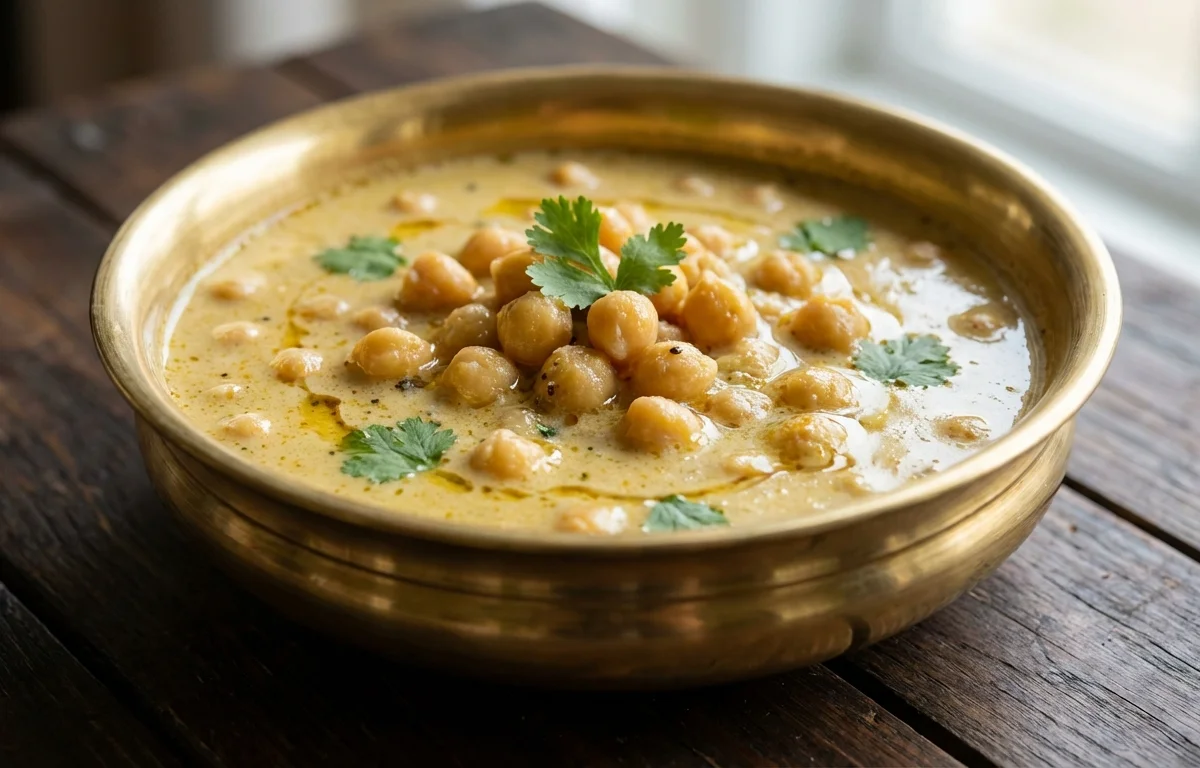
Kadalai Kurma
A rich, aromatic South Indian curry where tender chickpeas swim in a freshly ground coconut and spice paste. The earthy chickpeas soak up the creamy, mildly spiced gravy, making it perfect with fluffy appams, soft idiyappam, or plain parotta.
For 4 servings
- prep
Soak and cook the chickpeas.
1.Rinse 1 cup dried chickpeas and soak in plenty of water for 8 hours or overnight.2.Drain the soaked chickpeas and add them to a pressure cooker with 3 cups of fresh water.3.Pressure cook for 5 whistles on medium heat, then let the pressure release naturally.4.Drain the chickpeas, reserving the cooking water. Set aside.TIPThe chickpeas should be tender but not mushy. If they fall apart when pressed between fingers, you've overcooked them slightly—it's still fine, the gravy will just be thicker. - mix
Make the coconut-cashew paste.
1.Soak 10 cashews and 1 tsp poppy seeds in 2 tbsp warm water for 10 minutes.2.In a blender, add the soaked cashews, poppy seeds, 0.5 cup grated coconut, and 2 green chilies.3.Pour in 0.5 cup water and grind to a smooth, silky paste. Set aside.TIPGrind the paste until you don't feel any grit between your fingers—this takes about 2-3 minutes in a high-speed blender. A coarse paste will make the gravy grainy. - temper · ~1 min
Bloom the whole spices.
1.Heat 2 tbsp oil in a heavy-bottomed pan over medium heat until it shimmers.2.Add 1 bay leaf, 1-inch cinnamon stick, 3 cloves, 2 green cardamoms, and 1 tsp fennel seeds.3.Sauté for 30 seconds until the spices sizzle and release their aroma.TIPDon't let the spices burn—if they turn black, they'll taste bitter. Keep the heat at medium and stir constantly. - saute · ~9 min
Sauté the onions and aromatics.
1.Add 2 finely chopped onions to the pan and cook until soft and translucent, about 3-4 minutes.2.Stir in 1 tbsp ginger-garlic paste and sauté for 1 minute until the raw smell disappears.3.Add 2 finely chopped tomatoes and cook until they soften completely and release oil from the sides, about 5 minutes.TIPThe tomatoes must cook down until the oil separates—this is what gives the kurma its rich, deep flavor. Be patient with this step. - saute · ~1 min
Cook the spice powders.
1.Lower the heat to low and add 1 pinch turmeric powder, 0.5 tsp red chili powder, and 1 tsp coriander powder.2.Sauté for 30 seconds, stirring constantly so the powders don't burn.3.Add 1 pinch garam masala and stir for 10 seconds.TIPAlways lower the heat when adding dry spice powders—they burn in seconds and turn the whole dish bitter. - simmer · ~11 min
Simmer the chickpeas in the gravy.
1.Add the cooked chickpeas to the pan and stir gently to coat them in the masala.2.Pour in the reserved chickpea cooking water, about 1 cup or enough to get a thick, flowing consistency.3.Stir in the ground coconut-cashew paste and 0.5 tsp salt.4.Bring to a gentle simmer and cook uncovered for 10-12 minutes, stirring occasionally.TIPSimmer with the lid off so the gravy thickens and the flavors concentrate. Stir every couple of minutes to prevent the thick gravy from sticking to the bottom. - garnish
Garnish with fresh coriander and serve hot.
Ladle the Kadalai Kurma into a serving bowl, scatter freshly chopped coriander leaves on top, and serve piping hot with appam, parotta, or idiyappam.
What to keep in mind.
7 tips from the recipe — small details that make a real difference to the final dish.
- 1Soak chickpeas for a full 8 hours to ensure even cooking and a creamy texture.
- 2Reserve the chickpea cooking water — it adds body and earthy flavor to the gravy.
- 3Grind the coconut-cashew paste until silky smooth to avoid a grainy gravy.
- 4Bloom whole spices on medium heat until fragrant but not burnt to prevent bitterness.
- 5Cook tomatoes until oil separates from the masala for a rich, deep flavor base.
- 6Simmer the kurma uncovered to thicken the gravy and concentrate the spices.
- 7Stir the gravy occasionally while simmering to prevent it from sticking to the pan.
Adapt it for your goals.
Vegan
This recipe is already vegan as written — no dairy is used. The coconut-cashew paste provides all the creaminess needed.
low oilLow-oil
Reduce oil to 1 tablespoon and use a non-stick pan. For tempering, dry-roast whole spices in the pan for 20 seconds before adding a splash of water to sauté onions — cuts fat without sacrificing flavor.
high proteinHigh-protein
Add 1/2 cup of cooked, cubed paneer or tofu along with the chickpeas to boost protein content. The paneer soaks up the kurma beautifully.
without cashewsWithout-cashews
Replace cashews with an equal weight of raw melon seeds (magaz) or sunflower seeds for a nut-free version. Soak them with the poppy seeds and grind as directed.
Why this is on our healthy list.
High in Plant Protein
Chickpeas are an excellent source of plant-based protein and fiber, supporting muscle repair and digestive health.
Rich in Healthy Fats
Coconut and cashews provide heart-friendly unsaturated fats and essential minerals like copper and magnesium.
Good Source of Fiber
A single serving of this dish delivers a significant amount of dietary fiber from chickpeas and coconut, promoting satiety and gut health.
Contains Anti-Inflammatory Spices
Turmeric, cinnamon, cloves, and fennel seeds are rich in antioxidants and compounds that help reduce inflammation.
Frequently asked questions
Yes, use 1.5 cups of drained canned chickpeas. Skip the pressure cooking step and add them directly with a little water — reduce simmer time to 5-7 minutes.