
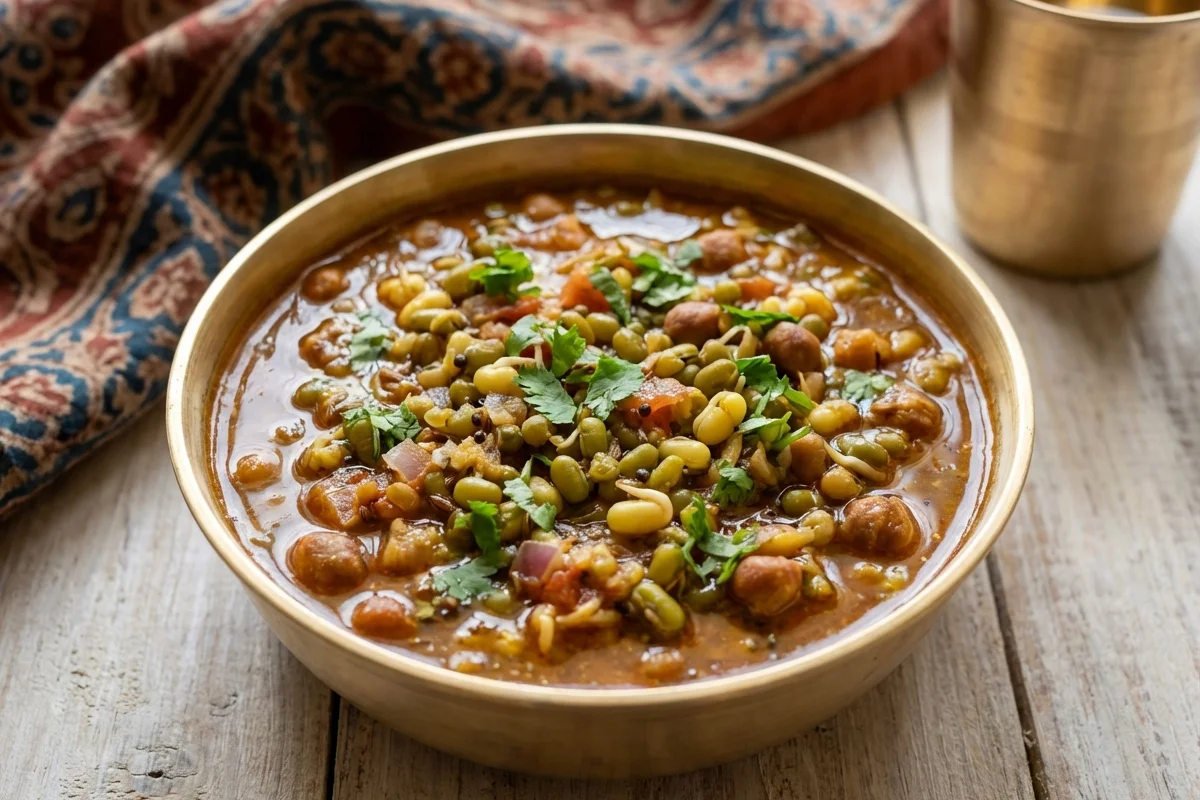
Kathol nu Shaak
A hearty, protein-packed Gujarati winter staple made with a medley of dried beans and pulses simmered in a spiced, garlicky tomato-onion gravy. Slow-cooked to creamy perfection, it's a comforting one-pot dish that warms you from the inside out and pairs beautifully with bajra rotla or steamed rice.
For 4 servings
- prep
Soak the dried beans and lentils overnight.
Wash and soak chana dal, whole moth beans, urad dal, and dried green peas in 3 cups of water for at least 8 hours or overnight. Drain and set aside.
- pressure cook · ~20 min
Pressure cook the soaked pulses.
Transfer the soaked pulses to a pressure cooker. Add 2 cups of water and a pinch of salt. Cook on medium heat for 3-4 whistles or until soft but not mushy. Let the pressure release naturally.
TIPDon't oversalt now — the final seasoning happens later. Just a pinch to help the pulses cook through. - temper · ~2 min
Make the tempering.
1.Heat oil in a heavy-bottomed pan over medium heat until shimmering.2.Add mustard seeds and let them crackle (30 sec).3.Add cumin seeds, asafoetida, dried red chilies, and bay leaf. Sauté until fragrant (20 sec). - saute · ~10 min
Build the aromatic base.
1.Add minced garlic and grated ginger. Sauté until the raw smell disappears (1 min).2.Add slit green chilies and chopped onions. Cook until onions turn golden brown (7-8 min).3.Add chopped tomatoes and cook until they turn soft and mushy (4-5 min).TIPPatience with the onions is key — properly browned onions give the gravy its deep, sweet flavor. - saute · ~2 min
Bloom the spices in the onion-tomato mix.
Add turmeric powder, red chili powder, coriander powder, and cumin powder. Stir continuously and cook for 1-2 minutes until the spices are fragrant and oil starts to separate.
- simmer · ~20 min
Simmer the curry to perfection.
Add the boiled pulses along with their cooking water to the pan. Mix well and mash some of the pulses lightly with the back of the ladle to help thicken the gravy. Add the remaining salt. Bring to a boil, then lower the heat and simmer uncovered for 15-20 minutes, stirring occasionally.
TIPMashing a small portion of the pulses releases natural starch and creates a creamy, thick gravy without any cream. - garnish · ~5 min
Finish with garam masala and garnish.
Turn off the heat. Sprinkle garam masala over the top and stir gently. Let it rest for 5 minutes. Garnish with chopped coriander leaves and serve hot.
TIPAdding garam masala at the end preserves its aromatic oils and gives a fresh burst of flavor.
What to keep in mind.
6 tips from the recipe — small details that make a real difference to the final dish.
- 1Soak the pulses overnight for at least 8 hours to ensure even cooking and creaminess.
- 2Pressure-cook the pulses with just a pinch of salt; over-salting early can toughen them.
- 3Brown the onions thoroughly until golden — this builds the gravy's sweet, deep foundation.
- 4Bloom the spice powders in the oil until fragrant and oil separates for maximum flavor.
- 5Lightly mash some of the cooked pulses with a ladle to thicken the gravy naturally.
- 6Add garam masala only after turning off the heat to preserve its volatile aromatics.
Adapt it for your goals.
Low-oil
Reduce oil to 1 tablespoon and dry-roast the mustard seeds and cumin before adding a splash of water to sauté the aromatics. A lighter version for those watching fat intake, while still retaining the tempering's essence.
high proteinHigh-protein
Add ½ cup of cubed paneer or tofu along with the simmering pulses for an extra protein boost. Ideal for post-workout meals or for increasing satiety.
jainJain
Omit garlic, onion, and asafoetida (use hing powder if allowed). Sauté ginger, green chili, and tomatoes in oil with the tempering. A Jain-friendly version that still delivers warmth and spice.
veganVegan
The recipe is already vegan — simply ensure any store-bought garam masala is free of animal-based additives. Serve with vegan roti or rice for a complete plant-based meal.
Why this is on our healthy list.
High in Plant-Based Protein
The combination of chana dal, moth beans, urad dal, and green peas delivers a complete amino acid profile, supporting muscle repair and satiety.
Rich in Dietary Fiber
The legume medley provides soluble and insoluble fiber, aiding digestion and promoting steady blood sugar levels.
Packed with Antioxidants
Spices like turmeric, ginger, and garlic contain anti-inflammatory compounds that support overall immune function.
Iron-Rich and Energizing
The pulses, especially urad dal and green peas, are good sources of iron, which helps combat fatigue and supports oxygen transport.
Frequently asked questions
Soaking is strongly recommended — it reduces cooking time and ensures the pulses cook evenly without a hard core. Unsoaked pulses will require a longer pressure-cook and may remain chewy.


