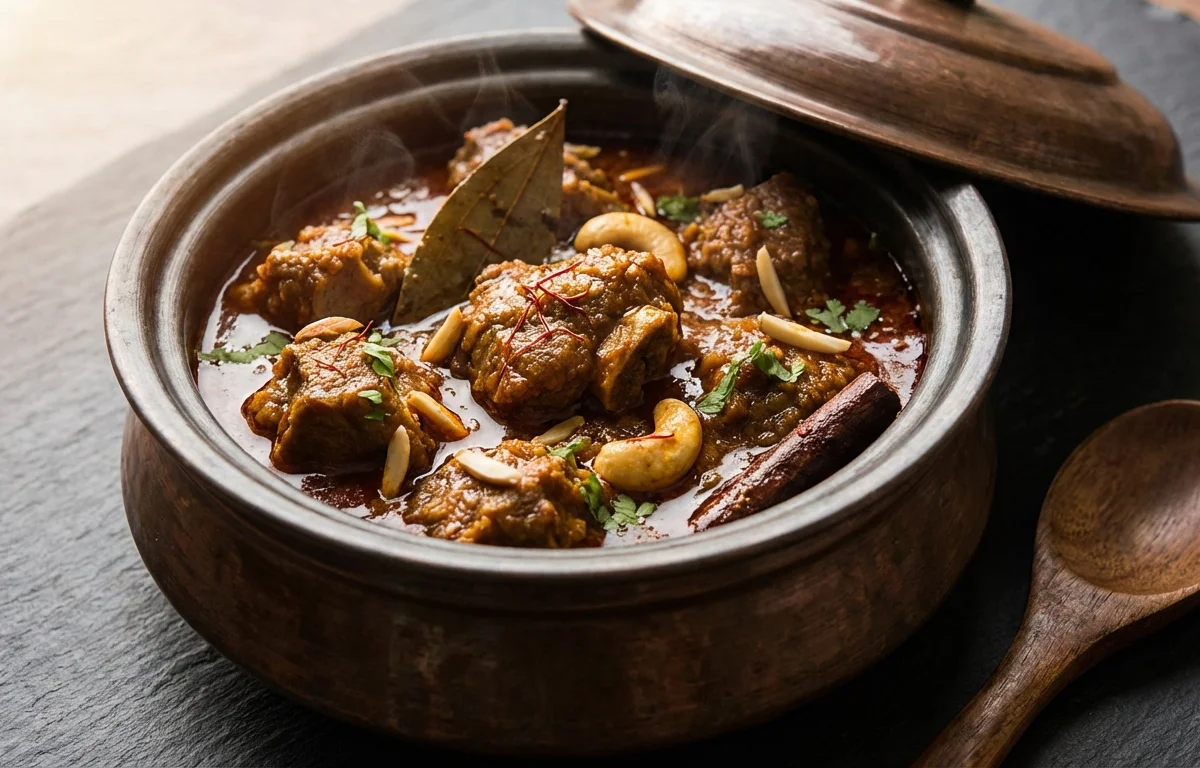
Lagan ka Gosht
A rich Hyderabadi mutton curry slow-cooked with yogurt, browned onions, coconut, peanuts, sesame, and warm spices. The gravy turns silky, nutty, and deeply savory, making it a perfect festive side for biryani, bagara rice, or naan.
For 4 servings
- prep · ~15 min
Fry the onions until deep golden.
1.Heat the oil in a heavy pan over medium heat.2.Add the sliced onion and cook, stirring often, until deep golden and crisp at the edges (12-15 min).3.Transfer the onion to a plate and cool slightly.4.Set aside a small spoonful for garnish and keep the rest for the masala.TIPKeep the heat medium so the onions brown evenly without turning bitter. - roast · ~6 min
Roast the coconut, nuts, and seeds.
1.In the same pan, dry roast the fresh coconut on low heat until lightly golden (2-3 min).2.Add the peanuts, white sesame seeds, poppy seeds, and coriander seeds.3.Roast everything together until fragrant and lightly toasted (2-3 min).4.Cool the mixture before grinding. - mix · ~4 min
Grind the masala paste.
Blend the roasted coconut mixture with the fried onions, yogurt, turmeric powder, red chili powder, and a little water to make a smooth, thick paste.
- saute · ~3 min
Start the whole spices and aromatics.
1.Heat the ghee in a heavy pot over medium heat.2.Add cumin seeds, cloves, green cardamom, cinnamon, and bay leaf.3.Let the spices sizzle until fragrant (30-40 sec).4.Add the ginger-garlic paste and slit green chili, then cook until the raw smell fades (1-2 min). - saute · ~8 min
Coat the mutton in the masala.
Add the mutton and salt. Cook for 6-8 minutes, turning the pieces well so they are evenly coated and lightly browned on the outside.
TIPLet the meat sear a little before stirring too much; that gives the curry deeper flavor. - simmer · ~70 min
Cook the curry slowly.
1.Add the ground masala paste to the pot and mix well with the mutton.2.Pour in the water and stir to loosen the gravy.3.Cover and cook on low heat until the mutton is tender and the gravy turns thick and glossy (60-70 min).4.Stir every 10-15 minutes so the masala does not catch at the bottom.TIPAdd a small splash of water only if the gravy gets too dry before the meat is tender. - garnish · ~2 min
Finish with garam masala, fried onion, and coriander leaves.
Sprinkle in the garam masala, mix gently, and simmer for 2 more minutes. Top with the reserved fried onion and chopped coriander leaves.
- serve
Serve hot.
Serve Lagan ka Gosht hot with bagara rice, biryani, naan, or roomali roti.
What to keep in mind.
7 tips from the recipe — small details that make a real difference to the final dish.
- 1Brown the onions to a deep golden, not just soft, because they give the gravy its color and sweetness.
- 2Cool the roasted coconut and seeds before grinding so the masala blends smooth instead of turning oily.
- 3Use full-fat yogurt and whisk it well before blending to keep the gravy rich and less likely to split.
- 4Sear the mutton briefly before adding the ground paste so the meat develops better flavor in the curry.
- 5Keep the simmer gentle and stir the pot every 10 to 15 minutes; the nut-and-coconut masala can catch easily.
- 6If the mutton is still firm after the gravy thickens, add a splash of hot water and continue cooking covered.
- 7This curry tastes even better after a few hours of rest, when the spice, yogurt, and nutty masala settle together.
Adapt it for your goals.
Pressure-cooker
Cook the seared mutton and masala under pressure to shorten the cooking time, then simmer uncovered to thicken the gravy.
spicierSpicier
Increase green chilies or red chili powder for a hotter festive-style curry without changing the core nutty Hyderabadi profile.
chickenChicken
Use bone-in chicken for a quicker version; reduce the simmer so the meat stays juicy while still absorbing the rich masala.
low oilLow-oil
Use less oil for frying onions and skim excess fat at the end; the coconut and seeds will still keep the gravy full-bodied.
Why this is on our healthy list.
Protein-Rich Main Dish
Mutton and yogurt make this curry satisfying and protein-rich, helping turn it into a filling festive main.
Minerals From Seeds and Nuts
Peanuts, sesame, poppy seeds, and coconut contribute minerals, healthy fats, and body to the gravy.
Aromatic Spice Support
Ginger, garlic, cumin, coriander, cloves, and cardamom add flavor complexity while bringing traditional digestive spices to the dish.
Frequently asked questions
Yes. Bone-in lamb works well, but it may cook a little faster or slower depending on the cut, so judge by tenderness rather than time alone.