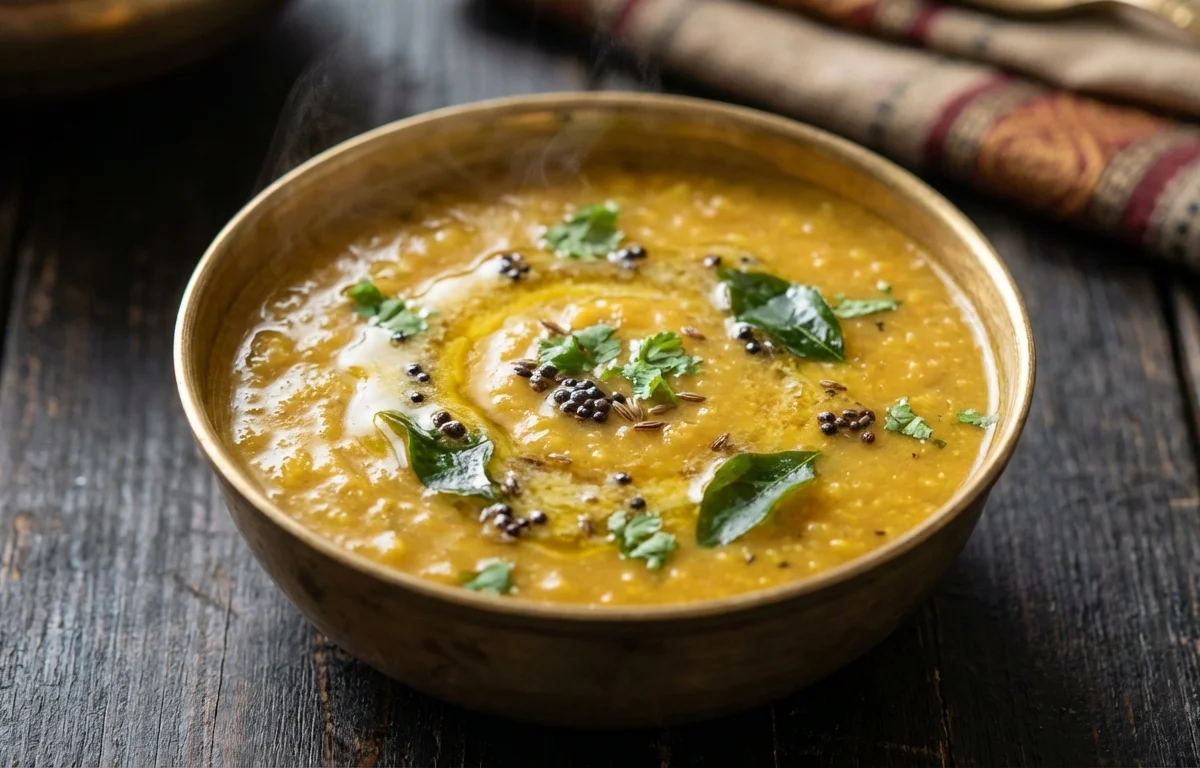
Amti Dal
A comforting Maharashtrian dal with toor dal, tamarind, jaggery, and goda masala. It has a lovely balance of tangy, mildly sweet, and spiced flavors that pairs beautifully with steamed rice or chapati.
For 4 servings
- prep · ~30 min
Wash and soak the dal.
Rinse the toor dal well until the water runs clearer. Soak it in fresh water for 30 minutes, then drain.
- pressure cook · ~20 min
Pressure cook the dal until soft.
1.Add the soaked toor dal to a pressure cooker with water, turmeric powder, and salt.2.Close the cooker and cook on medium heat for 4 to 5 whistles.3.Let the pressure release naturally before opening.4.Mash the cooked dal lightly until mostly smooth.TIPA lightly mashed dal gives Amti its smooth, comforting texture without making it pasty. - temper · ~2 min
Make the tempering.
1.Heat oil in a pot over medium heat.2.Add mustard seeds and let them splutter.3.Add cumin seeds, asafoetida, curry leaves, and green chili.4.Cook for a few seconds until fragrant.TIPKeep the heat moderate so the spices bloom nicely without burning. - simmer · ~5 min
Add the dal and season it.
1.Pour the cooked dal into the pot with the tempering.2.Add tamarind paste, jaggery, goda masala, and red chili powder.3.Mix well and add a little extra water if the dal looks too thick.4.Bring it to a gentle simmer. - simmer · ~10 min
Cook the Amti until the flavors come together.
Let the dal simmer for 8 to 10 minutes, stirring once or twice, until the jaggery dissolves and the dal smells rich and balanced.
TIPAmti should taste gently tangy and faintly sweet, not sharply sour or sugary. - garnish
Garnish with cilantro.
- serve
Serve hot.
What to keep in mind.
7 tips from the recipe — small details that make a real difference to the final dish.
- 1Mash the pressure-cooked toor dal only lightly; over-blending can make Amti gluey instead of silky.
- 2Add tamarind and jaggery after the dal is fully cooked, since acidic ingredients can keep lentils from softening properly.
- 3Let the mustard seeds splutter completely before adding cumin, hing, and curry leaves so the tempering tastes rounded, not raw.
- 4Keep the final consistency slightly looser than plain dal; Amti thickens as it rests and especially after cooling.
- 5Simmer for the full 8 to 10 minutes after adding goda masala so its warm, roasted notes meld into the dal.
- 6Taste at the end and adjust only in tiny pinches of tamarind or jaggery; Amti should be balanced, never obviously sweet.
- 7This dal keeps well for a day in the fridge; reheat with a splash of water to restore its original pourable texture.
Adapt it for your goals.
Spicier
Add an extra green chili or a bit more red chili powder for a sharper heat that still works with the sweet-sour balance.
low oilLow-oil
Use less oil for the tempering and keep the heat controlled so the mustard and cumin still bloom without burning.
garlic temperedGarlic-tempered
Add a little sliced garlic to the tempering for a more robust, homestyle version with deeper savory notes.
thickerThicker
Simmer a little longer and add less extra water if you want an Amti that sits well with chapati rather than rice.
Why this is on our healthy list.
Plant Protein From Toor Dal
Toor dal brings satisfying plant-based protein and makes this meal filling while still feeling light and comforting.
Good Source of Fiber
The lentils in Amti provide fiber that supports fullness and pairs well with its slow-simmered, hearty texture.
Digestive Spice Support
Cumin, asafoetida, curry leaves, and turmeric are traditional dal seasonings that add flavor and can make lentil dishes feel easier to digest.
Frequently asked questions
Yes, but it may take a little longer to pressure cook and the texture may be slightly less even. Soaking helps the dal cook faster and mash more smoothly.



.webp)