
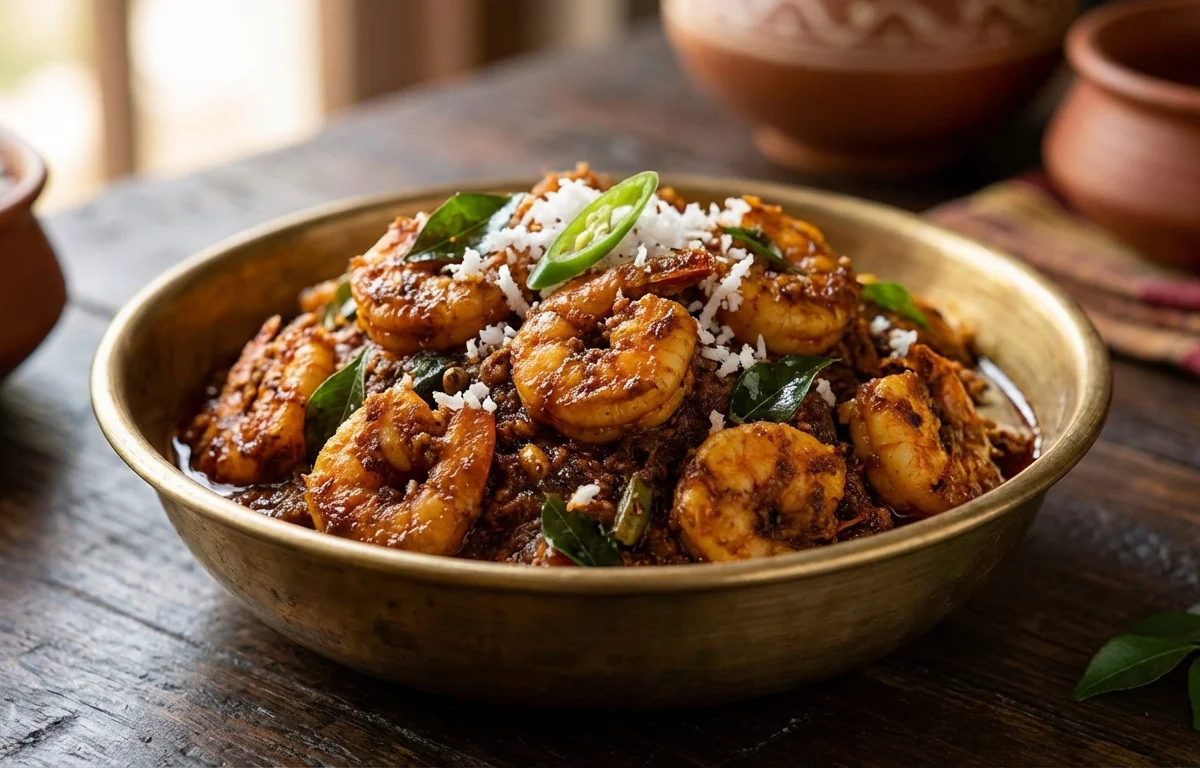
Mangalorean Prawn Sukka
Juicy prawns coated in a richly spiced, dry masala with the unmistakable aroma of roasted coconut and curry leaves. This Mangalorean coastal classic is a quick, deeply flavorful dish where fresh prawns are simmered in a freshly ground spice paste until perfectly tender and the masala clings dry to every piece.
For 4 servings
- prep
Marinate the prawns.
Toss the cleaned prawns with ¼ tsp salt, turmeric powder, and lemon juice. Set aside for 15 minutes while you prepare the masala.
TIPPat the prawns completely dry before marinating so they sear rather than steam. - roast · ~7 min
Dry roast the coconut and spices.
1.Heat a heavy-bottomed pan on medium-low heat. Add grated coconut and roast, stirring constantly, until deep golden brown (4-5 minutes).2.Add coriander seeds, cumin seeds, fenugreek seeds, dried red chilies, and black peppercorns.3.Roast for another 2-3 minutes until the spices turn deeply fragrant and the coconut is a rich brown. Remove and let cool completely.TIPRoast on medium-low heat — high heat burns the coconut without developing flavor. - prep · ~3 min
Grind the masala paste.
1.Transfer the cooled coconut-spice mixture to a blender jar.2.Add garlic cloves, tamarind paste, and 2 tbsp water.3.Grind to a coarse, thick paste — not a fine puree. Scrape down the sides as needed.TIPAdd just enough water to help the blades move. The paste should be thick and grainy, not smooth like a chutney. - temper · ~1 min
Make the tempering.
1.Heat coconut oil in the same pan over medium heat.2.Add mustard seeds and let them splutter (30 seconds).3.Add curry leaves and stir until they crackle (10 seconds). - saute · ~12 min
Build the onion-tomato base.
1.Add chopped onions and slit green chilies. Sauté until onions turn deep golden brown (7-8 minutes).2.Add chopped tomato and ¼ tsp salt. Cook until the tomato softens and releases oil (4-5 minutes).TIPBe patient with the onions — a deep golden color builds the sukka's rich, sweet-savory base. - saute · ~6 min
Cook the ground masala.
Add the ground coconut-spice paste to the pan. Sauté on medium-low heat, stirring constantly, for 5-7 minutes until the raw aroma fades, the paste darkens slightly, and you see tiny oil droplets on the surface.
TIPStir frequently and scrape the bottom — the thick paste can catch. Add a splash of water if it sticks too much. - simmer · ~8 min
Add the prawns and simmer.
1.Add the marinated prawns to the pan along with any collected juices.2.Stir gently to coat every prawn with the masala paste.3.Sprinkle 2-3 tbsp of water around the edges, cover, and cook on low heat for 5-6 minutes until the prawns are just cooked through and curled.4.Uncover and dry out any remaining moisture on medium heat, tossing gently, until the masala clings dry to the prawns (2-3 minutes).TIPPrawns cook fast — as soon as they turn opaque and pink, they're done. Overcooking makes them rubbery. - garnish
Finish and serve.
Turn off the heat. Garnish with fresh curry leaves and chopped coriander leaves. Serve hot with steamed rice or neer dosa.
TIPA final squeeze of lemon juice just before eating brightens all the coastal flavors.
What to keep in mind.
8 tips from the recipe — small details that make a real difference to the final dish.
- 1Pat prawns completely dry before marinating to ensure they sear, not steam.
- 2Roast grated coconut on medium-low heat, stirring constantly, until deep golden brown for maximum flavor.
- 3Grind the masala to a coarse, thick paste — not a smooth puree — for the signature dry texture.
- 4Sauté onions until deep golden brown to build the rich, sweet-savory base of the sukka.
- 5Cook the ground masala until oil droplets appear on the surface to eliminate raw flavors.
- 6Add a splash of water if the masala sticks to the pan while sautéing, scraping the bottom frequently.
- 7Do not overcook the prawns; remove from heat as soon as they turn opaque and curl.
- 8For the best texture, serve immediately after the final drying step, while the masala is still clinging to each prawn.
Adapt it for your goals.
Mangalorean Fish Sukka
Substitute firm white fish like kingfish or pomfret for the prawns. Cut into 2-inch chunks and cook for a few extra minutes until the fish flakes easily.
Prawn Sukka with Coconut MilkPrawn Sukka with Coconut Milk
For a saucier version, add 1/4 cup of thick coconut milk after the masala is cooked, then simmer the prawns. This creates a more succulent, gravy-like consistency while retaining the bold spices.
Dry Sukka (Extra Roasted)Dry Sukka (Extra Roasted)
After adding the prawns, cook on low heat uncovered for a few extra minutes, stirring gently, until the masala becomes very dry and almost crusty on the prawns. This intensifies the roasted flavor and texture.
Mangalorean Chicken SukkaMangalorean Chicken Sukka
Replace prawns with 500g boneless chicken thigh, cut into small bite-sized pieces. Increase cooking time in step 7 to 15-18 minutes, or until chicken is cooked through and the masala is dry.
Why this is on our healthy list.
Lean Protein from Prawns
Prawns are a low-fat, high-quality source of protein and provide essential minerals like selenium and zinc, supporting muscle health and immunity.
Healthy Fats from Coconut
Fresh grated coconut contains medium-chain triglycerides (MCTs), which are quickly metabolized for energy and may support heart health when used in moderation.
Rich in Antioxidant Spices
Coriander seeds, cumin, fenugreek, and turmeric are packed with antioxidants and anti-inflammatory compounds, supporting digestive health and reducing oxidative stress.
Natural Source of Curry Leaf Nutrients
Curry leaves are rich in iron, calcium, and vitamins A and C, contributing to better vision, bone health, and iron absorption.
Frequently asked questions
Yes, but thaw them overnight in the refrigerator, pat dry thoroughly, and marinate as directed. Frozen prawns release more water, so you may need an extra minute of drying at the end.


.webp)
.webp)