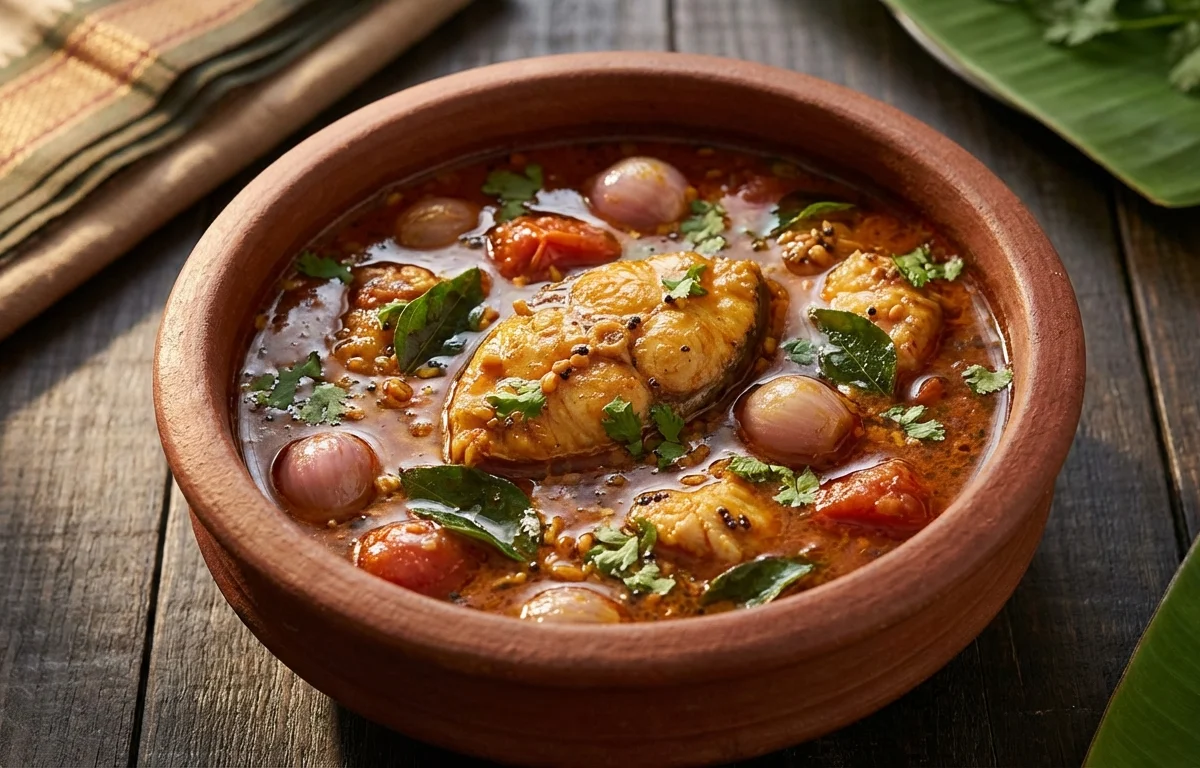
Meen Kuzhambu
Tangy South Indian fish curry with a deep tamarind base, gentle heat, and the earthy aroma of fenugreek and curry leaves. It tastes even better after resting, making it a wonderful partner for hot steamed rice.
For 4 servings
- prep · ~10 min
Soak the tamarind and clean the fish.
1.Soak the tamarind in a little warm water for 10 minutes.2.Squeeze well and strain to get a smooth tamarind extract.3.Rinse the fish pieces gently and set them aside.TIPHandle the fish gently so the pieces stay whole while simmering. - temper · ~1 min
Make the tempering.
1.Heat sesame oil in a wide pan over medium heat.2.Add mustard seeds and let them splutter.3.Add fenugreek seeds and curry leaves.4.Cook for a few seconds until fragrant.TIPDo not let the fenugreek seeds turn dark brown or the curry will taste bitter. - saute · ~8 min
Cook the onion mixture.
1.Add onion, garlic, and green chili to the pan.2.Cook until the onion turns soft and lightly golden.3.Add tomato and cook until it breaks down well. - saute · ~1 min
Cook the spice base.
Add red chili powder, coriander powder, turmeric powder, black pepper, and salt. Cook on low heat for 30 to 40 seconds so the spices lose their raw smell without burning.
TIPLower the heat before adding the powders so the masala stays bright and aromatic. - simmer · ~10 min
Simmer the kuzhambu base.
Pour in the tamarind extract and water, then mix well. Bring to a gentle simmer and cook for 10 minutes until the raw tamarind smell fades and the gravy tastes rounded.
- simmer · ~10 min
Add the fish and finish the curry.
Slide in the fish pieces in a single layer. Simmer gently for 8 to 10 minutes until the fish is just cooked and the gravy slightly thickens. Avoid stirring hard; swirl the pan instead.
TIPA gentle simmer keeps the fish tender and prevents it from breaking. - rest · ~10 min
Rest the curry before serving.
Turn off the heat and let the curry rest for 10 minutes. This helps the fish absorb the tangy, spicy gravy.
- serve
Serve hot with steamed rice.
What to keep in mind.
7 tips from the recipe — small details that make a real difference to the final dish.
- 1Use a wide pan so the fish can sit in a single layer and cook without breaking.
- 2After adding fenugreek, move quickly to the onions; even a few extra seconds can make it bitter.
- 3Cook the tamarind gravy fully before adding fish, or the curry can taste sharp and raw.
- 4Once the fish goes in, swirl the pan instead of stirring with a spoon to keep the pieces intact.
- 5Resting the kuzhambu for at least 10 minutes deepens the flavour and helps the fish absorb the gravy.
- 6This curry often tastes even better the next day; cool completely and refrigerate, then reheat very gently.
- 7If the tamarind is especially sour, balance it with a little extra tomato while cooking the base.
Adapt it for your goals.
Earthen-pot
Cook it in a clay pot for a more traditional taste and gentler simmer that suits delicate fish.
spicierSpicier
Increase red chili powder or add extra slit green chilies if you want a hotter kuzhambu for rice.
coconut styleCoconut-style
Add a little ground coconut paste near the end for a softer, richer Tamil-style gravy.
prawnPrawn
Swap fish for prawns and reduce the final simmer, since prawns cook much faster and turn rubbery if overdone.
Why this is on our healthy list.
Protein-Rich Main Dish
Fish makes this curry a satisfying source of protein, helping turn the kuzhambu into a filling meal with rice.
Spice-Forward, Not Cream-Heavy
The gravy gets its depth from tamarind, onion, tomato, and spices rather than cream or butter, keeping it lighter in style.
Aromatic Plant Ingredients
Garlic, curry leaves, tomato, and spices add flavour and beneficial plant compounds along with the fish.
Frequently asked questions
Choose firm fish steaks or thick fillets that hold their shape during simmering, such as seer fish, king fish, pomfret, or similar local varieties.