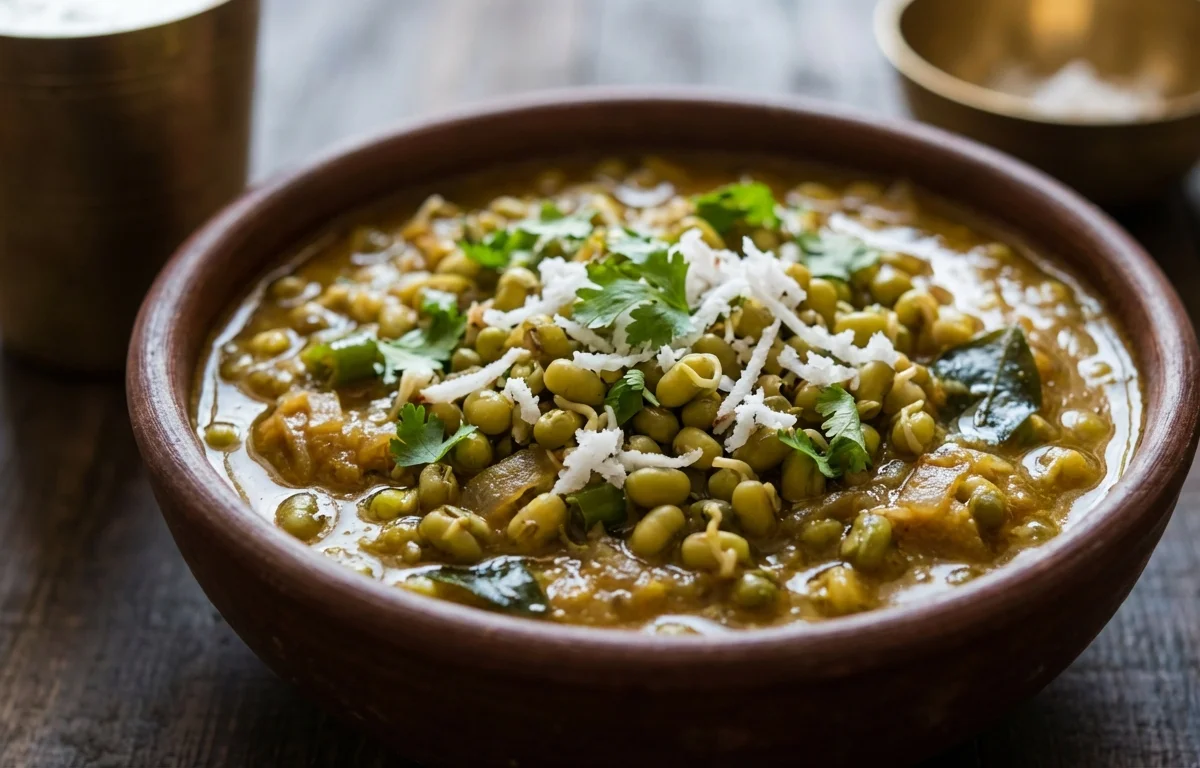
Mugachi Usal
A rustic and hearty Maharashtrian-style sprouted green gram curry simmered in a fragrant coconut-spice paste. This protein-packed usal is slightly thin, deeply aromatic, and comes alive with a crackling mustard seed tempering. Best enjoyed with soft pav or steamed rice, it is a simple everyday comfort that feels like a warm hug in a bowl.
For 4 servings
- prep · ~2 min
Prepare the coconut-spice paste.
1.In a mixer grinder jar, add 3 tbsp grated fresh coconut, 1 inch chopped ginger, and 3 garlic cloves.2.Add 2-3 tablespoons of water and grind to a smooth, thick paste. Set aside. - pressure cook · ~10 min
Pressure cook the sprouted green gram.
1.Place the sprouted green gram in the pressure cooker.2.Add 2 cups of water and 0.5 tsp salt. Stir well.3.Close the lid and pressure cook on medium heat for 2 whistles.4.Allow the pressure to release naturally. Do not drain the water. - temper · ~3 min
Make the tempering.
1.Heat 1 tsp oil in a kadai over medium heat.2.Add 1 tsp mustard seeds and let them splutter.3.Add 0.5 tsp cumin seeds, 1 pinch asafoetida, and 8 curry leaves. Sauté for 15 seconds.4.Add 2 slit green chilies and sauté for another 20 seconds until fragrant. - saute · ~4 min
Cook the spice paste.
1.Lower the heat and carefully pour in the coconut-spice paste.2.Add 1 pinch turmeric powder and 1 pinch red chili powder.3.Sauté the paste, stirring continuously, for 3-4 minutes until it turns aromatic and the raw smell of ginger-garlic disappears. - simmer · ~12 min
Simmer the usal.
1.Add the cooked green gram along with its cooking water to the kadai.2.Pour in 1.5 cups of additional water to achieve a thin, slightly soupy consistency.3.Add 0.5 tsp jaggery and stir well.4.Bring to a gentle boil, then cover and simmer on low heat for 10 minutes, allowing the flavors to meld.5.The usal will thicken slightly but should remain thin and brothy. - garnish · ~1 min
Finish and serve.
1.Turn off the heat and stir in 1 pinch of garam masala and 1 tbsp lemon juice.2.Transfer to a serving bowl and garnish generously with chopped coriander leaves.3.Serve piping hot with pav, roti, or steamed rice.
What to keep in mind.
6 tips from the recipe — small details that make a real difference to the final dish.
- 1Sprout the green gram at home for better texture and freshness — rinse and drain daily for 2-3 days until tiny tails appear.
- 2Do not drain the pressure-cooked water; it carries nutrients and starch that thicken the usal naturally.
- 3Sauté the coconut-spice paste until the raw aroma of ginger-garlic disappears to avoid a harsh taste.
- 4Add lemon juice and garam masala only after turning off the heat to preserve their bright flavors.
- 5The usal should remain thin and brothy; add extra water if it thickens too much during simmering.
- 6For a deeper flavor, let the cooked usal rest for 10 minutes before serving to allow spices to meld.
Adapt it for your goals.
Low-oil
Skip the tempering oil and dry-roast mustard seeds and cumin in a hot pan, then proceed with the recipe. This reduces fat while keeping the aromatic base intact.
high proteinHigh-protein
Boost protein by adding 1/2 cup of cubed paneer or cooked chickpeas along with the sprouts. Perfect for post-workout meals.
jainJain
Omit garlic and asafoetida (use hing substitute if needed), and replace onion if present. The recipe is already onion-free; use ginger only for the paste to keep it Jain-friendly.
veganVegan
Use a teaspoon of kasuri methi (dried fenugreek leaves) in the paste to mimic the richness cream usually adds. The recipe is naturally vegan as written.
Why this is on our healthy list.
Rich in Plant-Based Protein
Sprouted green gram provides a complete amino acid profile, making this curry an excellent protein source for vegetarians.
High in Dietary Fiber
The sprouts and coconut add significant fiber, aiding digestion and promoting a feeling of fullness.
Gut-Friendly Spices
Asafoetida, ginger, and cumin in this recipe support digestion and help reduce bloating.
Low in Saturated Fat
With only 1 tsp of oil and fresh coconut as the fat base, this dish is light on saturated fats while still being flavourful.
Frequently asked questions
Yes, but adjust cooking: dried green gram needs soaking overnight and longer pressure cooking (3-4 whistles). Canned beans should be rinsed and added directly, skipping the pressure-cooking step.



.webp)