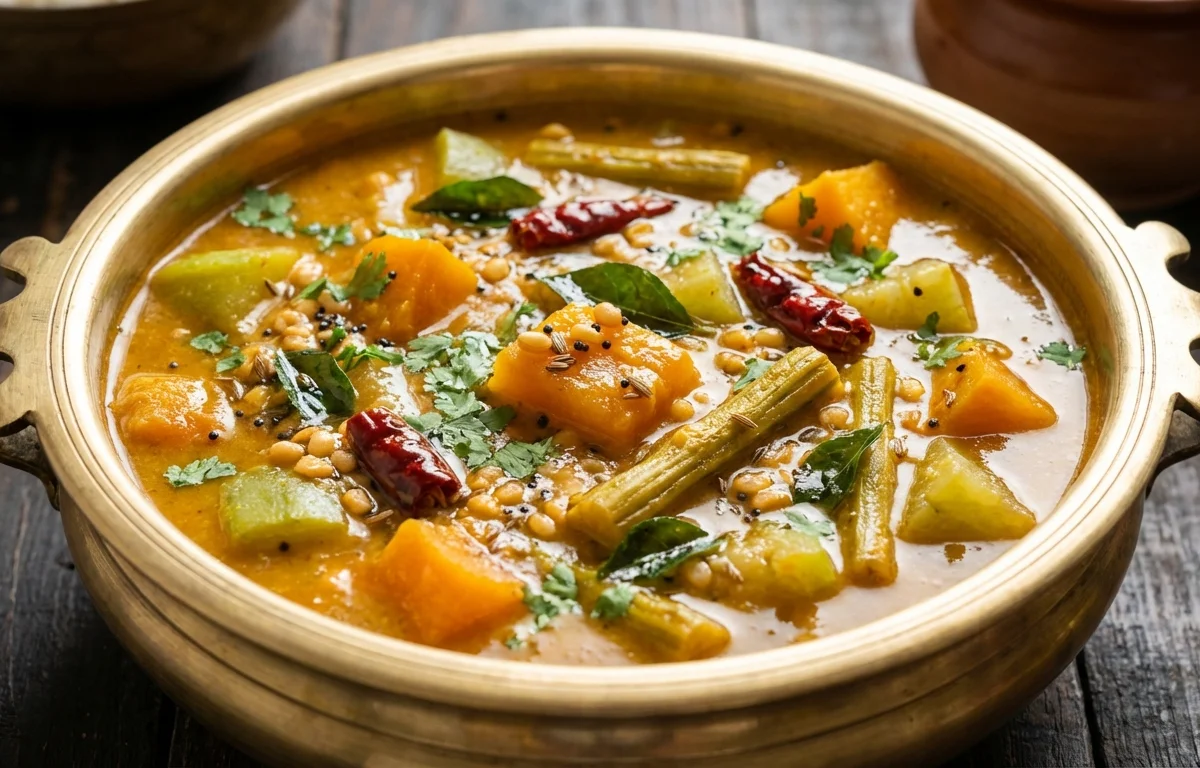
Mukkala Pulusu
A tangy Andhra-style mixed vegetable tamarind stew made with chunky pieces of pumpkin, drumstick, sweet potato, and brinjal. It has a gentle sweetness from jaggery and a comforting, home-style finish from a simple tempering.
For 4 servings
- prep · ~15 min
Soak the tamarind and prep the vegetables.
1.Soak tamarind in warm water for 15 minutes.2.Cut pumpkin, sweet potato, drumstick, and brinjal into medium pieces.3.Slice the onion and slit the green chilies.4.Squeeze the tamarind well and strain to get a smooth extract.TIPKeep the vegetable pieces slightly large so they hold their shape in the pulusu. - temper · ~4 min
Make the tempering.
1.Heat oil in a pot over medium heat.2.Add mustard seeds and let them splutter.3.Add fenugreek seeds, dried red chili, and curry leaves.4.Add onion and cook until just soft and lightly glossy.TIPDo not let the fenugreek seeds turn dark brown or the pulusu will taste bitter. - boil · ~20 min
Cook the vegetables in the tamarind base.
1.Add pumpkin, sweet potato, drumstick, brinjal, and green chili to the pot.2.Pour in the tamarind extract and water.3.Add turmeric powder, red chili powder, salt, and jaggery.4.Bring everything to a boil, then cook until the vegetables are tender.TIPCook on a steady simmer after the first boil so the vegetables soften without breaking apart. - mix · ~2 min
Thicken the pulusu lightly.
Stir rice flour with a little water to make a smooth slurry. Pour it into the simmering pulusu and mix well so it thickens slightly without lumps.
- simmer · ~5 min
Simmer until the flavors come together.
Cook for 3 to 5 minutes more, until the raw taste of the rice flour is gone and the pulusu looks glossy and lightly thickened.
- serve
Serve the Mukkala Pulusu hot.
What to keep in mind.
7 tips from the recipe — small details that make a real difference to the final dish.
- 1Add brinjal after the harder vegetables have started softening if you want neater wedges that do not collapse.
- 2Keep the tamarind extract smooth and free of fibers, or the pulusu can taste harsh and look muddy.
- 3Stir the rice flour slurry just before pouring, since it settles quickly and can thicken unevenly.
- 4Simmer gently once the vegetables are in; a hard boil can break the pumpkin and sweet potato into the gravy.
- 5Taste only after the vegetables are cooked, then balance with a little extra jaggery or tamarind if needed.
- 6Mukkala Pulusu often tastes even better after 20 to 30 minutes of resting, when the sweet-sour flavors settle.
- 7Reheat on low heat with a splash of water, as the rice flour and starchy vegetables make it thicken as it stands.
Adapt it for your goals.
Jain
Skip onion and use a little more curry leaves and green chili for aroma. Good for those avoiding onion while keeping the pulusu style intact.
low oilLow-oil
Use just enough oil for the tempering and soften the onion with a splash of water. You still get the classic pulusu flavor with a lighter finish.
spicierSpicier
Increase red chili powder or add one more slit green chili if you prefer a sharper Andhra-style heat against the sweet-sour base.
more vegetableMore-vegetable
Add ash gourd, bottle gourd, or colocasia along with the existing vegetables for a heartier mixed-vegetable pulusu.
Why this is on our healthy list.
Vegetable-Rich Meal
Pumpkin, sweet potato, brinjal, and drumstick make this stew rich in varied plant compounds, color, and everyday nourishment.
Digestive Sweet-Sour Profile
Tamarind, curry leaves, and spices create a tangy, warming base often enjoyed in home cooking as part of a satisfying meal.
Moderate and Filling
The chunky vegetables and lightly thickened broth make the dish comforting and filling without needing much oil.
Frequently asked questions
Fenugreek seeds likely browned too much in the tempering, or the tamarind extract was very strong. Toast fenugreek briefly and balance the sourness with a little jaggery.



.webp)