
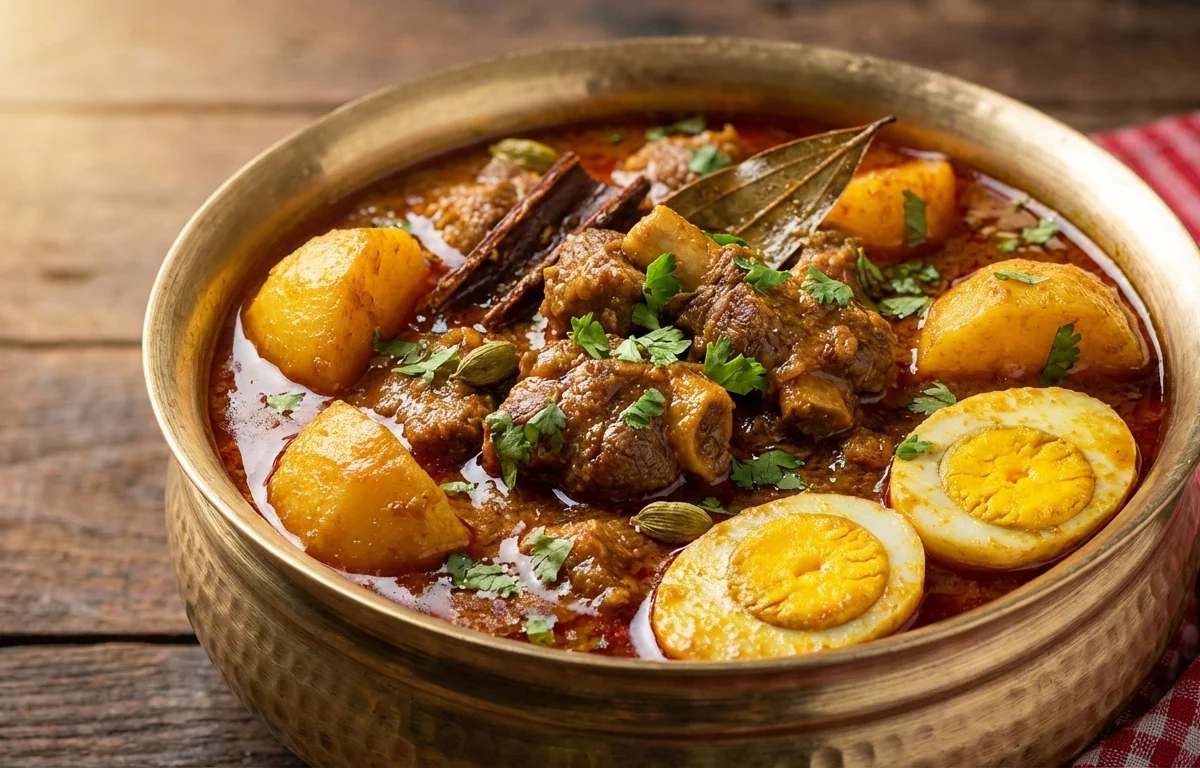
Mutton Dak Bungalow
A rich old-school curry from the dak bungalows of eastern India, this dish pairs tender mutton with potatoes, boiled eggs, onions, ginger, and warm spices in a deeply savory gravy.
For 4 servings
- prep · ~30 min
Marinate the mutton.
1.Place the mutton in a large bowl.2.Add yogurt, half of the ginger paste, half of the garlic paste, turmeric powder, red chili powder, coriander powder, cumin powder, and salt.3.Mix well so every piece is coated.4.Set aside for 30 minutes while you prepare the other ingredients.TIPA short marinade helps the meat absorb flavor and softens it slightly before cooking. - fry · ~7 min
Fry the potatoes and eggs lightly.
1.Heat mustard oil in a heavy pan until it just begins to smoke lightly, then lower the heat.2.Add the potato halves and fry until lightly golden on the edges, 4 to 5 minutes.3.Add the boiled eggs and turn them gently in the oil for 1 minute to lightly blister the surface.4.Remove the potatoes and eggs to a plate.TIPLight frying gives the potatoes and eggs better flavor and helps them hold their shape in the gravy. - saute · ~10 min
Cook the whole spices and onions.
1.In the same pan, add bay leaf, cinnamon, green cardamom, cloves, and black peppercorns.2.Let them sizzle for 20 to 30 seconds until fragrant.3.Add the sliced onions and sugar.4.Cook on medium heat until the onions turn golden brown, 8 to 10 minutes.TIPDo not rush the onions; their deep color gives the curry its old-style dak bungalow flavor. - saute · ~2 min
Add the ginger and garlic.
Add the remaining ginger paste and garlic paste. Cook for 1 to 2 minutes until the raw smell fades.
- saute · ~12 min
Bhuno the marinated mutton.
1.Add the marinated mutton along with all the marinade to the pan.2.Cook on medium-high heat, stirring often, until the meat changes color and the masala thickens.3.Keep cooking until the oil starts separating at the edges, about 10 to 12 minutes.TIPThis slow bhuno step builds the body of the gravy, so keep scraping the bottom as it cooks. - simmer · ~40 min
Add water and cook the curry.
1.Pour in the hot water and stir well.2.Add the fried potatoes and slit green chilies.3.Bring the curry to a boil, then lower the heat.4.Cover and cook until the mutton is tender, 35 to 40 minutes, stirring once or twice.TIPAdd a splash more hot water only if the gravy gets too thick before the mutton is done. - simmer · ~5 min
Add the eggs and finish the gravy.
Add the fried boiled eggs and garam masala. Simmer uncovered for 5 minutes so the eggs soak up the gravy and the sauce thickens slightly.
- rest · ~10 min
Rest the curry before serving.
Turn off the heat and let the curry rest for 10 minutes so the flavors settle and the oil rises gently to the top.
- serve
Serve hot.
What to keep in mind.
7 tips from the recipe — small details that make a real difference to the final dish.
- 1Bring the mustard oil just to smoking before cooking to tame its raw sharpness without losing its signature flavor.
- 2Pat the boiled eggs dry before frying so they blister lightly instead of sputtering in the hot oil.
- 3Slice the onions evenly and let them reach a true golden brown; pale onions will give a flatter, sweeter gravy.
- 4During the bhuno stage, keep scraping the pan bottom so the yogurt marinade cooks down without catching.
- 5Use hot water, not cold, when loosening the masala so the mutton keeps simmering steadily and the gravy stays smooth.
- 6Cook until the potatoes are tender but intact; overcooked potatoes can break and muddy the gravy.
- 7This curry tastes even better after a few hours or the next day, when the eggs and mutton absorb more of the spiced gravy.
Adapt it for your goals.
Low-oil
Use less mustard oil and skip frying the eggs; the curry will be lighter but still retain its onion-spice depth.
spicierSpicier
Add an extra slit green chili or a bit more red chili powder for a hotter, more robust Bengali-style heat.
pressure cookerPressure-cooker
After bhuno, pressure-cook the mutton and potatoes for faster tenderizing, then finish with eggs and garam masala.
no eggNo-egg
Leave out the boiled eggs for a simpler mutton-and-potato curry that still feels traditional and hearty.
Why this is on our healthy list.
Protein-Rich Main Dish
Mutton and boiled eggs make this curry filling and rich in protein, helping turn it into a satisfying one-pot meal.
Contains Warming Spices
Ginger, garlic, black pepper, cloves, cinnamon, and cardamom add aromatic complexity along with traditional spice benefits.
Balanced With Potatoes
Potatoes add substance and energy to the dish, making the rich mutton gravy more complete and comforting.
Frequently asked questions
Yes. Lamb works well and may cook a little faster and taste milder, so start checking tenderness earlier than with goat meat.





-curry.webp)
.webp)