
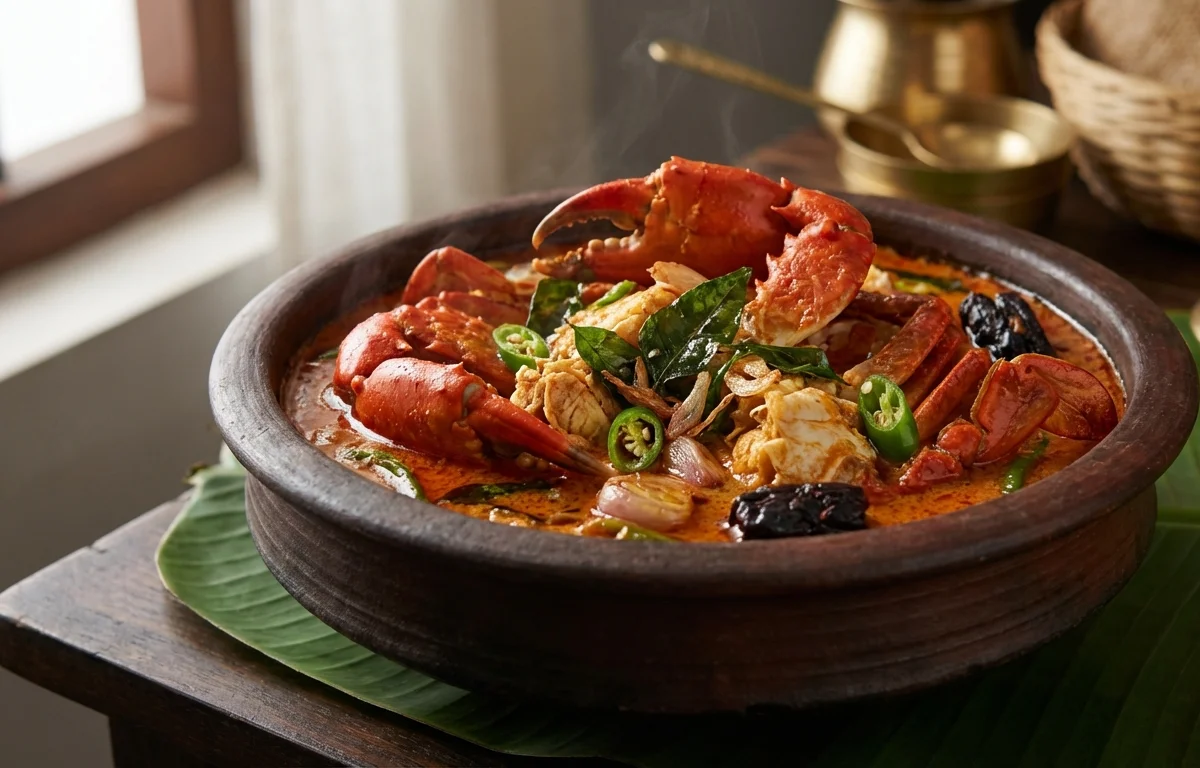
Nadan Crab Curry
A rustic Kerala-style crab curry where whole cleaned crabs swim in a roasted coconut and spice gravy. Tangy from kokum, rich with coconut, and fragrant with curry leaves. A coastal delicacy that pairs perfectly with steamed rice or appam.
For 4 servings
- prep
Clean and marinate the crab.
Rinse crab pieces well under cold water. Rub with a pinch of turmeric and a little salt. Set aside while you prepare the masala.
- roast · ~8 min
Dry roast the coconut and spices.
1.Heat a heavy-bottomed pan over medium-low heat. Add grated coconut.2.Stir continuously until coconut turns deep golden brown and fragrant (5-6 minutes).3.Add coriander powder, red chili powder, turmeric powder, black pepper powder, and fennel seeds.4.Roast for another 2 minutes until spices release their aroma. Do not burn.5.Remove from heat and let cool slightly. Blend with a splash of water to a smooth paste.TIPKeep the heat medium-low. Burnt coconut tastes bitter and will ruin the curry. - temper · ~8 min
Make the tempering.
1.Heat coconut oil in the same pan over medium heat.2.Add mustard seeds and let them splutter (30 seconds).3.Tear curry leaves and add them. Fry for 10 seconds until fragrant.4.Add sliced shallots, green chilies, crushed ginger, and garlic.5.Sauté until shallots turn soft and golden (6-7 minutes). - saute · ~7 min
Cook the tomato base.
1.Add chopped tomatoes to the pan.2.Cook until tomatoes turn soft and pulpy and oil starts to separate at the edges (4-5 minutes).3.Add the ground coconut-spice paste. Sauté for 2-3 minutes until the raw smell disappears and the masala darkens slightly.TIPDon't rush this step. The masala needs to fry well in oil to develop its full flavor. - simmer · ~20 min
Add crab and simmer in the gravy.
1.Pour in 1.5 cups of water. Add kokum pieces and salt to taste.2.Bring the gravy to a gentle boil, then add the marinated crab pieces.3.Cover and simmer on low heat for 15-20 minutes, stirring once or twice carefully so the crab pieces don't break.4.The gravy will thicken and the crab will turn a vibrant orange-red when done.TIPSimmer gently — high heat makes crab meat tough and rubbery. - rest · ~5 min
Rest the curry before serving.
Turn off the heat and let the curry sit covered for 5 minutes. The flavors meld beautifully during this rest.
- garnish
Finish with a final flourish.
1.Drizzle a teaspoon of raw coconut oil on top for aroma.2.Tuck a few fresh curry leaves on the surface.
What to keep in mind.
6 tips from the recipe — small details that make a real difference to the final dish.
- 1Use fresh coconut for roasting; pre-packaged desiccated coconut lacks the natural oils needed for a rich gravy.
- 2Crack the crab claws and legs with a heavy knife before cooking so the flavors seep into the meat.
- 3Kokum is key for tang; if unavailable, substitute with 1 tablespoon of tamarind pulp, but adjust salt accordingly.
- 4Do not skip the resting period after simmering — it allows the crab to absorb the gravy without overcooking.
- 5Use only coconut oil for authentic Kerala flavor; other oils will alter the dish's character.
- 6When blending the roasted coconut-spice paste, add just enough water to form a thick, smooth puree — too much water dilutes the gravy.
Adapt it for your goals.
Mangalorean-style
Replace kokum with tamarind and add ½ teaspoon of fenugreek seeds to the tempering for a slightly sweeter, more piquant gravy popular in coastal Karnataka.
Extra spicyExtra spicy
Double the green chilies and add 1 teaspoon of freshly ground black pepper at the end for a fiery kick that still lets the coconut shine.
Low oilLow-oil
Reduce coconut oil to 1½ tablespoons and skip the final drizzle; the roasted coconut paste provides enough richness.
Seafood swapSeafood swap
Substitute crab with 500g of cleaned prawns or mussels; reduce cooking time to 5-7 minutes to prevent overcooking.
Why this is on our healthy list.
Rich in Lean Protein
Crab meat is a high-quality, low-fat protein source that supports muscle maintenance and tissue repair.
Healthy Fats from Coconut
Fresh coconut provides medium-chain triglycerides (MCTs), which are easily metabolized for quick energy.
Anti-Inflammatory Spices
Turmeric and ginger in this curry contain curcumin and gingerol, compounds known for their anti-inflammatory properties.
Digestive Aid from Kokum
Kokum is rich in hydroxycitric acid, which can aid digestion and enhance the absorption of minerals.
Frequently asked questions
Yes, but thaw completely in the refrigerator and pat dry before marinating. Frozen crab is often pre-cooked, so simmer for only 10 minutes to avoid rubbery meat.



.webp)
.webp)