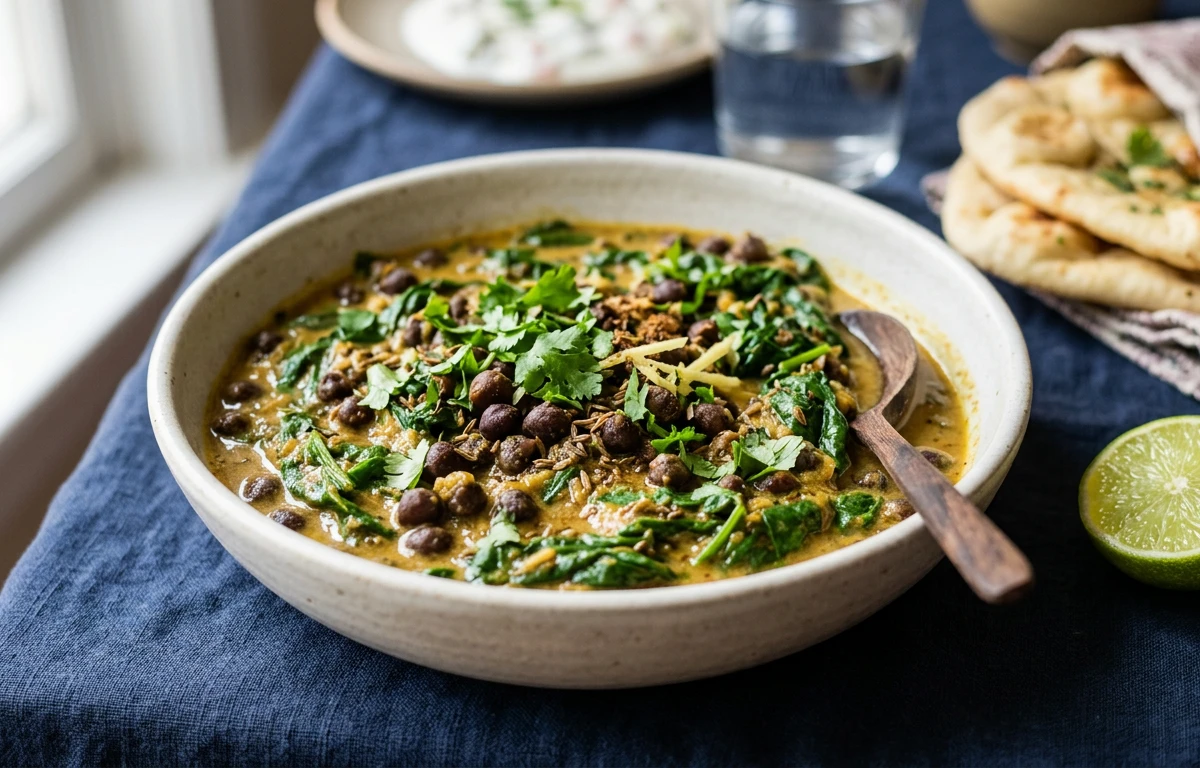
Shalgam Gosht
Tender mutton and sweet turnips simmered in a fragrant onion-tomato masala with whole spices. A classic North Indian winter delicacy where the earthy sweetness of shalgam beautifully balances the richness of slow-cooked meat, best enjoyed with warm roti or steamed rice.
For 4 servings
- prep · ~20 min
Marinate the mutton.
1.Pat the mutton pieces dry.2.Mix with whisked yogurt, a pinch of turmeric, and a pinch of salt.3.Set aside to marinate while prepping other ingredients. - temper · ~2 min
Heat oil and add whole spices.
1.Heat mustard oil in a pressure cooker until it reaches its smoking point, then reduce heat.2.Add cumin seeds, bay leaves, black cardamom, cinnamon, and cloves.3.Let them splutter for 30 seconds until fragrant. - saute · ~11 min
Fry the onions until golden.
1.Add sliced onions and stir.2.Cook on medium heat until deep golden brown (8-10 minutes).3.Add crushed garlic and grated ginger, then cook for 1 minute until the raw smell disappears. - saute · ~7 min
Cook the tomatoes and spices.
1.Add chopped tomatoes and slit green chilies.2.Cook until tomatoes turn mushy and oil starts to separate (5-6 minutes).3.Add coriander powder, red chili powder, and remaining turmeric. Stir for 1 minute. - saute · ~5 min
Sear the marinated mutton.
1.Add the marinated mutton pieces to the masala.2.Sear on high heat for 4-5 minutes, turning to brown all sides.3.Sprinkle salt and mix well. - pressure cook · ~25 min
Pressure cook the mutton until tender.
1.Pour in 1.5 cups of water and stir.2.Close the pressure cooker lid and cook on medium-high heat.3.Wait for 2 whistles, then reduce heat to low and cook for 20 minutes.4.Allow pressure to release naturally. - simmer · ~20 min
Add turnips and simmer.
1.Open the lid and add quartered turnips to the curry.2.Stir gently and check gravy consistency; add 1/4 cup water if too thick.3.Simmer uncovered on low heat for 15-20 minutes until turnips are tender but hold their shape.4.Stir occasionally to prevent sticking.TIPDon't overcook the turnips — they should be fork-tender with a slight bite, not mushy. - simmer · ~3 min
Finish with garam masala and adjust gravy.
1.Sprinkle garam masala over the curry.2.Simmer for 2-3 minutes to let the flavors meld.3.The oil should float on top when ready. - garnish
Garnish with fresh cilantro and ginger juliennes.
Transfer to a serving bowl. Scatter chopped cilantro and ginger juliennes on top. Serve hot with roti, naan, or steamed rice.
What to keep in mind.
6 tips from the recipe — small details that make a real difference to the final dish.
- 1Smoke mustard oil until its pungent aroma turns nutty before adding spices — this removes rawness and deepens flavor.
- 2Bone-in mutton adds body to the gravy; the marrow releases collagen that thickens the curry naturally.
- 3Marinate the mutton in yogurt for at least 20 minutes — the lactic acid tenderizes the meat and helps the masala cling.
- 4Wait for natural pressure release to avoid shocking the meat; quick release can make mutton chewy.
- 5Add turnips only after the mutton is almost done — they cook quickly and become mushy if pressure-cooked with the meat.
- 6To prevent turnips from breaking, stir gently with a spatula and avoid boiling the curry vigorously once they are added.
Adapt it for your goals.
Pressure-cooker shortcut
Cook the turnips with the mutton in the pressure cooker (add them after 2 whistles, then cook for 5 more minutes on low) if you are short on time — the texture will be softer, but the flavors still meld well.
low oilLow-oil
Reduce mustard oil to 1 tablespoon and skip the finishing oil; the yogurt and meat fat provide enough richness for a lighter but still flavourful curry.
vegetarianVegetarian
Replace mutton with 400 g of paneer cubes (or boiled chickpeas) and adjust cooking times: skip pressure-cooking, sauté the masala, add turnips and paneer/chickpeas, then simmer 15-20 minutes.
high proteinHigh-protein
Use lean goat or beef stew meat and add a handful of boiled chana (chickpeas) along with the turnips for extra protein without compromising the winter roots flavour.
jainJain
Omit onion and garlic; replace with a generous pinch of asafoetida (hing) in the tempering step and double the ginger content — the turnips and tomatoes create enough depth for a satisfying Jain version.
Why this is on our healthy list.
Rich in Fibre from Turnips
Turnips are an excellent source of dietary fibre, which supports healthy digestion and helps maintain stable blood sugar levels, especially valuable in a hearty winter meal.
High-Quality Animal Protein
Bone-in mutton provides complete protein, essential for muscle repair and immune function, along with iron and B vitamins for energy.
Anti-Inflammatory Spices
Turmeric, ginger, and cinnamon in this dish contain curcumin and gingerol, natural compounds known for their antioxidant and anti-inflammatory properties.
Bone Health Support
The collagen and minerals released from bone-in meat during slow cooking may contribute to joint and bone health, along with the calcium from the yogurt.
Low Glycemic Load Roots
Turnips have a low glycemic index compared to potatoes, making this curry a suitable option for those watching blood sugar levels while enjoying a satisfying stew.
Frequently asked questions
Yes, but you'll lose the pungent, earthy aroma that defines many North Indian gravies. Add 1/2 teaspoon of mustard seeds to the tempering to partially mimic the flavour, or use a neutral oil like sunflower.



.webp)