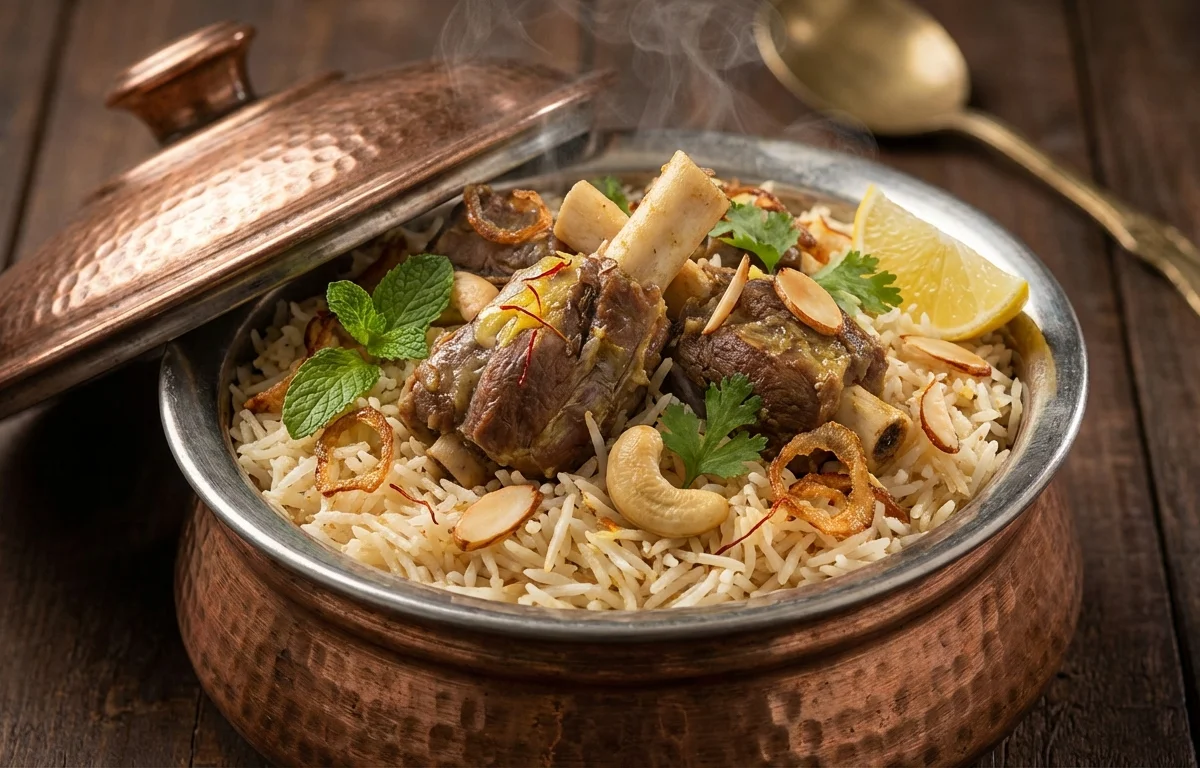
Sofiyani Mutton Biryani
A fragrant, lighter-style biryani where tender mutton is layered with basmati rice, yogurt, herbs, and warm whole spices. It has the richness of a festive biryani without a heavy masala base, letting the meat and aroma shine.
For 4 servings
- prep · ~30 min
Soak the rice and prep the biryani ingredients.
1.Wash the basmati rice until the water runs mostly clear.2.Soak the rice in water for 30 minutes, then drain well.3.Slice the onions thinly, slit the green chilies, and chop the coriander leaves.4.Soak the saffron in warm milk and set aside.TIPDrained rice should feel firm and separate. Over-soaked rice can break while parboiling. - mix · ~20 min
Marinate the mutton.
Mix the mutton with yogurt, ginger-garlic paste, green chili, red chili powder, garam masala, lemon juice, coriander leaves, mint, and 0.25 tsp salt. Coat well and set aside for 20 minutes while you fry the onions.
- fry · ~12 min
Fry the onions until golden.
1.Heat the oil in a wide pan over medium heat.2.Add the sliced onions and fry, stirring often, until deep golden and crisp at the edges.3.Lift them out and spread on a plate so they stay crisp.TIPPull the onions out just before they look fully done. They darken more as they cool. - boil · ~55 min
Cook the mutton until tender.
1.Heat 1 tbsp ghee in a heavy pot and add shah jeera, bay leaf, cardamom, cloves, cinnamon, and black peppercorns.2.Cook for a few seconds until fragrant, then add the marinated mutton.3.Cook over medium heat for 6 to 8 minutes, stirring, until the yogurt thickens and the raw smell fades.4.Add 4 cups water, cover, and cook until the mutton is tender and the gravy is lightly reduced.TIPThe mutton should be tender but not falling apart, because it cooks a little more during dum. - boil · ~10 min
Parboil the rice.
1.Bring 8 cups water to a boil in a large pot.2.Add 0.5 tsp salt, 1 bay leaf, 2 cardamom, 2 cloves, and a small piece of cinnamon if desired from the listed whole spices already in the recipe.3.Add the drained rice and cook until it is about 70 percent done, with a firm center.4.Drain the rice immediately.TIPThe rice must stay undercooked at this stage so the grains finish perfectly during dum. - assemble · ~5 min
Layer the biryani.
1.Keep the cooked mutton with its gravy in the heavy pot.2.Scatter half of the fried onions over the mutton.3.Spread the parboiled rice evenly on top.4.Drizzle the saffron milk and remaining 1 tbsp ghee over the rice.5.Finish with the remaining fried onions, mint, and coriander leaves. - simmer · ~30 min
Cook the biryani on dum.
Cover the pot tightly and cook on very low heat for 20 minutes. Let it rest off the heat for 10 minutes before opening the lid and gently fluffing from the sides.
TIPKeep the heat very low so the bottom does not scorch before the rice finishes steaming. - serve
Serve the Sofiyani Mutton Biryani hot.
What to keep in mind.
7 tips from the recipe — small details that make a real difference to the final dish.
- 1Marinate the mutton longer, up to 2 hours in the fridge, if you want deeper flavor and more tender meat.
- 2Fry the onions evenly over medium heat; patches of pale onion will soften the layered biryani instead of staying aromatic.
- 3Reduce the mutton gravy until lightly thick before layering, or the rice can turn soggy on dum.
- 4Check the rice at 70% doneness by breaking a grain; it should have a firm white core in the center.
- 5Seal the lid tightly with foil or dough if your pot leaks steam, so the dum stays gentle and aromatic.
- 6Let the biryani rest the full 10 minutes after dum to help the rice firm up and separate cleanly.
- 7When serving, scoop from the side and lift in layers so the mutton, gravy, and saffron rice stay mixed but not mashed.
Adapt it for your goals.
Low-oil
Use less oil for frying onions and rely more on ghee for finishing; the biryani stays aromatic but feels lighter.
spicierSpicier
Add extra slit green chilies or a little more red chili powder if you want the delicate Sofiyani profile with more heat.
chickenChicken
Swap mutton for bone-in chicken and reduce the initial cooking time; good for a faster, softer-textured biryani.
pressure cookerPressure-cooker
Cook the marinated mutton in a pressure cooker until just tender, then layer and dum as written for a quicker version.
Why this is on our healthy list.
Protein-Rich Main Dish
Mutton and yogurt make this biryani satisfying and protein-rich, helping turn it into a substantial one-pot meal.
Herb-Forward Flavor
Mint, coriander, ginger, garlic, and whole spices add aroma and complexity without relying on a heavy, oily masala.
Balanced Richness
Compared with heavier biryanis, this Sofiyani style uses a lighter gravy, so the dish highlights meat, rice, and herbs more cleanly.
Frequently asked questions
Yes, overnight marination in the refrigerator works well and can improve flavor and tenderness. Bring it closer to room temperature before cooking.