
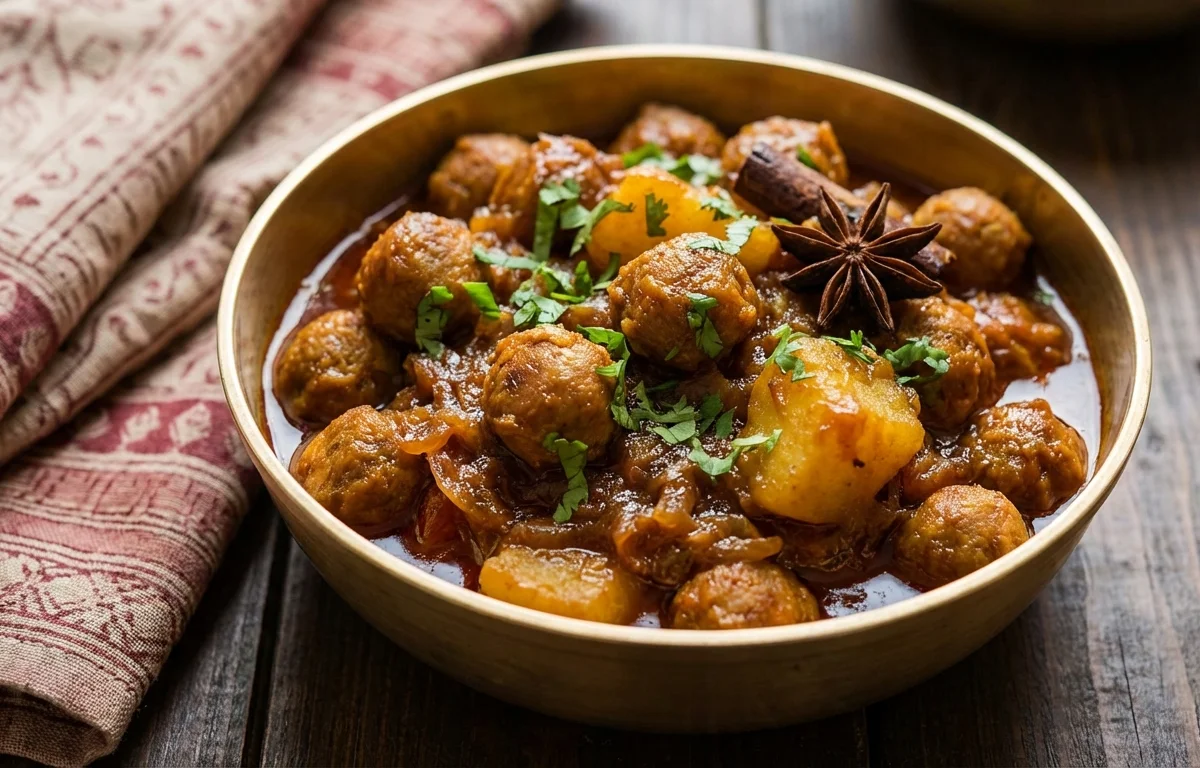
Soyabean Kosha
Chunky soyabean nuggets simmered in a bold, slow-cooked Bengali spice mix. The gravy clings tight, rich with mustard oil warmth and caramelized masala. Serve hot with steamed rice or luchi for a proper comfort meal.
For 4 servings
- prep
Soak and prepare the soyabean nuggets.
1.Soak soyabean nuggets in enough hot water for 15-20 minutes until soft and doubled in size.2.Drain the water and rinse under fresh water twice to remove any aftertaste.3.Squeeze each nugget firmly between your palms to remove all excess water. Set aside.TIPSqueezing out the water is crucial—dry nuggets absorb the masala better and won't taste watery. - temper · ~2 min
Temper the whole spices in mustard oil.
1.Heat mustard oil in a kadai over high heat until it reaches smoking point and turns pale yellow.2.Reduce heat to medium. Add bay leaves, green cardamom, cinnamon stick, and cloves; stir for 30 seconds until fragrant.3.Add cumin seeds and let them crackle and sputter for 15 seconds.TIPHeating mustard oil to smoking point reduces its pungency and brings out a nutty flavour. - saute · ~15 min
Caramelize the onions and build the masala base.
1.Add finely chopped onions to the tempered oil. Sprinkle a pinch of salt to help them sweat.2.Sauté over medium heat for 10-12 minutes, stirring often, until deeply golden brown.3.Add ginger and garlic paste. Sauté for 2 minutes until the raw aroma disappears.4.Stir in turmeric powder, red chili powder, cumin powder, and coriander powder. Cook for 1 minute until the spices bloom.5.Add chopped tomatoes, sugar, and another small pinch of salt. Cook for 5-7 minutes, mashing occasionally, until tomatoes are pulpy and oil separates at the edges.TIPProper browning of the onions is non-negotiable—it forms the deep, sweet base of a true kosha. - simmer · ~20 min
Slow-cook the soyabean with the masala.
1.Add the squeezed soyabean nuggets and slit green chilies to the pan. Stir gently to coat each piece with the masala.2.Sauté on medium-low heat for 5 minutes, letting the nuggets absorb the spices.3.Pour in the warm water and bring to a gentle simmer. Cover the pan with a lid.4.Slow-cook on low heat for 15-18 minutes, stirring once halfway, until the water is fully absorbed and the masala clings thickly to each piece.TIPDon't rush the slow-cook. A proper kosha is almost dry—the masala should coat the beans, not float in gravy. - garnish · ~6 min
Finish with ghee, garam masala, and fresh coriander.
1.Sprinkle garam masala over the cooked soyabean and drizzle a teaspoon of ghee.2.Fold gently and switch off the heat. Let it rest covered for 5 minutes for the flavours to settle.3.Transfer to a serving bowl and garnish with freshly chopped coriander leaves.TIPAdding garam masala and ghee off-heat preserves their aromatic, fresh finish.
What to keep in mind.
7 tips from the recipe — small details that make a real difference to the final dish.
- 1Squeeze soaked soy nuggets thoroughly dry so they absorb the masala instead of releasing water.
- 2Heat mustard oil until it smokes and turns pale yellow to mellow its sharp pungency.
- 3Sauté onions on medium heat until deeply golden brown for the authentic kosha sweetness.
- 4Cook the tomato masala until oil separates at the edges for a rich, cohesive gravy.
- 5Slow-cook covered on low heat until the gravy is almost dry and clings to each nugget.
- 6Add garam masala and ghee only after turning off the heat for a fresh, aromatic finish.
- 7Rest the dish covered for 5 minutes before serving to let flavors meld together.
Adapt it for your goals.
Low-oil
Reduce mustard oil to 1½ tbsp and skip the ghee finish; the flavor will be lighter but still aromatic for a lower-fat version.
veganVegan
Replace ghee with an extra teaspoon of mustard oil or a neutral oil to keep the dish entirely plant-based.
spicierSpicier
Increase green chilies to 4-5 and add ½ teaspoon crushed red pepper for those who want a fiery kick.
gluten freeGluten-free
This recipe is naturally gluten-free as written; confirm your soy nuggets are certified gluten-free for celiac safety.
Why this is on our healthy list.
High in Plant Protein
Soybean nuggets provide a substantial amount of complete plant-based protein, supporting muscle repair and satiety.
Rich in Fiber
Textured soy protein contains dietary fiber that aids digestion and helps maintain steady energy levels.
Antioxidant Spice Blend
Ingredients like turmeric, cumin, coriander, and cardamom supply antioxidant compounds that support overall wellness.
Frequently asked questions
Yes, any brand of textured vegetable protein chunks works. Adjust soaking time as needed until they are soft and doubled in size.



-curry.webp)
.webp)