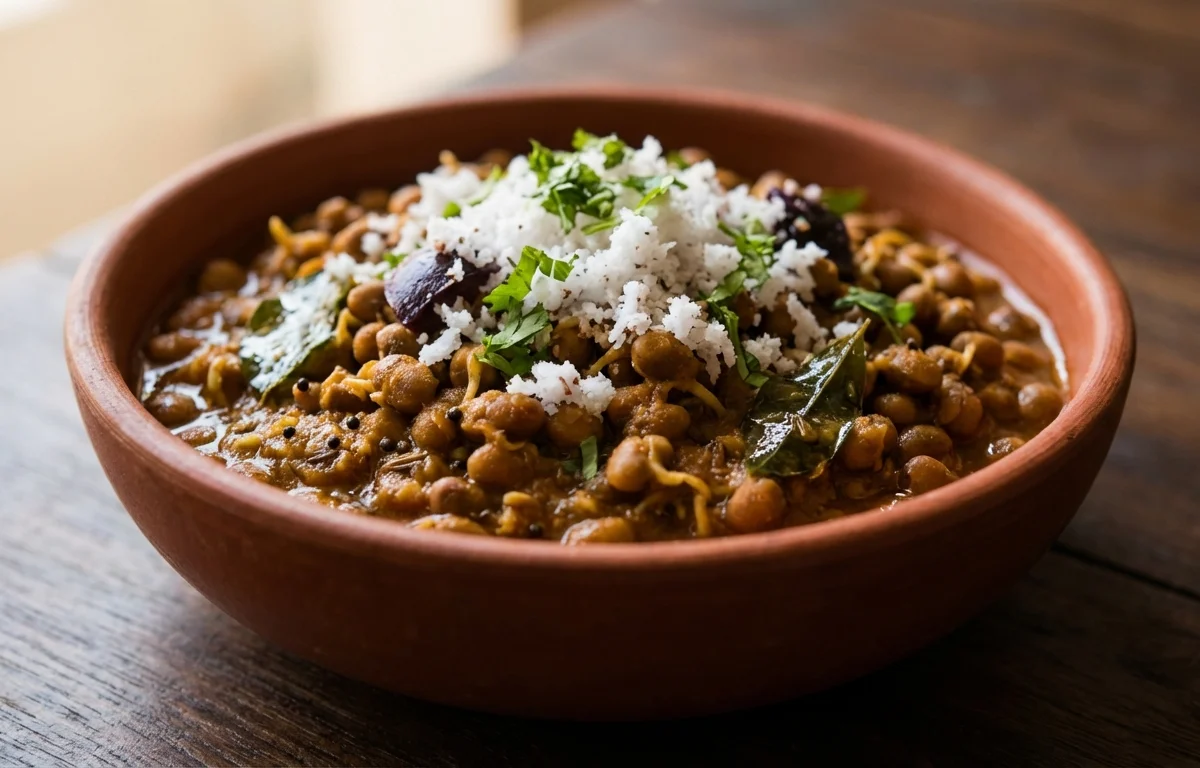
Vaal Bhaji
A rustic Maharashtrian-style preparation of field beans cooked with minimal spices and a nutty coconut-garlic garnish. The beans turn creamy and tender as they simmer, absorbing the gentle heat of green chilies and the earthiness of turmeric. A protein-rich, homely sabzi that pairs perfectly with bhakri or steamed rice.
For 4 servings
- prep
Soak and peel the field beans overnight.
Wash the vaal and soak them in enough water for 8 hours or overnight. Drain, then peel the outer skin off each bean by pinching gently. Rinse once more and set aside.
- pressure cook · ~15 min
Pressure cook the beans until just tender.
Transfer peeled beans to a pressure cooker. Add 0.5 cup water and a pinch of salt. Cook on medium heat for 2 whistles, then let the pressure release naturally. The beans should be soft but hold their shape.
TIPIf the beans are very fresh, 1 whistle is enough. Overcooking makes them mushy. - temper · ~2 min
Prepare the tempering in a kadai.
1.Heat 2 tsp oil in a kadai over medium heat until shimmering.2.Add mustard seeds and let them splutter completely (30 seconds).3.Add cumin seeds and fry until aromatic (15 seconds).4.Add asafoetida, curry leaves, and slit green chilies. Sauté for 30 seconds. - saute · ~11 min
Cook the beans with spices.
1.Add turmeric powder and red chili powder to the tempering. Stir quickly for 10 seconds.2.Add the cooked beans along with any remaining water in the cooker.3.Add the remaining salt and mix gently.4.Simmer on low heat for 10-12 minutes, stirring occasionally, until the mixture thickens slightly.TIPMash a few beans with the back of the spoon to create a slightly creamier texture. - garnish · ~1 min
Finish with fresh coconut, garlic, and coriander.
Turn off the heat. Sprinkle the grated fresh coconut and chopped raw garlic over the bhaji. Mix gently once. Garnish with chopped coriander leaves.
TIPAdding the garlic raw at the end gives a sharp, aromatic bite that cuts through the creaminess of the beans. - serve
Serve hot with jowar bhakri or steamed rice.
Transfer to a serving bowl. Vaal bhaji tastes best after resting for 5 minutes, allowing the garlic and coconut flavors to meld.
What to keep in mind.
6 tips from the recipe — small details that make a real difference to the final dish.
- 1Peeling the soaked beans is tedious but essential for a creamy texture without skins.
- 2Cook the beans to just 2 whistles; overcooking turns them into a mushy paste.
- 3Mash a few beans with the back of a spoon while simmering for a naturally creamy consistency.
- 4Add raw garlic only after turning off the heat to preserve its sharp, pungent kick.
- 5Let the bhaji rest for 5 minutes before serving so the coconut and garlic flavors meld.
- 6If you prefer a drier sabzi, simmer uncovered for a few extra minutes to reduce liquid.
Adapt it for your goals.
Vegan
This recipe is already vegan. For a richer version, add a splash of coconut milk when simmering the beans.
spicySpicy
Increase green chilies to 4-5 or add 1/2 tsp of Kashmiri red chili powder for a brighter, spicier finish.
low oilLow-oil
Use a non-stick pan and dry-roast the spices before adding a single teaspoon of oil for tempering.
protein boostProtein-boost
Stir in a handful of steamed peanuts or roasted chana dal along with the beans for added crunch and protein.
Why this is on our healthy list.
Rich in Plant Protein
Field beans (vaal) are an excellent source of plant-based protein, supporting muscle repair and satiety.
High in Dietary Fiber
The beans provide substantial fiber, aiding digestion and promoting a feeling of fullness.
Low in Fat
With only 2 teaspoons of oil, this dish is naturally low in fat, relying on spices for flavor.
Contains Anti-Inflammatory Spices
Turmeric and asafoetida are known for their anti-inflammatory properties, contributing to overall wellness.
Frequently asked questions
Soaking is crucial — it softens the tough outer skin and reduces cooking time. Without it, the beans may remain hard even after pressure cooking.



.webp)