
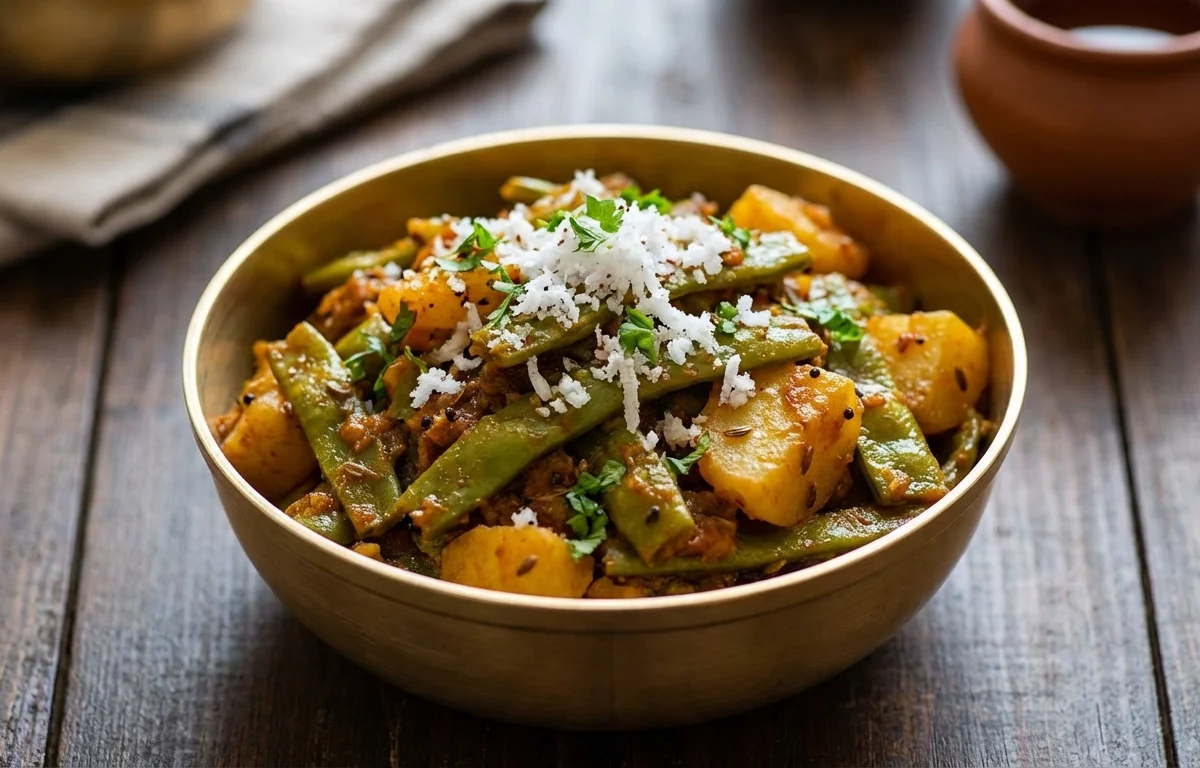
Val Papdi Bhaji
Tender flat beans slow-cooked with simple everyday spices until perfectly soft. This comforting Gujarati-style dry sabzi uses minimal ingredients to let the natural sweetness of the beans shine through. A homestyle dish that pairs beautifully with roti and a bowl of dal.
For 4 servings
- prep
Prep the flat beans.
1.Wash the val papdi thoroughly under running water.2.Snap off both ends and pull away any strings along the sides.3.Chop the beans into 1-inch pieces and set aside. - temper · ~2 min
Make the tempering.
1.Heat oil in a kadai over medium heat until shimmering.2.Add mustard seeds and let them crackle for 30 seconds.3.Add cumin seeds and let them sizzle for 15 seconds.4.Add asafoetida, green chili, and ginger — sauté for 30 seconds until fragrant. - saute · ~2 min
Add the beans and spices.
1.Add the chopped val papdi to the kadai and stir well to coat with the tempering.2.Add turmeric powder, red chili powder, coriander powder, salt, and sugar.3.Mix everything thoroughly so the spices evenly coat the beans. - simmer · ~20 min
Cook the beans until tender.
1.Sprinkle 3 tablespoons of water over the beans and stir once.2.Cover the kadai with a tight-fitting lid and reduce heat to low.3.Cook for 15-20 minutes, stirring once halfway, until beans are tender and all water is absorbed.TIPCheck at 15 minutes — the beans should be fork-tender but not mushy. Add a splash of extra water only if they're drying out too fast. - saute · ~3 min
Dry out the sabzi.
1.Remove the lid and increase heat to medium.2.Stir-fry for 2-3 minutes until any remaining moisture evaporates and the beans look glossy.3.The edges should start catching a light golden color. - garnish
Finish and serve.
1.Turn off the heat and squeeze lemon juice over the bhaji.2.Garnish with fresh chopped coriander leaves.3.Serve hot with roti or as part of a Gujarati thali.
What to keep in mind.
6 tips from the recipe — small details that make a real difference to the final dish.
- 1Remove the tough strings from flat beans before chopping to avoid a chewy texture.
- 2Cook covered on low heat for 15-20 minutes so the beans steam evenly and stay tender.
- 3Do not overcook; check at 15 minutes — the beans should be fork-tender but not mushy.
- 4Add a splash of water only if beans look dry during steaming; too much water makes them soggy.
- 5Stir-fry uncovered at the end to evaporate excess moisture and get a glossy finish.
- 6This sabzi tastes even better the next day as the spices meld — store in fridge for up to 3 days.
Adapt it for your goals.
Vegan
This recipe is already vegan as written — no changes needed for a plant-based diet.
lower oilLower-oil
Reduce oil to 1 teaspoon and dry-roast mustard seeds and cumin in a non-stick pan before adding asafoetida and green chili for a lighter version.
high proteinHigh-protein
Add 1/2 cup of boiled peanuts or cooked chana dal along with the beans for extra protein while keeping the Gujarati flavor profile.
Why this is on our healthy list.
Rich in Dietary Fiber
Flat beans (val papdi) are a good source of fiber, which supports digestive health and helps maintain steady blood sugar levels.
Low in Calories
This dry sabzi uses minimal oil and relies on spices for flavor, making it a light yet satisfying dish for weight-conscious meals.
Anti-Inflammatory Spices
Turmeric, ginger, and asafoetida are known for their anti-inflammatory properties, adding a healthful boost to this everyday sabzi.
Frequently asked questions
Yes, frozen flat beans work well. Thaw them first and reduce cooking time by about 5 minutes since they are already parboiled.


