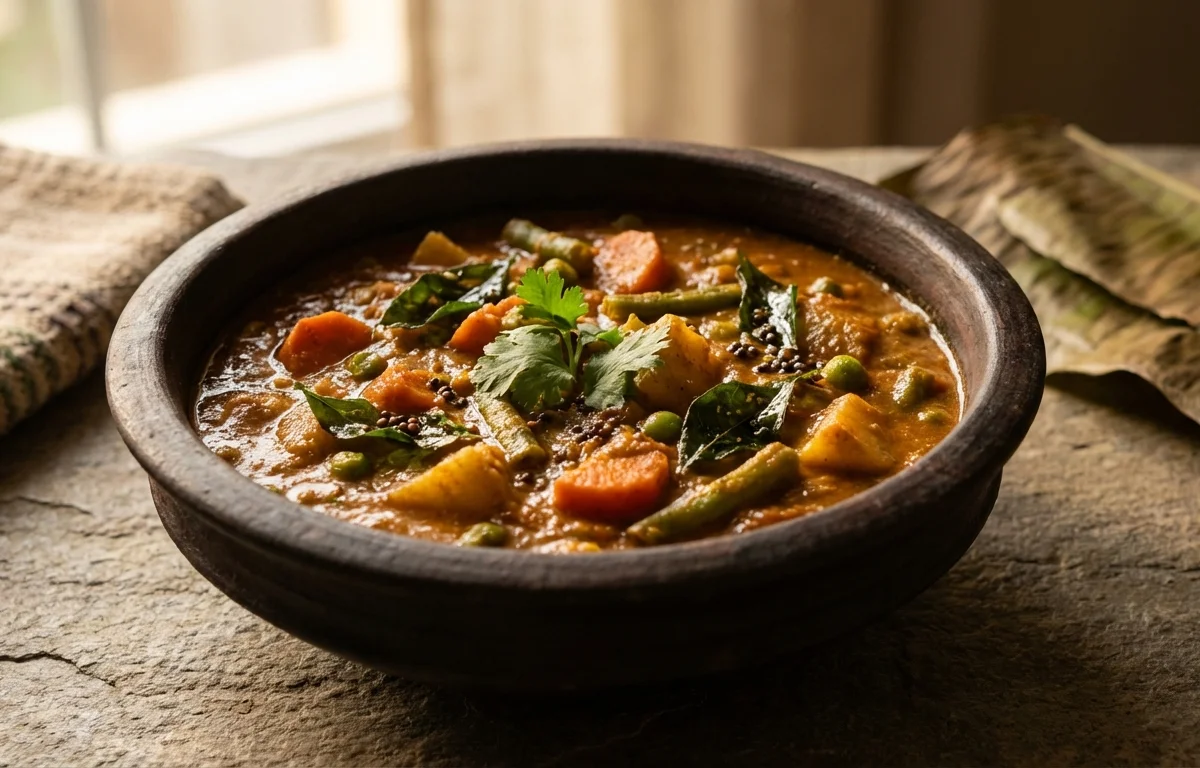
Vegetable Gassi
A coastal Karnataka style mixed vegetable curry with a gently spiced coconut base, soft vegetables, and a rich red masala. It is comforting, fragrant, and perfect with neer dosa, rice, or roti.
For 4 servings
- prep · ~10 min
Prep the vegetables and masala ingredients.
1.Cube the potato and carrot into even bite-size pieces.2.Cut the beans into short pieces and keep the peas ready.3.Slice the onion, chop the tomato, and peel the garlic cloves. - boil · ~15 min
Cook the vegetables until just tender.
Add potato, carrot, beans, peas, 1.5 cups water, turmeric powder, and half of the salt to a pot. Cook over medium heat until the vegetables are tender but still hold their shape.
TIPDo not overcook the vegetables or they will break once the masala is added. - saute · ~8 min
Cook the spices and coconut for the masala.
1.Heat 1 tsp oil in a pan over medium heat.2.Add dried red chili, coriander seeds, cumin seeds, fenugreek seeds, and garlic; sauté until fragrant (1-2 min).3.Add the grated coconut and sauté lightly for 2 minutes without browning too much.4.Add the chopped tomato and cook until soft (3-4 min).TIPA light roast gives the gassi a deeper flavor, but burnt coconut will make it bitter. - mix · ~4 min
Grind the masala smooth.
Cool the coconut mixture slightly, then grind it with tamarind paste and 0.5 cup water to a smooth, thick paste.
- simmer · ~10 min
Simmer the curry.
Add the ground masala to the cooked vegetables. Mix well, add the remaining water and salt, and simmer gently for 8 to 10 minutes until the gravy thickens and the flavors come together.
TIPKeep the heat low and stir now and then so the coconut gravy does not catch at the bottom. - temper · ~1 min
Make the tempering.
1.Heat the remaining oil in a small pan.2.Add mustard seeds and let them splutter (20-30 sec).3.Add curry leaves and fry briefly until aromatic. - assemble · ~1 min
Pour the tempering over the gassi.
Pour the hot tempering into the simmering curry and mix gently. Cook for 1 more minute.
- serve
Serve the vegetable gassi hot.
What to keep in mind.
7 tips from the recipe — small details that make a real difference to the final dish.
- 1Cut the potato and carrot to a similar size so they finish cooking together and stay neat in the gravy.
- 2Toast the red chilies and spices only until fragrant; fenugreek turns bitter very quickly if it darkens too much.
- 3Let the coconut mixture cool slightly before grinding so the masala blends smoother and doesn't build excess pressure in the jar.
- 4Grind the masala very smooth for the classic gassi texture; add water in small splashes rather than all at once.
- 5Simmer the curry gently after adding the coconut masala, not at a hard boil, to prevent splitting and sticking.
- 6Add the mustard-curry leaf tempering while it is still sizzling so the hot oil perfumes the whole pot immediately.
- 7This gassi tastes even better after 20 to 30 minutes of resting, once the vegetables absorb the tamarind-coconut masala.
Adapt it for your goals.
Jain
Skip onion and garlic, increase tomato slightly, and use a touch more coconut for body; good for a no-root-aromatics version.
spicierSpicier
Add 1 or 2 extra dried red chilies or use a hotter variety for a deeper red, more robust gassi.
no peasNo-peas
Replace peas with more beans or carrot if you want a less sweet, more traditional mixed-veg texture.
with mangalore cucumberWith-mangalore-cucumber
Swap part of the potato and carrot for mangalore cucumber for a more coastal Karnataka-style flavor and lighter feel.
Why this is on our healthy list.
Vegetable-Rich Meal
Potato, carrot, beans, peas, onion, and tomato make this curry a varied way to include multiple vegetables in one dish.
Good Fiber From Veg and Coconut
The mixed vegetables and fresh coconut add fiber, which helps make the curry more satisfying and hearty.
Plant-Based Ingredients
This gassi is built entirely from plant ingredients, making it suitable for vegetarian and dairy-free meals.
Spice-Based Flavoring
Coriander, cumin, garlic, curry leaves, and tamarind bring strong flavor without relying on heavy cream or butter.
Frequently asked questions
Yes. Add frozen peas directly, and use frozen beans if needed, but reduce the initial cooking time so they don't turn mushy.