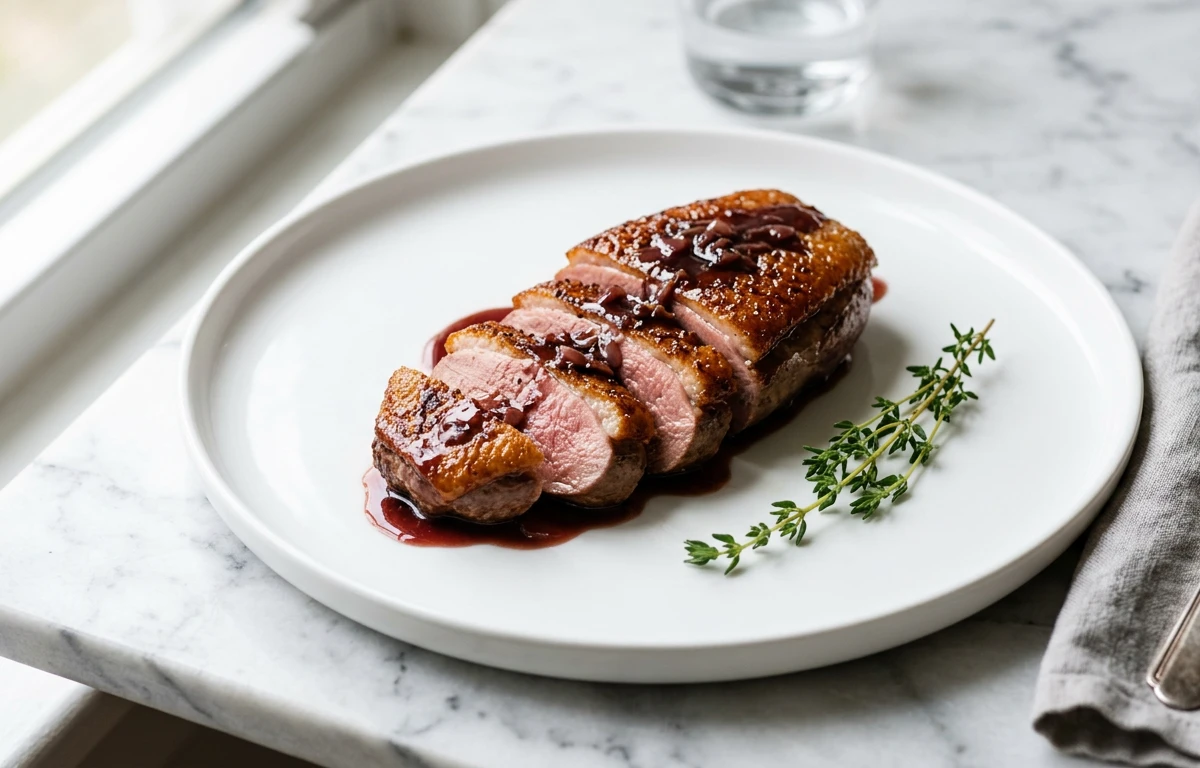
Duck is one of those foods we tend to save for restaurants or special occasions. It feels decadent, a little intimidating. And it is rich — unapologetically so. But that richness comes with a surprisingly straightforward nutritional profile: zero carbohydrates, a decent hit of protein, and a lot of fat. The conversation around duck isn't about sugar or carbs; it's all about that glorious, flavorful fat, and how to handle it right.
↑ A whole roasted duck, skin crisp and golden — a rich source of fat and protein.
The zero-carb bird
Duck is poultry, but we often cook and talk about it like it's red meat. It has a deeper, richer flavor than chicken or turkey, and a much, much higher fat content. That fat is the main event. When you cook a duck, your primary job is to get the thick layer of fat under the skin to melt away — a process called rendering — leaving behind a shatteringly crisp skin and moist meat.
Nutritionally, it's incredibly simple. It's an animal protein. There are no carbs, no fiber, and no sugar. It's just protein and fat. This makes it a dream for certain diets, and a food to be careful with for others.
IN ONE LINE
Duck is a zero-carb, high-fat, high-protein food with a glycemic index of zero. The key is managing the rich fat content by rendering it well and keeping portions sensible.
Duck nutrition facts
Here’s the nutritional profile for a 100-gram (about 3.5 ounce) serving of roasted whole duck, including the skin. Remember, removing the skin will significantly lower the fat and calorie count.
The numbers speak for themselves. This is a high-calorie food driven almost entirely by its fat content. That 39.3 grams of fat is more than you'd find in the same amount of 70/30 ground beef. But it's also a good source of minerals like iron and selenium, and the protein is high-quality.
Is duck fat unhealthy?
This is the big question. Duck fat is about 33% saturated, 51% monounsaturated (the kind famous in olive oil), and 16% polyunsaturated fat. So while the saturated fat content is high, more than half of its fat is the unsaturated kind. It's certainly not a 'health food' you should eat with abandon, especially if you're concerned about heart disease. But in moderation, it's a flavorful cooking fat that's arguably a better choice than butter (which has more saturated fat) and definitely better than trans fats.
Don't throw out the rendered fat! Strained and chilled, 'liquid gold' duck fat is an incredible medium for roasting potatoes to crispy perfection.
Duck has a Glycemic Index of Zero
Glycemic index (GI) measures how quickly a food's carbohydrates raise blood sugar. Since duck has no carbohydrates, it doesn't raise blood sugar at all. This gives it a GI of 0. For anyone managing blood sugar, from diabetics to those on a ketogenic diet, duck is a completely 'safe' food from a glycemic standpoint. The chart below puts it into perspective.
GLYCEMIC INDEX · DUCK vs COMMON FOODS
Duck sits at the very bottom of the GI scale
Duck
no carbs
LOW
Cherries
whole fruit
LOW
Apple
whole fruit
LOW
White bread
refined
HIGH
Cornflakes
refined
HIGH
SCALE 0–90
04590
The right way to cook it
Cooking duck is all about managing the fat. Get it right, and you're rewarded with crisp skin and moist meat. Here are the key steps for a whole roast duck.
01
Score the skin.
Use a sharp knife to cut a diamond pattern into the skin and fat, being careful not to pierce the meat. This helps the fat render out.
02
Season generously.
Salt is crucial. It draws out moisture from the skin, helping it get extra crispy. Season inside and out.
03
Start low, finish high.
Roast at a low temperature first (e.g., 300°F / 150°C) to gently melt the fat, then crank up the heat (400°F / 200°C) to crisp the skin.
04
Save the rendered fat.
Carefully pour off the liquid fat from the roasting pan partway through. This is 'liquid gold' for roasting vegetables.
05
Rest before carving.
Like any meat, let it rest for 10-15 minutes after cooking. This allows the juices to redistribute for a more tender result.
What duck is good for
01
Zero blood sugar impact
With a glycemic index of 0, duck provides energy from fat and protein without affecting blood glucose levels. Ideal for low-carb and diabetic diets.
GI 0
glycemic
02
Highly satiating
The combination of high fat and protein is incredibly filling, helping to curb hunger for hours after a meal.
39.3 g
fat per 100g
03
A complete protein source
Duck provides all the essential amino acids your body needs for muscle repair, hormone production, and overall function.
11.5 g
protein
04
Rich in essential minerals
It's a particularly good source of selenium, vital for thyroid function and antioxidant defense, and heme iron, the most absorbable form of iron.
34%
selenium DV
What to pair duck with
The richness of duck calls for pairings that offer acidity, sweetness, or earthy notes to cut through and complement the fat.
Eat freely — or be mindful?
Three ways to cook it
Beyond a whole roast, duck is versatile. Here are three classic approaches.
Want rich, satisfying meals worked into a balanced week?
Our meal planner can incorporate foods like duck into a healthy diet, balancing its richness with lighter meals, calculating your macros, and generating a single grocery list.
Build my weekly plan →SOURCES & REFERENCES · 3
One more thing
Eating well is rarely about willpower. It’s about having a short list of dinners you actually want to eat. Pick two from this list. Make them next week. The rest will follow.
If you want these on autopilot, our weekly meal planner can drop the picks above into your calendar with one click and build a single grocery list from the merged ingredients.
FREQUENTLY ASKED QUESTIONS
Frequently asked questions
Is duck healthier than chicken?
It depends on the cut. Skinless chicken breast is far leaner and lower in calories than duck with skin. However, duck fat has a better fatty acid profile than butter, with more monounsaturated fat. Overall, chicken is generally considered the leaner, 'healthier' everyday choice, while duck is a richer, more occasional meat.
Is duck considered red meat or white meat?
Botanically, duck is poultry, so it's technically white meat. However, its dark color, rich flavor, and high myoglobin content lead chefs to cook and pair it like red meat. So, it's a bird that lives in the culinary world of red meat.
Can I eat duck on a keto diet?
Absolutely. With zero carbohydrates and a high fat content, duck is an ideal food for a ketogenic diet. It provides fat for energy and protein for satiety without any impact on blood sugar or ketosis.
Is duck high in cholesterol?
Yes, duck is relatively high in dietary cholesterol, and more importantly, very high in saturated fat, which has a greater impact on blood cholesterol levels for most people. For this reason, it should be eaten in moderation, especially by those with concerns about heart health.
METHODOLOGY
How this article was created
Built using verified nutrition databases, culinary research, and traditional cooking knowledge — every claim is cross-referenced against the sources listed in the article.
· USDA data· Culinary research· Quality reviewed
Read our methodology →TRANSPARENCY
About this content
Articles are curated using trusted food databases (USDA FoodData Central, IFCT), culinary literature, and dietary guidelines, then structured by our editorial team for clarity, accuracy, and usefulness.
· Verified data sources· Culinary research· Quality reviewed
Read our editorial policy →RELATED RECIPES
Cook from this article
EXPLORE OUR MEALS
Meals that fit this article

AMERICAN · 1677 CAL
Almonds with Sliced Apple + supplement + iron

MEDITERRANEAN · 809 CAL
Greek Yogurt with Berries Almonds and Granola + supplement + iron

GENERAL_HEALTHY · 705 CAL
Banana with Peanut Butter Pregnancy + supplement + iron

MODERN · 982 CAL
Hummus with Crudits and Pita with Fresh Orange Snack + supplement + iron
TAGGED
KEEP READING