Most people know green gram as one of two things: the tiny beans that become crunchy sprouts, or the base for a comforting dal. Both are true, but they sell this little legume short. Whole green gram, or mung bean, is a quiet nutritional giant. It's loaded with plant protein and gut-friendly fiber, it's incredibly gentle on blood sugar, and it's one of the most versatile and affordable staples you can keep in your pantry. It's time we saw it as more than just a sprout.
↑ Whole green gram is a pantry staple that's both affordable and deeply nutritious.
The quiet, everyday workhorse
Green gram isn't flashy. It doesn't have the celebrity status of chickpeas or the creamy appeal of cannellini beans. What it has is a solid, reliable, and deeply impressive nutritional profile. It's one of the best plant-based sources of protein you can find, and it's packed with the kind of fiber that keeps you full for hours and your blood sugar on an even keel.
The best part? It's easy. It cooks faster than most other dried beans, has a mild, earthy flavor that plays well with others, and it's one of the most digestible legumes, which is great news if other beans give you trouble.
IN ONE LINE
A fantastic source of plant protein and fiber with a low glycemic index, making it a stellar choice for blood sugar control, weight management, and gut health.
Green gram nutrition facts
The numbers below are for 100 grams of dry, uncooked whole green gram (about ½ cup). Remember that cooking will increase the volume and weight as the beans absorb water, but this gives you the core nutritional value before you add anything else.
The two numbers that jump out immediately are the protein and the fiber. At nearly 24 grams of protein and 16 grams of fiber, this isn't just a side dish; it's the foundation of a substantial, satisfying meal. The iron and magnesium content are also seriously impressive for such a small bean.
Green gram's gentle glycemic index
If you're managing blood sugar, legumes are your best friends, and green gram is a perfect example. Its glycemic index (GI) is low. While exact numbers vary, it's consistently in the 25-35 range, which is exceptionally gentle. Why? The massive dose of fiber and protein acts like a brake, slowing down the absorption of its carbohydrates into your bloodstream. This means no sharp spikes, just steady, sustained energy.
GLYCEMIC INDEX · GREEN GRAM vs COMMON FOODS
Green gram sits in the very-low-GI band
Green Gram (cooked)
legume
LOW
Apple
whole fruit
LOW
Pineapple
whole fruit
MEDIUM
White bread
refined
HIGH
Cornflakes
refined
HIGH
SCALE 0–90
04590
How to cook and eat it right
Getting the most out of green gram is simple. A few small steps make it even more nutritious and easy to digest.
01
Rinse and soak.
Always rinse your beans well. Soaking for a few hours (or overnight) isn't strictly necessary but it speeds up cooking time and can make them easier to digest.
02
Cook until tender.
For soups and dals, you want them very soft and creamy. For salads, cook them until they are just tender but still hold their shape. A 1:3 ratio of beans to water is a good starting point.
03
Don't add salt too early.
As with most beans, adding salt at the beginning of cooking can make the skins tough. It's better to salt your dish towards the end.
04
Try sprouting them.
Soak the beans overnight, then drain and keep them in a covered container, rinsing twice a day. In 2-3 days, you'll have fresh sprouts for salads and stir-fries. Sprouting also increases the vitamin C content.
What green gram is good for
01
Serious plant-based protein
With nearly 24g of protein per 100g, it’s a cornerstone for building muscle and staying full, especially on a vegetarian or vegan diet.
24 g
protein
02
Exceptional fiber source
The 16g of fiber per 100g helps manage cholesterol, promotes gut health, and is key to the bean's low glycemic index.
16 g
fiber
03
Excellent for blood sugar control
The powerful combination of low-GI carbs, high fiber, and high protein makes it one of the best foods for preventing blood sugar spikes.
Low
GI
04
Rich in essential minerals
It's loaded with iron for energy, magnesium for muscle function and blood pressure, and potassium for fluid balance.
37%
iron DV
What to pair green gram with
Green gram's mild flavor makes it a perfect canvas. Pair it with bold spices and complementary grains to make it shine.
Eat freely — or be mindful?
Three ways to eat it
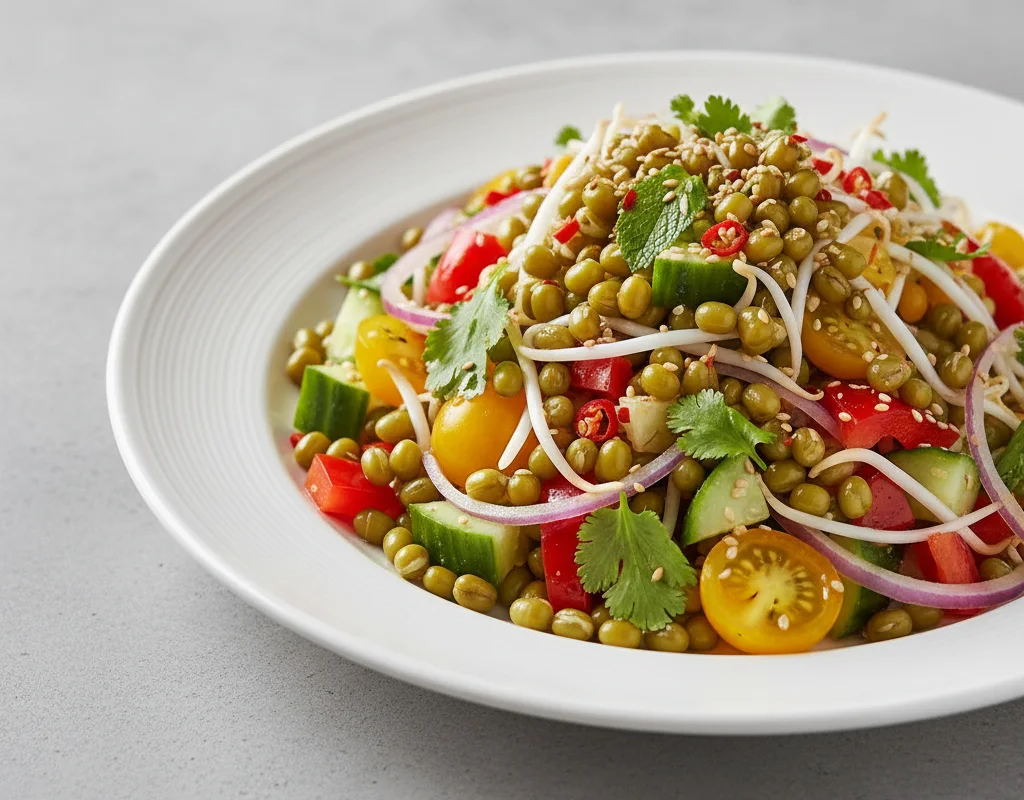
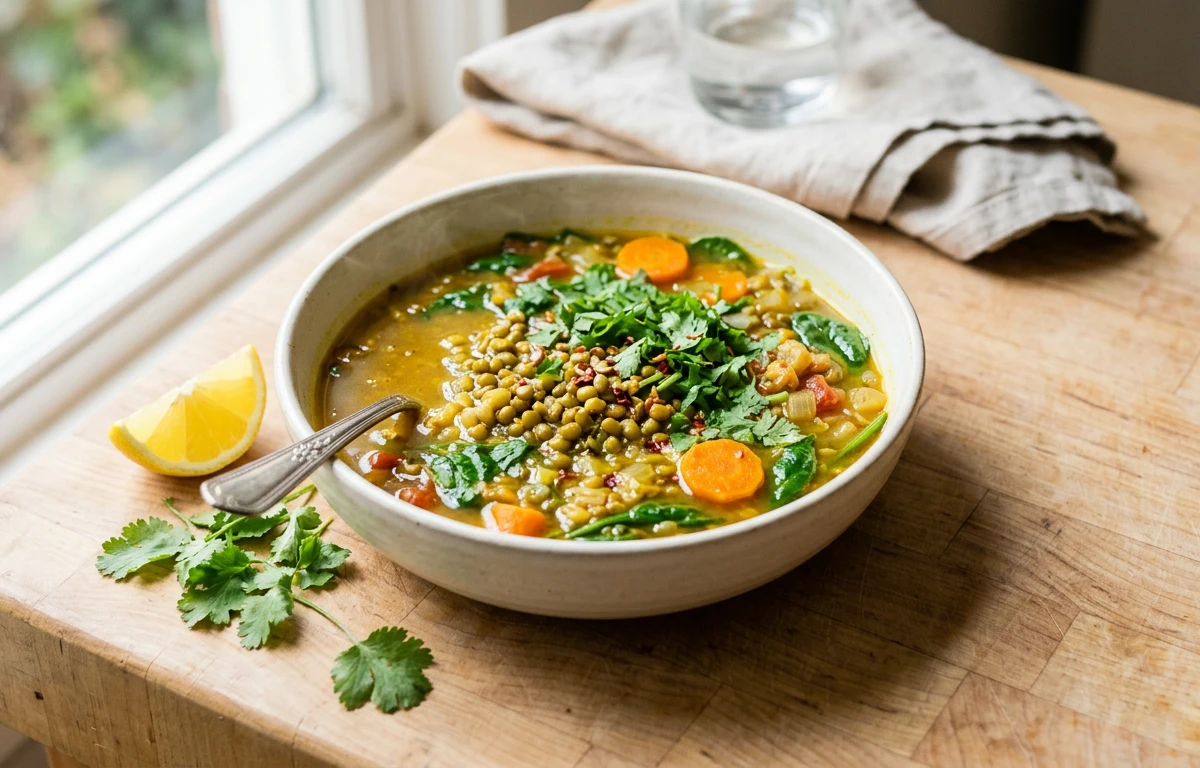
From a classic comfort dish to a fresh salad, here are three simple ways to get more green gram into your week.
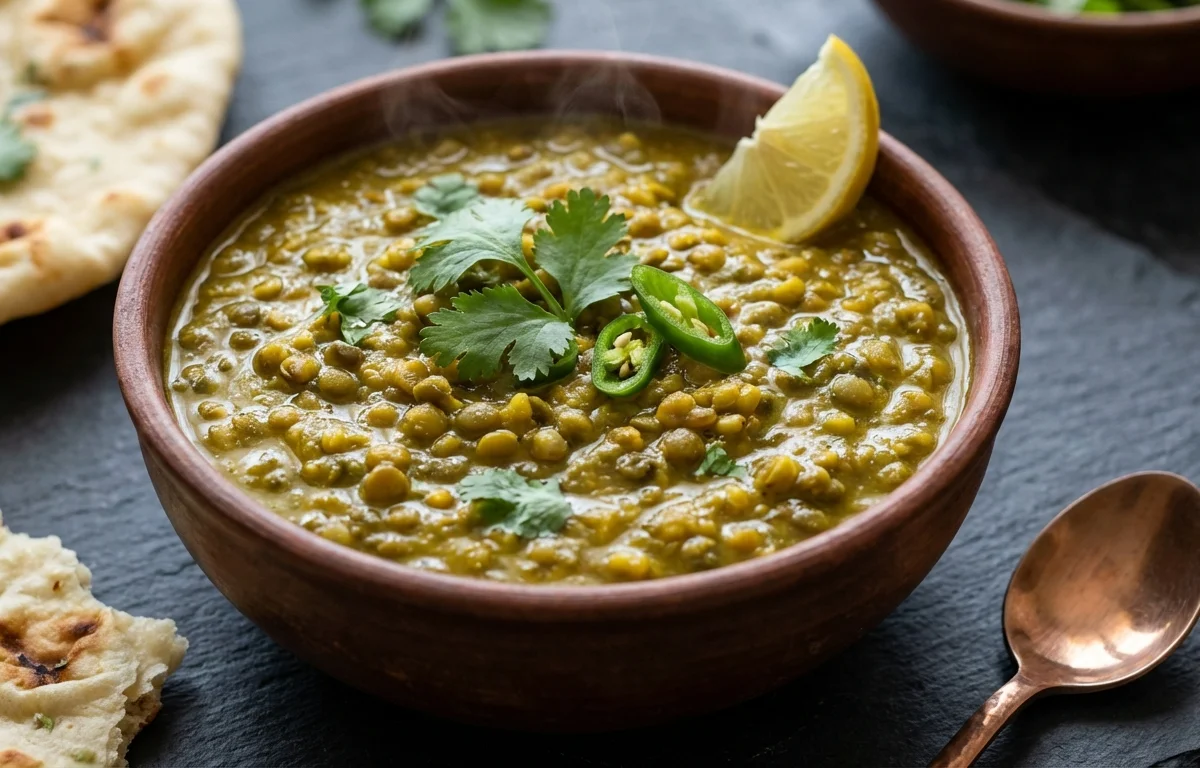
Want more plant-based protein in your week — without the guesswork?
Our meal planner makes it easy to build balanced days with high-protein, high-fiber foods like green gram. Get custom plans with macros calculated and a single grocery list for the week.
Build my weekly plan →SOURCES & REFERENCES · 3
One more thing
Eating well is rarely about willpower. It’s about having a short list of dinners you actually want to eat. Pick two from this list. Make them next week. The rest will follow.
If you want these on autopilot, our weekly meal planner can drop the picks above into your calendar with one click and build a single grocery list from the merged ingredients.
FREQUENTLY ASKED QUESTIONS
Frequently asked questions
Is green gram good for people with diabetes?
Yes, it's an excellent choice. The combination of a low glycemic index, high fiber, and high protein helps to manage blood sugar levels very effectively. It provides steady energy without the sharp spikes associated with refined carbohydrates.
Is green gram and mung bean the same thing?
Yes, they are the same legume. 'Green gram' is a common name in South Asia, while 'mung bean' is more common in East Asia and the West. You might also see it as 'moong'.
Does green gram cause gas and bloating?
Like all legumes, it can, especially if you're not used to eating a lot of fiber. Green gram is generally considered one of the more easily digestible beans. Soaking them before cooking and starting with smaller portions can help minimize any digestive discomfort.
How much protein is in green gram?
Whole green gram is a protein powerhouse. It contains about 24 grams of protein per 100 grams of dry beans, making it one of the best plant-based protein sources available.

ABOUT THE AUTHOR
Shreya Chatterjee
NUTRITION WRITER
Shreya is a nutrition writer and the voice behind The Nutrition Pen, where she turns evidence-based nutrition into simple, repeatable eating habits. Her writing focuses on practical food guidance — what to actually put on the plate — for readers who want to eat well without the noise.
Meet the editorial team →METHODOLOGY
How this article was created
Built using verified nutrition databases, culinary research, and traditional cooking knowledge — every claim is cross-referenced against the sources listed in the article.
· USDA data· Culinary research· Quality reviewed
Read our methodology →TRANSPARENCY
About this content
Articles are curated using trusted food databases (USDA FoodData Central, IFCT), culinary literature, and dietary guidelines, then structured by our editorial team for clarity, accuracy, and usefulness.
· Verified data sources· Culinary research· Quality reviewed
Read our editorial policy →RELATED RECIPES
Cook from this article
EXPLORE OUR MEALS
Meals that fit this article

AMERICAN · 1677 CAL
Almonds with Sliced Apple + supplement + iron

MEDITERRANEAN · 809 CAL
Greek Yogurt with Berries Almonds and Granola + supplement + iron

GENERAL_HEALTHY · 705 CAL
Banana with Peanut Butter Pregnancy + supplement + iron

MODERN · 982 CAL
Hummus with Crudits and Pita with Fresh Orange Snack + supplement + iron
TAGGED
KEEP READING