Let's be honest, kale had a moment. It went from a forgotten garnish to the star of every smoothie, and then... the backlash. People got tired of tough, bitter salads. But if you push past the hype and the hate, raw kale is still one of the most nutrient-dense things you can put on your plate. The secret isn't in forcing down a dry, woody salad. It's in knowing how to handle it — and appreciating what a nutritional workhorse it really is for the tiny calorie cost.
↑ Raw kale's reputation is tough, but its nutritional profile is undeniable.
More than just a trendy green
Kale is a member of the cabbage family, and for decades, that's how we treated it: a sturdy, slightly bitter cooking green or a frilly decoration on a buffet table. Then, around 2012, it became a health-food superstar. And while the intense hype has faded, the facts haven't changed.
For just 49 calories, a big bowl of raw kale delivers a serious payload of nutrition. It's packed with fiber, has a decent amount of plant-based protein, and offers a staggering amount of vitamin C. It's the definition of nutrient-dense, and learning to love it raw is one of the best things you can do for your everyday diet.
IN ONE LINE
Raw kale is a low-calorie, low-carb, high-fiber green with a huge vitamin C payload and a glycemic index so low it's barely measurable. The key is preparing it right.
Raw kale nutrition facts
Here's the nutritional profile for a 100-gram serving of raw kale, which is about 1.5 cups chopped. It's a generous portion for a salad base.
The standout number is obviously the vitamin C — 120 milligrams is more than you'll find in an orange. You also get a solid dose of fiber and a surprising amount of protein for a leafy green. With very few carbs and almost no fat, it's about as clean a food as you can find.
Kale's glycemic index
Glycemic index (GI) measures how fast a food raises blood sugar. A score under 55 is low, and 70+ is high. There's no official, published GI value for raw kale, and for good reason: it has so few digestible carbs that its effect on blood sugar is tiny, bordering on zero. It's safe to assume its GI is extremely low. For people managing blood sugar, this makes kale one of the safest vegetables you can eat, with a glycemic load that's practically negligible.
GLYCEMIC INDEX · KALE vs COMMON FOODS
Kale has a negligible glycemic impact
Kale (raw, est.)
leafy green
LOW
Apple
whole fruit
LOW
Mango
whole fruit
LOW
White bread
refined
HIGH
Cornflakes
refined
HIGH
SCALE 0–90
04590
The secret to making it taste good
The biggest barrier to eating raw kale isn't nutritional, it's textural. It can be tough, fibrous, and bitter. But a few simple kitchen tricks can transform it into something delicious.
01
Massage it.
This is the big one. Drizzle with a little olive oil and lemon juice, then literally massage the leaves with your hands for 2-3 minutes. It sounds silly, but it physically breaks down the tough cell walls, making it tender and less bitter.
02
De-stem it.
The thick, woody stem running down the middle of the leaf is too fibrous to eat raw. Fold the leaf in half and slice the stem out, or just tear the leafy parts off with your hands.
03
Chop it finely.
Don't treat it like lettuce. A rough chop leaves pieces that are too big and chewy. Slice it into thin ribbons (a 'chiffonade') for a much better texture in salads.
04
Balance it with fat and acid.
Kale loves a good dressing. The bitterness is mellowed by acid (lemon, vinegar) and the texture is softened by fat (olive oil, avocado, tahini).
What raw kale is good for
01
A massive vitamin C boost
A single serving provides well over your entire daily need for vitamin C, a key antioxidant for immune function and skin health.
133%
vit C DV
02
Excellent for blood sugar control
With a negligible glycemic impact and plenty of fiber, kale is one of the best vegetables for maintaining stable blood sugar levels.
GI ~5
very low
03
Supports weight management
It's very low in calories but high in fiber and water, which helps you feel full and satisfied without consuming excess energy.
49
cals / 100g
04
Promotes healthy skin
The high dose of vitamin C is crucial for producing collagen, the protein that gives skin its structure and elasticity.
120 mg
vit C
What to pair kale with
Raw kale is a team player, but it needs the right teammates. Pairings should offer fat, acid, or a contrasting texture to balance its robust nature.
Eat freely — or be mindful?
Three ways to eat raw kale
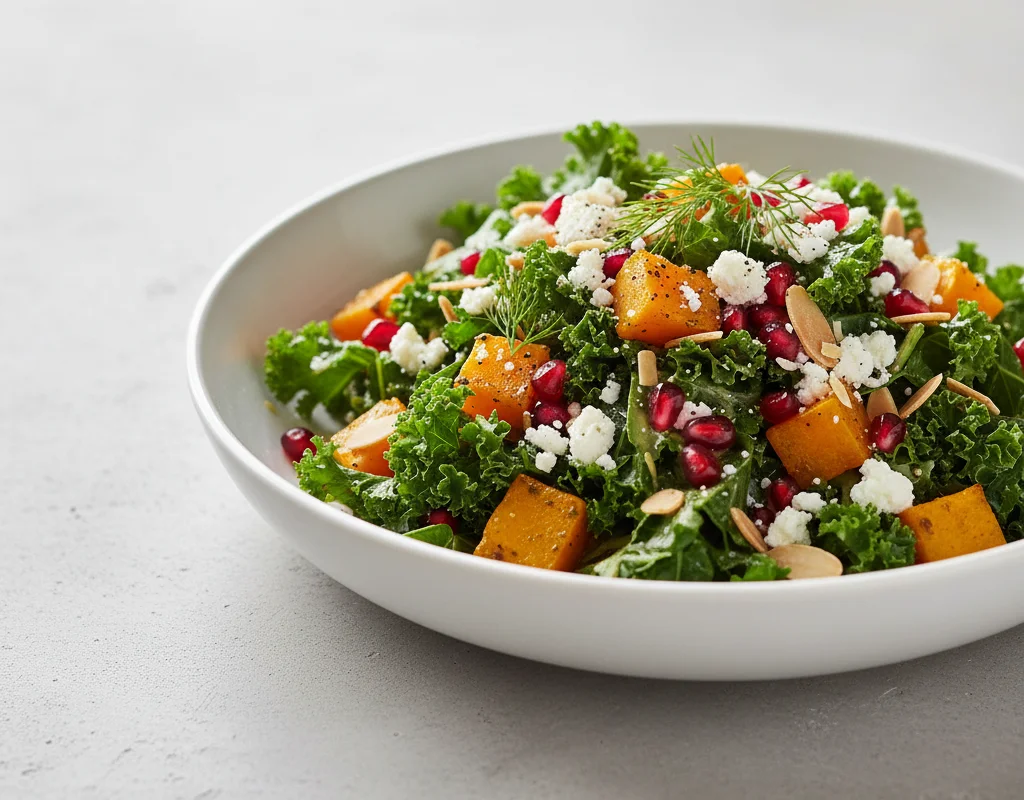
Forget boring salads. Here are three simple ways to get raw kale into your diet that are genuinely delicious.

Want powerful greens worked into a balanced week — without the planning?
Our meal planner can build you a week of meals that features nutrient-dense foods like kale, perfectly balanced with protein and healthy fats for steady energy, with a single grocery list at the end.
Build my weekly plan →SOURCES & REFERENCES · 3
One more thing
Eating well is rarely about willpower. It’s about having a short list of dinners you actually want to eat. Pick two from this list. Make them next week. The rest will follow.
If you want these on autopilot, our weekly meal planner can drop the picks above into your calendar with one click and build a single grocery list from the merged ingredients.
FREQUENTLY ASKED QUESTIONS
Frequently asked questions
Is raw kale good for diabetes?
Yes, it's an excellent choice. It has very few carbohydrates and a high amount of fiber, so its impact on blood sugar is negligible. It's one of the best vegetables you can eat for blood sugar management.
How do you get the bitterness out of raw kale?
The two best methods are massaging it with oil and lemon juice, and pairing it with the right ingredients. Fat (like oil, avocado, tahini) and acid (like lemon juice, vinegar) both help to mellow its bitter compounds significantly.
Is it better to eat kale raw or cooked?
Both are healthy, but they offer slightly different benefits. Raw kale retains more of its heat-sensitive vitamin C. Cooked kale is easier to digest for some people and can reduce compounds called oxalates. A mix of both in your diet is a great approach.
Can you eat too much raw kale?
For most people, no. However, because it's so high in fiber, suddenly eating huge amounts could cause digestive upset like bloating or gas. Also, kale is very high in Vitamin K, which can interfere with blood-thinning medication. If you're on Warfarin or a similar drug, speak to your doctor before making a big change to your kale intake.
METHODOLOGY
How this article was created
Built using verified nutrition databases, culinary research, and traditional cooking knowledge — every claim is cross-referenced against the sources listed in the article.
· USDA data· Culinary research· Quality reviewed
Read our methodology →TRANSPARENCY
About this content
Articles are curated using trusted food databases (USDA FoodData Central, IFCT), culinary literature, and dietary guidelines, then structured by our editorial team for clarity, accuracy, and usefulness.
· Verified data sources· Culinary research· Quality reviewed
Read our editorial policy →RELATED RECIPES
Cook from this article
EXPLORE OUR MEALS
Meals that fit this article

AMERICAN · 1677 CAL
Almonds with Sliced Apple + supplement + iron

MEDITERRANEAN · 809 CAL
Greek Yogurt with Berries Almonds and Granola + supplement + iron

GENERAL_HEALTHY · 705 CAL
Banana with Peanut Butter Pregnancy + supplement + iron

MODERN · 982 CAL
Hummus with Crudits and Pita with Fresh Orange Snack + supplement + iron
TAGGED
KEEP READING