The mango gets a bad reputation it doesn't quite deserve. Yes, it's sweet — sweeter than most everyday fruit — but a ripe mango is also a genuine nutritional heavyweight: a big hit of vitamin C, a useful dose of vitamin A, fibre, and a glycemic index that's lower than people assume. The trick isn't avoiding mango. It's eating it whole, in a sensible portion, and ideally alongside something with protein or fat.
↑ A ripe mango, hedgehog-cut — eat it whole, not juiced.
The sweet-but-smart fruit
A mango is roughly 83% water, with most of the rest being carbohydrate — and a good chunk of that carbohydrate is sugar. That single fact is why mango gets labelled a 'sugar bomb'. But the sugar arrives wrapped in fibre, water and a wall of micronutrients, so a whole mango behaves very differently from the same sugar in a juice or a dried slice.
The theme of this profile is simple: a whole, ripe mango in a one-cup portion is a genuinely healthy fruit. Juice it, dry it, or eat half the fruit in one sitting and the maths changes.
IN ONE LINE
A whole mango is low-GI, rich in vitamin C and vitamin A, and a real source of fibre — eat it in a one-cup portion, skin off but flesh whole, not juiced or dried.
Mango nutrition facts
Here's what one cup of sliced ripe mango — about 165 grams — provides.
The headline numbers are the vitamin C — over half a day's worth in one cup — and the vitamin A, which is unusual for a fruit. Mango is one of the better fruit sources of the carotenoids your body turns into vitamin A.
Is mango too sugary?
At around 23 grams of sugar a cup, mango is one of the sweeter fruits — more than an apple, less than a banana by the cup. But 'sugary' and 'spikes your blood sugar' are not the same thing. The fibre, the water content and the fruit's intact cell structure all slow how fast that sugar is absorbed. The problem isn't the mango; it's the portion and the form. Half a large mango is a sensible serving. A whole one blended into a lassi with added sugar is not.
WATCH OUT
Dried mango concentrates the sugar dramatically — a small handful can carry the sugar of two or three fresh cups, with the water (and most of the fullness) removed.
Mango's glycemic index
Glycemic index ranks how fast a food raises blood sugar on a 0–100 scale: under 55 is low, 56–69 medium, 70+ high. A ripe mango lands around 51 — low, and well below refined carbs. Its glycemic load, which accounts for portion, is only about 8, also low. Put it next to everyday foods and it sits comfortably in the gentle band.
GLYCEMIC INDEX · MANGO vs COMMON FOODS
Mango sits in the low-GI band
Cherries
whole fruit
LOW
Apple
whole fruit
LOW
Mango (ripe)
whole fruit
LOW
White bread
refined
HIGH
Cornflakes
refined
HIGH
SCALE 0–90
04590
The smart way to eat one
A mango needs no instructions, but a few habits get you the most from it without the sugar swing.
01
Stick to a cup.
Roughly half a large mango or one small one. It's the single biggest lever on the sugar you take in.
02
Eat it whole, not juiced.
Whole mango keeps its fibre and structure. Mango juice and sweetened lassi behave far more like a soft drink.
03
Pair it with protein or fat.
A few nuts, a spoon of yogurt or some seeds slow the sugar's release and turn mango into a balanced snack.
04
Choose ripe-but-firm.
Over-ripe mango is sweeter and slightly higher-GI. Firm-ripe fruit has a touch more resistant starch and acid.
05
Go easy on dried and pickled.
Dried mango concentrates sugar; aam pickle and aamras add salt and sugar respectively.
What mango is good for
01
A vitamin C powerhouse
One cup covers over half your daily vitamin C, which supports immune function, skin, and helps you absorb plant iron.
51%
vit C DV
02
Rare fruit source of vitamin A
Mango's orange flesh is rich in beta-carotene and other carotenoids the body converts to vitamin A — important for vision and immunity.
10%
vit A DV
03
Steady, low-glycemic energy
With a GI around 51 and a glycemic load near 8, a cup of mango gives carbohydrate without the spike-and-crash of refined snacks.
GI 51
low
04
Gut-friendly fibre and water
Mango supplies both soluble and insoluble fibre plus a high water content, a combination that supports digestion and fullness.
2.6 g
fiber
05
Folate for cell and blood health
A cup provides a meaningful share of folate, a B-vitamin especially important in pregnancy and for healthy red blood cells.
18%
folate DV
What to pair mango with
Mango's sweetness and acidity make it pairing-friendly. Adding protein or fat keeps energy steady and turns it into a proper snack.
Eat freely — or be mindful?
Three ways to eat it
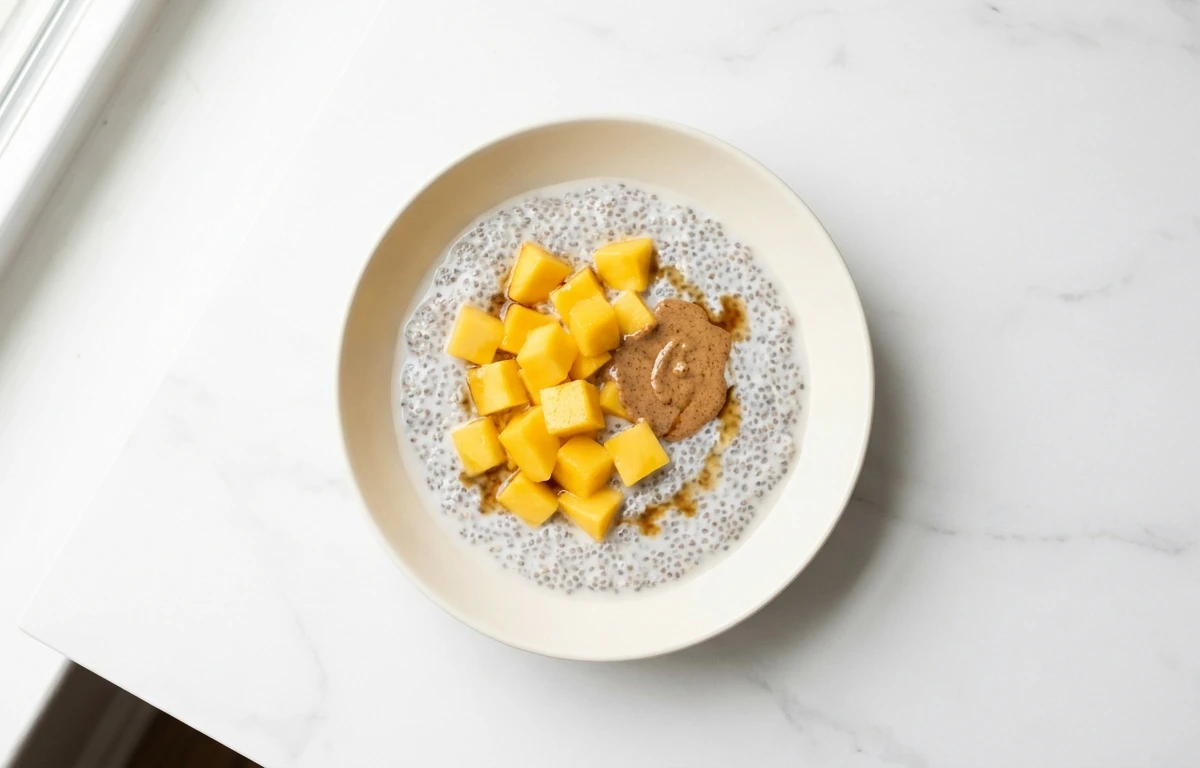
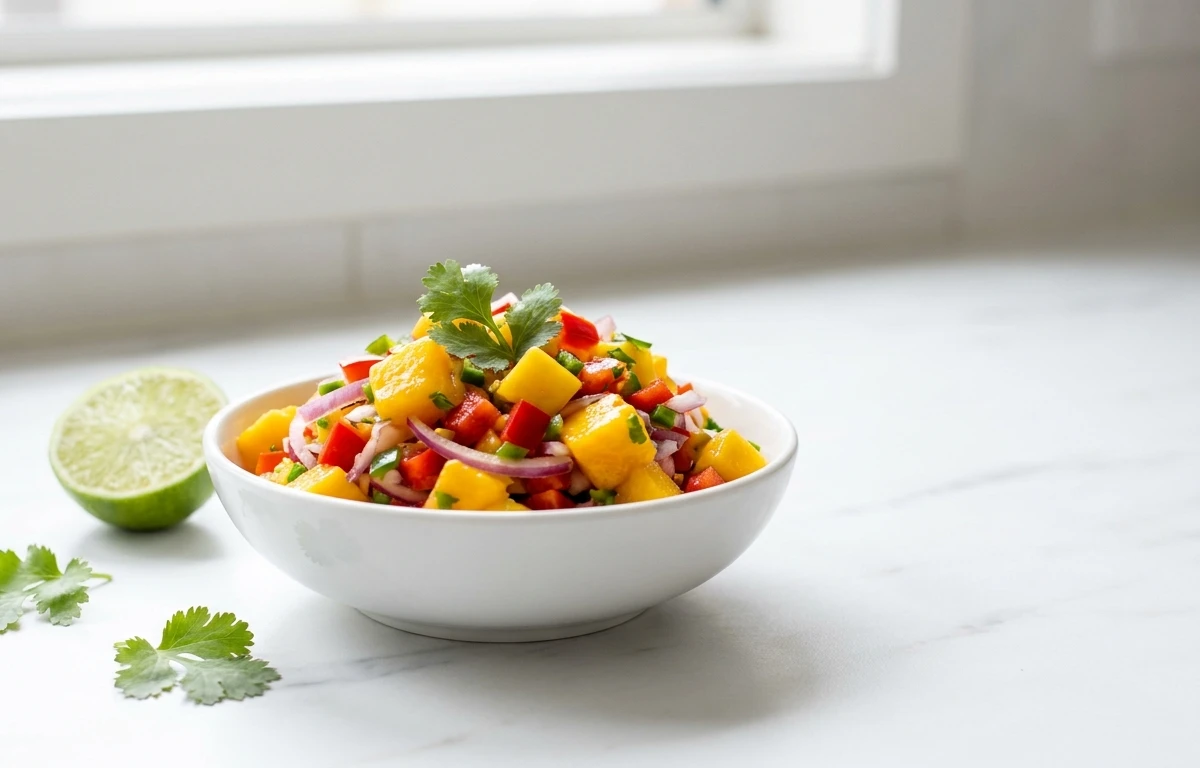
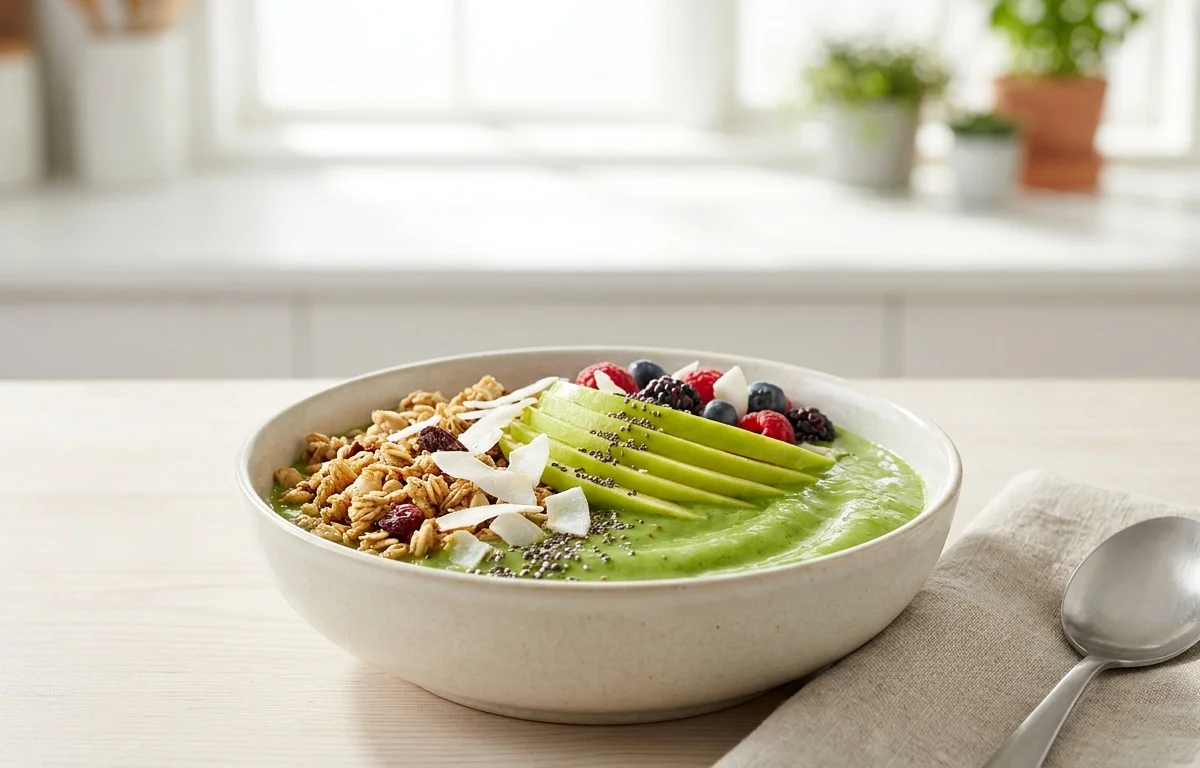
Three easy ways to eat mango well — each leaning on the fruit's own sweetness so you add little or no sugar.
Want fruit worked into a balanced week — without the planning?
Our meal planner pairs fruit like mango with protein and fibre for steady energy, with portions and macros already calculated and a single grocery list at the end.
Build my weekly plan →SOURCES & REFERENCES · 3
One more thing
Eating well is rarely about willpower. It’s about having a short list of dinners you actually want to eat. Pick two from this list. Make them next week. The rest will follow.
If you want these on autopilot, our weekly meal planner can drop the picks above into your calendar with one click and build a single grocery list from the merged ingredients.
FREQUENTLY ASKED QUESTIONS
Frequently asked questions
Can people with diabetes eat mango?
Generally yes, in a sensible portion. A cup of mango is low-GI (around 51) and a reasonable choice, especially paired with protein or fat such as yogurt or nuts. Mind the portion and fit it to your own targets and care plan.
Is mango too high in sugar?
Mango is one of the sweeter fruits at about 23 g sugar a cup, but the sugar comes with fibre, water and a low glycemic index. Eaten whole and in a one-cup portion it behaves far better than juice or dried mango.
Does mango make you gain weight?
Not on its own — a cup is about 99 calories. The risk is over-eating: a whole large mango or sweetened mango drinks add up quickly. Keep to a cup and it fits a weight-loss diet easily.
Is dried mango healthy?
Less so. Drying removes the water and concentrates the sugar and calories, and many dried mangoes have added sugar. A small handful can carry the sugar of several fresh cups — treat it as a sweet, not a fruit serving.
METHODOLOGY
How this article was created
Built using verified nutrition databases, culinary research, and traditional cooking knowledge — every claim is cross-referenced against the sources listed in the article.
· USDA data· Culinary research· Quality reviewed
Read our methodology →TRANSPARENCY
About this content
Articles are curated using trusted food databases (USDA FoodData Central, IFCT), culinary literature, and dietary guidelines, then structured by our editorial team for clarity, accuracy, and usefulness.
· Verified data sources· Culinary research· Quality reviewed
Read our editorial policy →RELATED RECIPES
Cook from this article
EXPLORE OUR MEALS
Meals that fit this article

AMERICAN · 1677 CAL
Almonds with Sliced Apple + supplement + iron

MEDITERRANEAN · 809 CAL
Greek Yogurt with Berries Almonds and Granola + supplement + iron

GENERAL_HEALTHY · 705 CAL
Banana with Peanut Butter Pregnancy + supplement + iron

MODERN · 982 CAL
Hummus with Crudits and Pita with Fresh Orange Snack + supplement + iron
TAGGED
KEEP READING