
Other
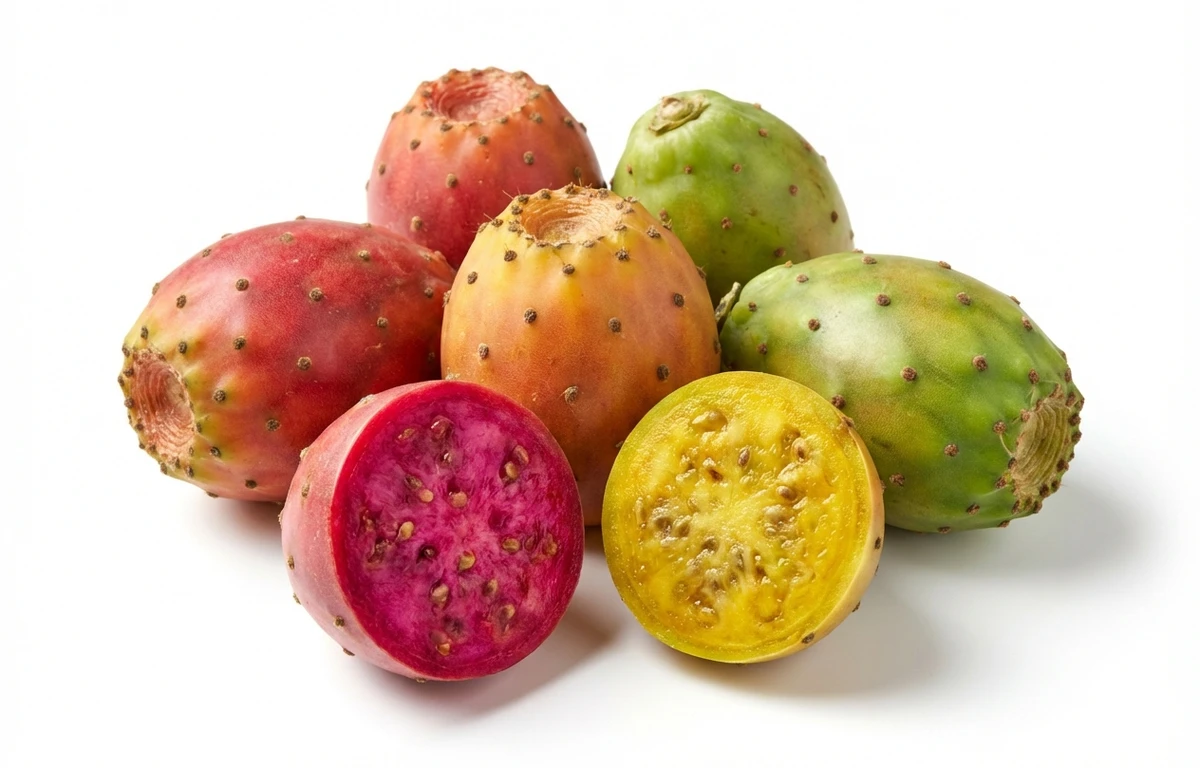
prickly pear fruits.
VegetarianVeganGluten-freeDairy-freeNut-freePeanut-freeSoy-freeEgg-freeShellfish-freeHoney-freeAlcohol-free
ALSO KNOWN AS
tuna fruitcactus pearopuntia fruitnagfanisabra fruitindian figbarbary fig
SERVING
CALORIES
41
PROTEIN
0.73g
CARBS
9.6g
FAT
0.51g
FIBER
3.6g
This ingredient is flagged as naturally gluten-free. Per 100 g, it provides 0 µg of vitamin K.
NUTRITION PROFILE · per 100 g
Everything in this ingredient.
MACRONUTRIENTS
Calories41kcal—
Protein0.73g1%
Carbohydrates9.6g3%
Fiber3.6g13%
Sugar6.0g12%
Total fat0.51g1%
Saturated fat0.07g0%
Trans fat0g—
Cholesterol0mg0%
Water87.5g—
MINERALS
Sodium5.0mg0%
Potassium220mg5%
Calcium56mg4%
Iron0.30mg2%
Magnesium85mg20%
Phosphorus24mg2%
Zinc0.12mg1%
Copper0.08mg9%
Manganese0.10mg4%
Selenium0.60µg1%
VITAMINS
Vitamin A2.0µg0%
Vitamin C14mg16%
Vitamin D0µg0%
Vitamin E0.01mg0%
Vitamin K0µg0%
Thiamin (B1)0.01mg1%
Riboflavin (B2)0.06mg5%
Niacin (B3)0.46mg3%
Pantothenic acid (B5)0.17mg3%
Vitamin B60.06mg4%
Folate (B9)6.0µg2%
Vitamin B120µg0%
%DV based on a 2,000 cal diet. Source: USDA FoodData Central. A dash in the %DV column means there’s no established Daily Value for that nutrient.
MEASUREMENT CONVERSIONS
How much is what.
1 cup244g
1 tablespoon15.5g
1 teaspoon5.2g
1 oz28.4g
1 lb453.6g
1 ml1g
1 liter1030g
1 piece150g
HEALTH BENEFITS
Why eat it.
- ✓High fiber content aids in healthy digestion and bowel regularity
- ✓Excellent source of magnesium which supports bone and heart health
COOKING TIPS
In the kitchen.
- 1Always use tongs or thick gloves when handling unpeeled fruit to avoid tiny spines (glochids)
- 2To peel, cut off both ends, make a vertical slit in the skin, and peel it back from the flesh
- 3If the seeds are too hard to chew, pulse the flesh in a blender and strain through a fine-mesh sieve
STORAGE
Keep it fresh.
- Store firm, unpeeled fruits at room temperature for 2-3 days until slightly soft
- Once ripe, refrigerate in a breathable bag for up to 5-7 days
- Peeled pulp or juice can be frozen in airtight containers for up to 6 months
FAQ
Frequently asked questions.
How do I know if a prickly pear is ripe?
A ripe prickly pear will be deep red or purple (depending on variety) and should give slightly to gentle pressure, similar to a ripe avocado.
Can you eat the seeds of a prickly pear?
Yes, the seeds are edible, but they are very hard. Most people either swallow them whole or strain them out to make juice or jam.
What does prickly pear taste like?
It has a sweet, mild flavor often described as a cross between watermelon, bubblegum, and raspberries.
How do I remove the tiny prickles (glochids)?
Most store-bought fruits have been cleaned, but for wild ones, you can singe them over an open flame or scrub them with a vegetable brush under running water.
What are the best substitutes for prickly pear?
Dragon fruit or kiwi are the best substitutes for texture, while a mix of watermelon and pomegranate juice can mimic the flavor.
How is prickly pear typically used in cooking?
It is commonly used to make syrups, jellies, candies, margaritas, and vinaigrettes, or eaten raw and chilled.
When is prickly pear in season?
The peak season is typically from late summer through early winter, usually between August and December.



















