Fruit
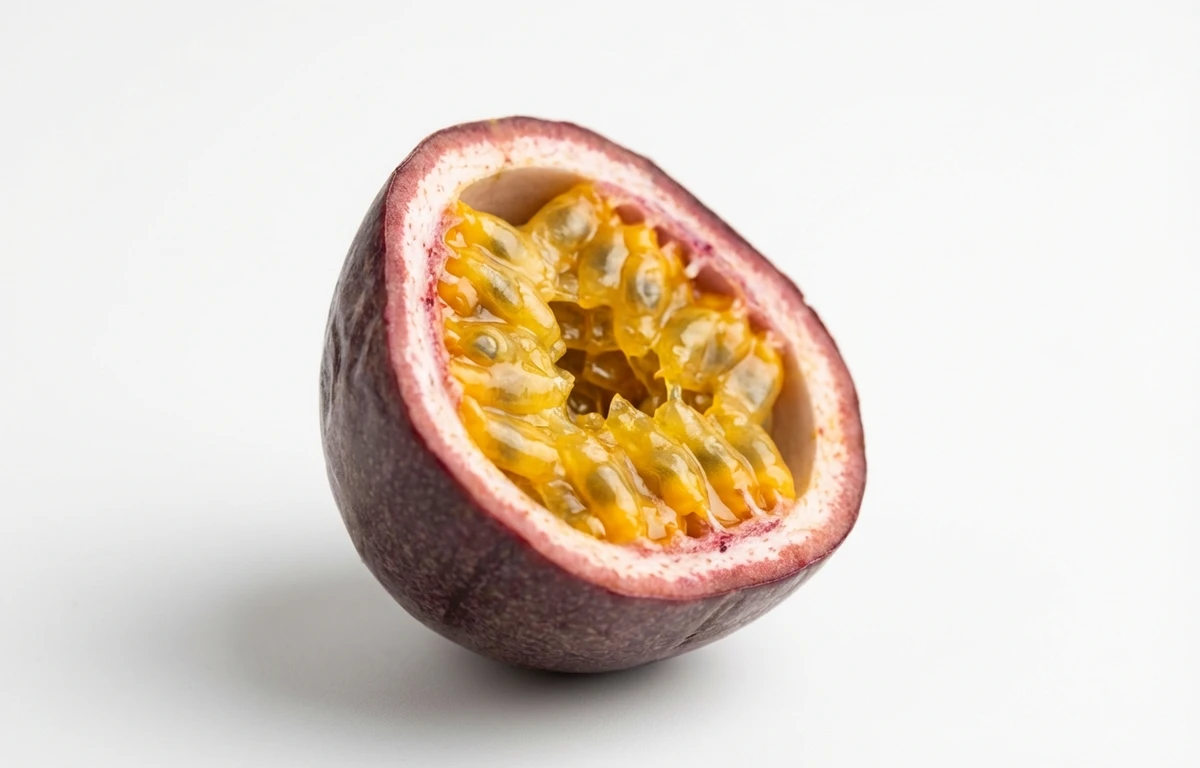
raw purple passion fruit.
VegetarianVeganGluten-freeDairy-freeNut-freePeanut-freeSoy-freeEgg-freeShellfish-freeHoney-freeAlcohol-freeHalalKosher
ALSO KNOWN AS
purple passionfruitPassiflora edulismaracuyamaracujagulupa
SERVING
CALORIES
97
PROTEIN
2.2g
CARBS
23.4g
FAT
0.70g
FIBER
10.4g
NUTRITION PROFILE · per 100 g
Everything in this ingredient.
MACRONUTRIENTS
Calories97kcal—
Protein2.2g4%
Carbohydrates23.4g9%
Fiber10.4g37%
Sugar11.2g22%
Total fat0.70g1%
Saturated fat0.06g0%
Trans fat0g—
Cholesterol0mg0%
Water72.9g—
MINERALS
Sodium28mg1%
Potassium348mg7%
Calcium12mg1%
Iron1.6mg9%
Magnesium29mg7%
Phosphorus68mg5%
Zinc0.10mg1%
Copper0.09mg10%
Manganese0mg0%
Selenium0.60µg1%
VITAMINS
Vitamin A64µg7%
Vitamin C30mg33%
Vitamin D0µg0%
Vitamin E0.02mg0%
Vitamin K0.70µg1%
Thiamin (B1)0mg0%
Riboflavin (B2)0.13mg10%
Niacin (B3)1.5mg9%
Pantothenic acid (B5)0mg0%
Vitamin B60.10mg6%
Folate (B9)14µg4%
Vitamin B120µg0%
%DV based on a 2,000 cal diet. Source: USDA FoodData Central. A dash in the %DV column means there’s no established Daily Value for that nutrient.
MEASUREMENT CONVERSIONS
How much is what.
1 cup236g
1 tablespoon15g
1 teaspoon5g
1 oz28.4g
1 lb453.6g
1 ml95g
1 piece18g
HEALTH BENEFITS
Why eat it.
- ✓Extremely high in dietary fiber which aids digestion
- ✓Rich in Vitamin C and Vitamin A for immune support
- ✓Contains piceatannol, a polyphenol that may improve insulin sensitivity
- ✓High antioxidant content helps reduce inflammation
- ✓Low glycemic index makes it suitable for blood sugar management
COOKING TIPS
In the kitchen.
- 1Cut in half and scoop out the pulp and seeds with a spoon
- 2Strain the pulp through a fine-mesh sieve if you want juice without seeds
- 3Add to yogurt, smoothies, or salads for a tart, tropical flavor boost
STORAGE
Keep it fresh.
- Store at room temperature until the skin becomes slightly wrinkled and heavy
- Once ripe, refrigerate in a plastic bag for up to 1 week
- Pulp can be frozen in ice cube trays for up to 3 months
FAQ
Frequently asked questions.
How do I know when a purple passion fruit is ripe?
A ripe passion fruit will have deeply wrinkled, dimpled skin and feel heavy for its size. If the skin is smooth, it is still ripening.
Are the seeds of the passion fruit edible?
Yes, the crunchy black seeds are completely edible and provide a significant amount of the fruit's fiber content.
What is the best way to store passion fruit?
Keep them on the counter to ripen. Once they are wrinkled, move them to the refrigerator where they will last for about 7-10 days.
Can I freeze passion fruit?
Yes, the best way is to scoop out the pulp and seeds and freeze them in ice cube trays or airtight containers.
What can I use as a substitute for passion fruit?
Depending on the recipe, you can use pomegranate seeds for texture, or a mix of lime juice and pineapple/mango juice for flavor.
Is passion fruit high in sugar?
It contains about 11g of sugar per 100g, but its very high fiber content (10g) helps slow down sugar absorption.
How do I use passion fruit in cooking?
It is most commonly used raw in desserts, sauces, cocktails, and dressings. Heating it can diminish its delicate aromatic flavor.
Is there a difference between purple and yellow passion fruit?
Purple passion fruit is generally smaller, sweeter, and more aromatic than the yellow variety, which is more acidic and larger.