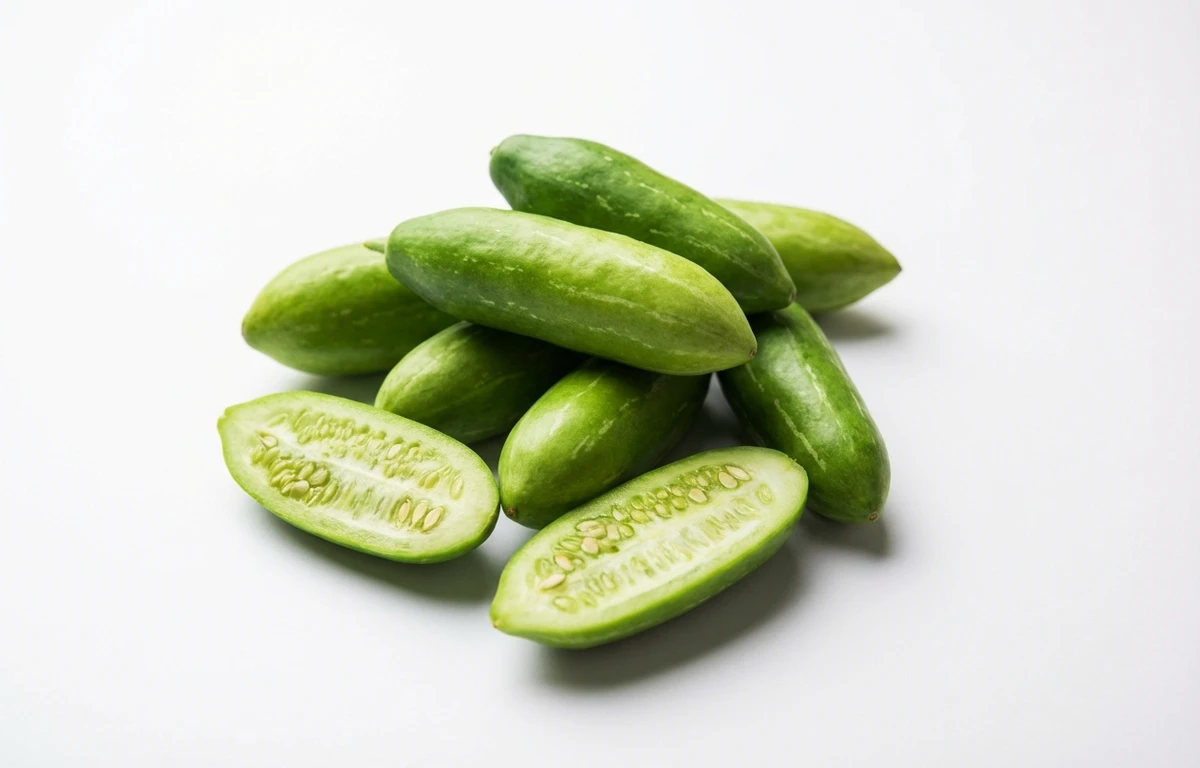
vegetable
tondekai.
VegetarianVeganGluten-freeDairy-freeNut-freePeanut-freeSoy-freeEgg-freeShellfish-freeHoney-freeAlcohol-freeHalalKosher
SERVING
CALORIES
18
PROTEIN
1.2g
CARBS
3.1g
FAT
0.10g
FIBER
1.6g
NUTRITION PROFILE · per 100 g
Everything in this ingredient.
MACRONUTRIENTS
Calories18kcal—
Protein1.2g2%
Carbohydrates3.1g1%
Fiber1.6g6%
Sugar1.1g2%
Total fat0.10g0%
Saturated fat0.02g0%
Trans fat0g—
Cholesterol0mg0%
Water93.5g—
MINERALS
Sodium3.0mg0%
Potassium180mg4%
Calcium40mg3%
Iron1.4mg8%
Magnesium25mg6%
Phosphorus30mg2%
Zinc0.10mg1%
Copper0.06mg7%
Manganese0.08mg3%
Selenium0.60µg1%
VITAMINS
Vitamin A15µg2%
Vitamin C15mg17%
Vitamin D0µg0%
Vitamin E0.20mg1%
Vitamin K5.0µg4%
Thiamin (B1)0.07mg6%
Riboflavin (B2)0.08mg6%
Niacin (B3)0.70mg4%
Pantothenic acid (B5)0.15mg3%
Vitamin B60.11mg6%
Folate (B9)11µg3%
Vitamin B120µg0%
%DV based on a 2,000 cal diet. Source: USDA FoodData Central. A dash in the %DV column means there’s no established Daily Value for that nutrient.
MEASUREMENT CONVERSIONS
How much is what.
1 cup130g
HEALTH BENEFITS
Why eat it.
- ✓Rich in dietary fiber, which aids in digestion and promotes gut health.
- ✓Contains compounds that may help in regulating blood sugar levels, making it beneficial in diabetic diets.
- ✓Good source of antioxidants like beta-carotene, which supports vision health and protects cells from damage.
- ✓Low in calories and fat, making it a suitable addition to weight management diets.
COOKING TIPS
In the kitchen.
- 1Slice into thin rounds or lengthwise strips for quick and even cooking in stir-fries (known as 'palya' or 'poriyal').
- 2To reduce its slight bitterness, sauté with onions, tamarind, or jaggery.
- 3Tondekai can be stuffed with a spice mixture and then shallow-fried or baked for a flavorful side dish.
- 4For a crispy texture, slice thinly, coat with spices and a little flour, and deep-fry or air-fry.
STORAGE
Keep it fresh.
- Store unwashed tondekai (ivy gourd) in a perforated plastic bag in the refrigerator's crisper drawer for up to one week.
- Avoid washing until just before use to prevent moisture buildup and premature spoilage.
FAQ
Frequently asked questions.
Is tondekai healthy?
Yes, tondekai is very healthy. It is low in calories and rich in dietary fiber, which aids digestion, and contains antioxidants like beta-carotene that support vision and cellular health.
Can diabetics eat tondekai?
Yes, tondekai is highly recommended for diabetic diets. It contains specific compounds that may help regulate blood sugar levels and has a low glycemic index, making it a safe choice for managing glucose.
Is tondekai good for weight loss?
Absolutely. With only 18 calories and 0.1g of fat per 100g, it is a nutrient-dense, low-calorie food. Its high fiber content also helps promote a feeling of fullness, which can prevent overeating.
Is tondekai keto-friendly?
Yes, tondekai is keto-friendly. It contains only 3.1g of carbohydrates per 100g, making it an excellent low-carb vegetable option for those following a ketogenic or low-carbohydrate lifestyle.
What does tondekai taste like?
Tondekai has a mild, slightly nutty flavor with a crunchy texture similar to a cucumber or a firm green bean. It absorbs spices well, making it a versatile ingredient for savory dishes.
How do you cook tondekai?
It is most commonly prepared by slicing it into rounds or thin strips and stir-frying it with spices like mustard seeds, turmeric, and chili. It is also frequently used in curries, sambars, and pickles.
Can you eat tondekai raw?
While tondekai is most commonly eaten cooked to soften its skin, it can be consumed raw in salads or used to make fresh chutneys. When raw, it has a crisp texture similar to a small cucumber.
How do you store tondekai and how long does it last?
Store fresh tondekai in a paper bag or a perforated plastic bag in the refrigerator's crisper drawer. When stored properly, it typically stays fresh and firm for about 5 to 7 days.
How do you know if tondekai is fresh or spoiled?
Fresh tondekai should be firm to the touch and bright green. If it feels soft, looks shriveled, or has turned bright red inside, it is over-ripe or starting to spoil and may have a different flavor profile.
Is tondekai vegan and gluten-free?
Yes, tondekai is a natural vegetable and is both 100% vegan and gluten-free. It is a safe and healthy addition to plant-based, Celiac-friendly, and gluten-restricted diets.