Chettinad Cauliflower Masala
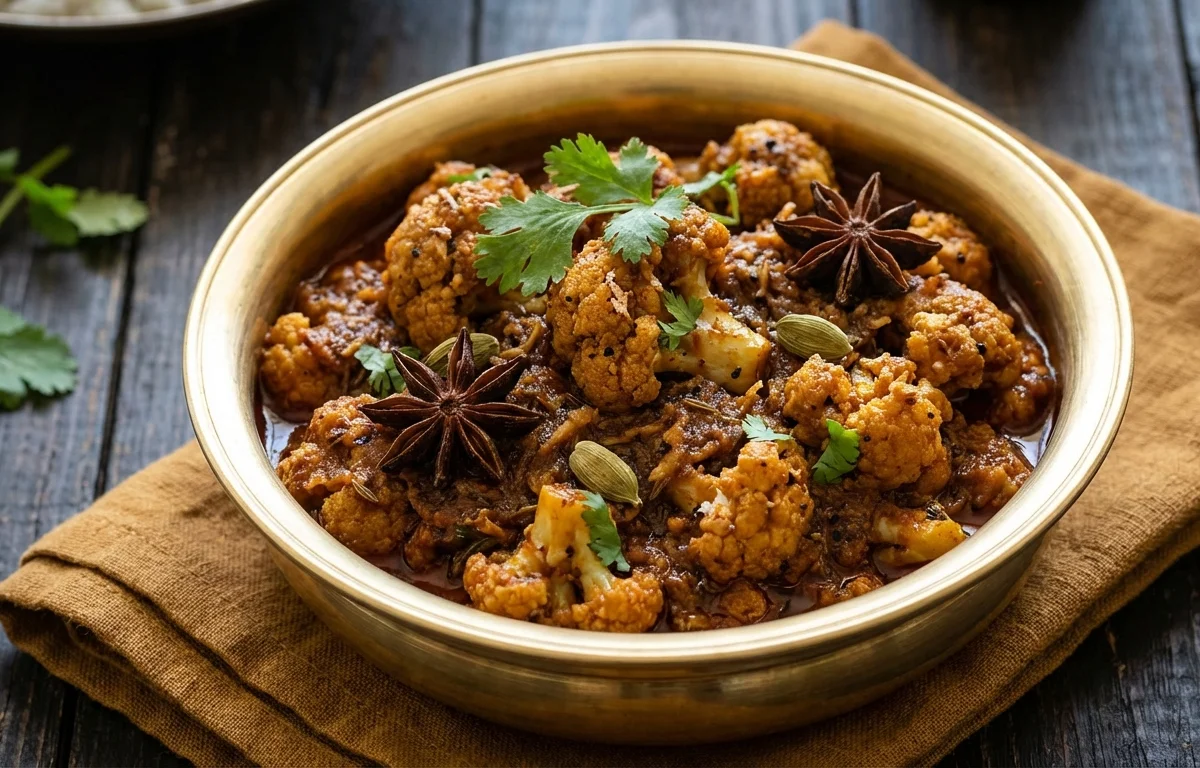
A bold, spicy cauliflower curry with the deep roasted flavors Chettinad cooking is known for. Freshly ground spices, onion, tomato, and curry leaves give this dish a rich taste that pairs beautifully with rice or roti.
For 4 servings
- roast · ~4 min
Roast the spices and coconut.
1.Heat a small pan over low heat.2.Add dry coconut, fennel seeds, cumin seeds, black peppercorns, dry red chili, coriander seeds, cinnamon, cloves, and green cardamom.3.Roast gently, stirring often, until fragrant and lightly colored (2-3 min).4.Take off the heat and let the mixture cool.TIPKeep the heat low so the coconut and whole spices toast evenly without turning bitter. - mix · ~2 min
Grind the Chettinad masala.
Blend the roasted spice mixture with ginger, garlic, and 0.25 cup water to a smooth, thick paste.
- temper · ~1 min
Make the tempering.
1.Heat oil in a kadai over medium heat.2.Add mustard seeds and let them splutter (20-30 sec).3.Add curry leaves and stir for a few seconds. - saute · ~11 min
Cook the onions and tomatoes.
1.Add sliced onion and cook until soft and lightly golden (5-6 min).2.Add chopped tomato and turmeric powder.3.Cook until the tomatoes break down and turn pulpy (4-5 min). - saute · ~5 min
Cook the ground masala.
Add the ground Chettinad paste and cook on medium-low heat until the raw smell fades and the oil starts to show at the edges.
TIPStir often during this step so the masala does not catch at the bottom. - saute · ~2 min
Coat the cauliflower in the masala.
Add cauliflower florets and salt. Mix well so the masala coats the florets evenly for 2 minutes.
- simmer · ~9 min
Simmer until the cauliflower is tender.
Pour in the remaining 0.5 cup water, cover, and cook on low heat until the cauliflower is tender but not mushy and the masala turns thick (8-10 min).
TIPUse only a little water to keep the dish rich and semi-dry rather than watery. - garnish
Finish with cilantro.
- serve
Serve hot with rice or roti.
What to keep in mind.
7 tips from the recipe — small details that make a real difference to the final dish.
- 1Cut the cauliflower into even medium florets so they finish cooking at the same time and hold their shape in the thick masala.
- 2Let the roasted coconut and whole spices cool before grinding, or the paste can turn oily and coarse.
- 3Cook the onion until lightly golden, not deeply browned, so the Chettinad spice paste stays bold without tasting sweet.
- 4After adding the ground masala, stir frequently and scrape the kadai bottom to prevent the coconut-rich paste from catching.
- 5Keep the simmer gentle and use minimal water; this dish is best as a thick, semi-dry masala that clings to the cauliflower.
- 6Stop cooking as soon as the florets are fork-tender, because cauliflower softens quickly and can turn mushy if covered too long.
- 7This curry tastes even better after a short rest, as the pepper, fennel, and curry leaf flavors settle into the cauliflower.
Adapt it for your goals.
Low-oil
Use less oil and add a splash of water while sautéing the masala; good if you want a lighter everyday version without losing the spice profile.
high proteinHigh-protein
Add cooked green peas or pan-fried tofu during the final simmer to make the curry more filling while keeping the Chettinad masala center stage.
jainJain
Skip onion and garlic, increase tomato slightly, and grind the roasted spices with ginger and coconut for a Jain-friendly version with strong spice flavor.
potato cauliflowerPotato-cauliflower
Add cubed parboiled potato with the cauliflower for a heartier masala that pairs especially well with chapati or dosa.
Why this is on our healthy list.
Vegetable-Rich Main
Cauliflower makes this dish hearty while adding fiber and plant compounds from a cruciferous vegetable.
Spice-Forward Cooking
Fennel, cumin, coriander, pepper, ginger, and garlic bring intense flavor, so the curry feels rich without needing heavy cream.
Moderate Fat, Big Flavor
A small amount of oil and dry coconut help carry the roasted spice aromas, creating depth without a very heavy gravy.
Frequently asked questions
Yes. A quick blanch or a short roast helps the florets cook faster and stay firmer, but do not overcook them before they go into the masala.