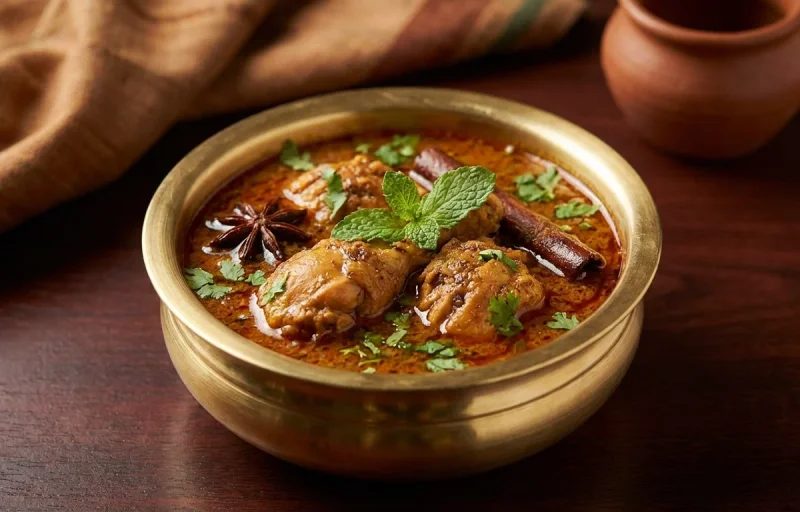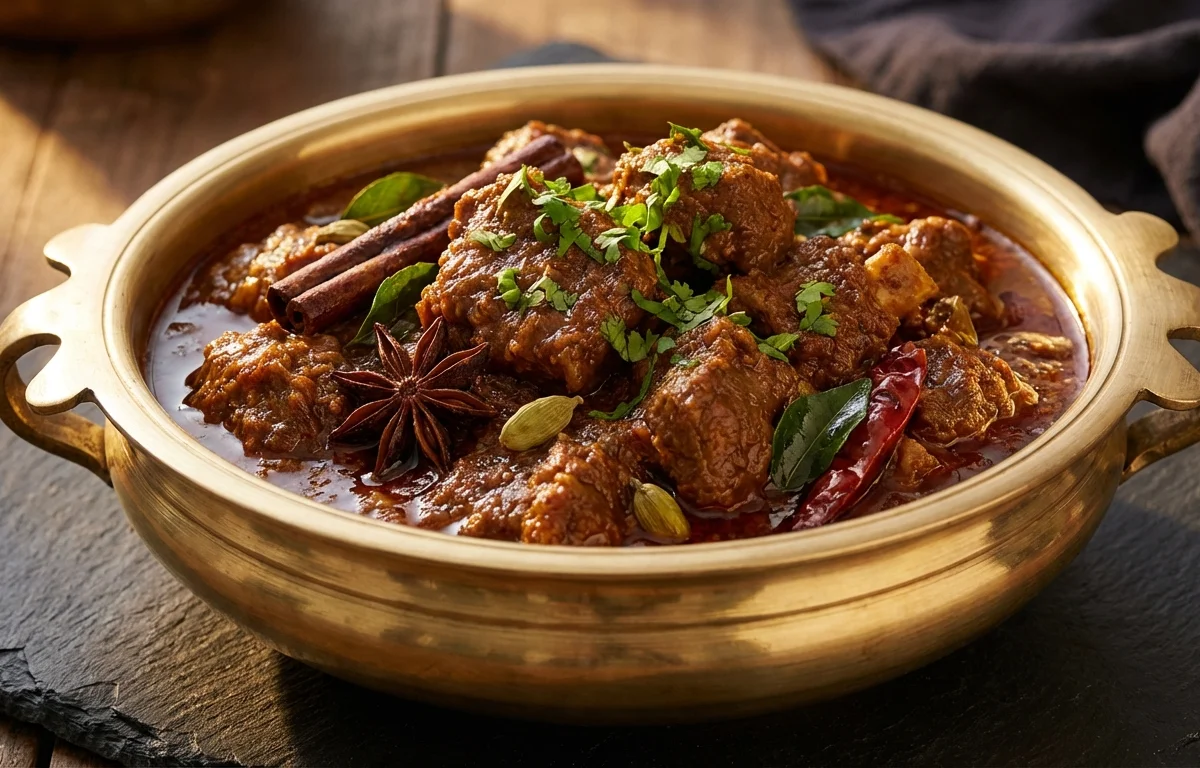
Chettinad Mutton Curry
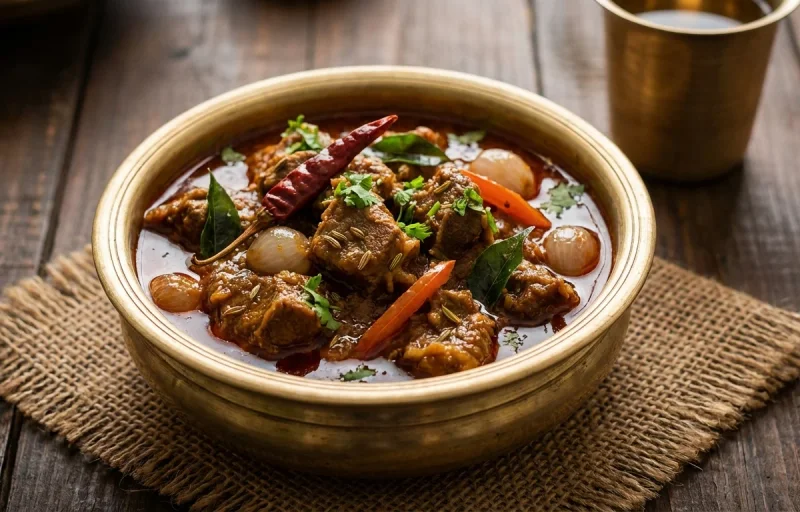
A bold South Indian curry with tender mutton simmered in a roasted spice masala, onions, tomatoes, and coconut. It has deep heat, warm peppery notes, and a rich gravy that tastes even better after a short rest.
For 4 servings
- prep · ~10 min
Prep the mutton and aromatics.
1.Clean the mutton pieces and drain well.2.Slice the onions finely and chop the tomatoes.3.Roughly chop the ginger and peel the garlic.4.Keep the curry leaves and chopped coriander leaves ready. - roast · ~5 min
Roast the Chettinad spices and coconut.
1.Heat a dry pan over low heat.2.Add fennel seeds, cumin seeds, black peppercorns, coriander seeds, dried red chili, cinnamon, cloves, green cardamom, and star anise.3.Roast until fragrant, stirring often so the spices do not burn (2-3 min).4.Add grated coconut and roast until lightly golden (2 min).TIPKeep the heat low while roasting. Burnt pepper and coconut can make the curry bitter. - mix · ~3 min
Grind the roasted masala.
Cool the roasted spices and coconut slightly, then grind with the ginger, garlic, and a little water to a thick, smooth paste.
- saute · ~13 min
Cook the onion base.
1.Heat oil in a pressure cooker over medium heat.2.Add curry leaves and let them sizzle for a few seconds.3.Add sliced onions and cook until golden brown (6-8 min).4.Add chopped tomatoes, turmeric powder, and red chili powder.5.Cook until the tomatoes soften and the oil starts to separate (4-5 min). - saute · ~7 min
Fry the mutton with the masala.
Add the ground masala paste to the cooker and cook for 3-4 minutes. Add the mutton and salt, then mix well and fry until the meat is coated and slightly tightened.
TIPThis short frying step deepens the flavor before pressure cooking. - pressure cook · ~20 min
Pressure cook the curry.
Pour in water and stir well, scraping the bottom. Cover and cook on medium heat for 5-6 whistles, until the mutton is tender.
- simmer · ~10 min
Simmer the gravy to finish.
Let the pressure drop naturally, then open the cooker and simmer the curry uncovered for 8-10 minutes until the gravy thickens and the oil rises lightly on top.
TIPIf the gravy gets too thick before the mutton is fully soft, add a splash of water and simmer a little longer. - garnish
Garnish with coriander leaves.
- serve
Serve the curry hot.
Serve Chettinad Mutton Curry hot with rice, dosa, idiyappam, or parotta.
What to keep in mind.
7 tips from the recipe — small details that make a real difference to the final dish.
- 1Roast the whole spices and coconut on low heat only; black pepper and coconut turn bitter very quickly once dark.
- 2Cool the roasted mixture before grinding so the masala stays smooth and doesn’t turn greasy.
- 3Brown the onions well to a deep golden stage; this gives the curry its dark, rounded base flavor.
- 4After adding water, scrape the cooker bottom thoroughly so the ground coconut masala doesn’t catch and scorch.
- 5Natural pressure release helps the mutton stay juicy and finish cooking gently without tightening up.
- 6Simmer uncovered until you see a light layer of oil on top; that is the cue the masala has cooked through.
- 7This curry tastes better after resting 20-30 minutes, and even better the next day as the peppery masala settles into the meat.
Adapt it for your goals.
Extra-spicy
Increase dried red chilies and black pepper for a fiercer, more traditional Chettinad-style heat.
bonelessBoneless
Use boneless mutton for easier serving; reduce cooking time slightly since it softens faster than bone-in pieces.
stovetopStovetop
Make it in a heavy pot instead of a pressure cooker and simmer longer for cooks who prefer open-pot control.
thicker gravyThicker-gravy
Add a little more grated coconut while roasting if you want a richer curry that pairs especially well with parotta or idiyappam.
Why this is on our healthy list.
Protein-Rich Main Dish
Mutton provides substantial protein, making this curry filling and useful for a hearty meal.
Rich in Aromatic Spices
Black pepper, cumin, fennel, coriander, cloves, and cardamom add flavor complexity with less need for heavy sauces.
Contains Allium and Herb Compounds
Onion, garlic, ginger, curry leaves, and coriander leaves contribute plant compounds along with savory depth.
Frequently asked questions
The pieces should be tender enough to pierce easily with a spoon or fork, but not falling apart into shreds.