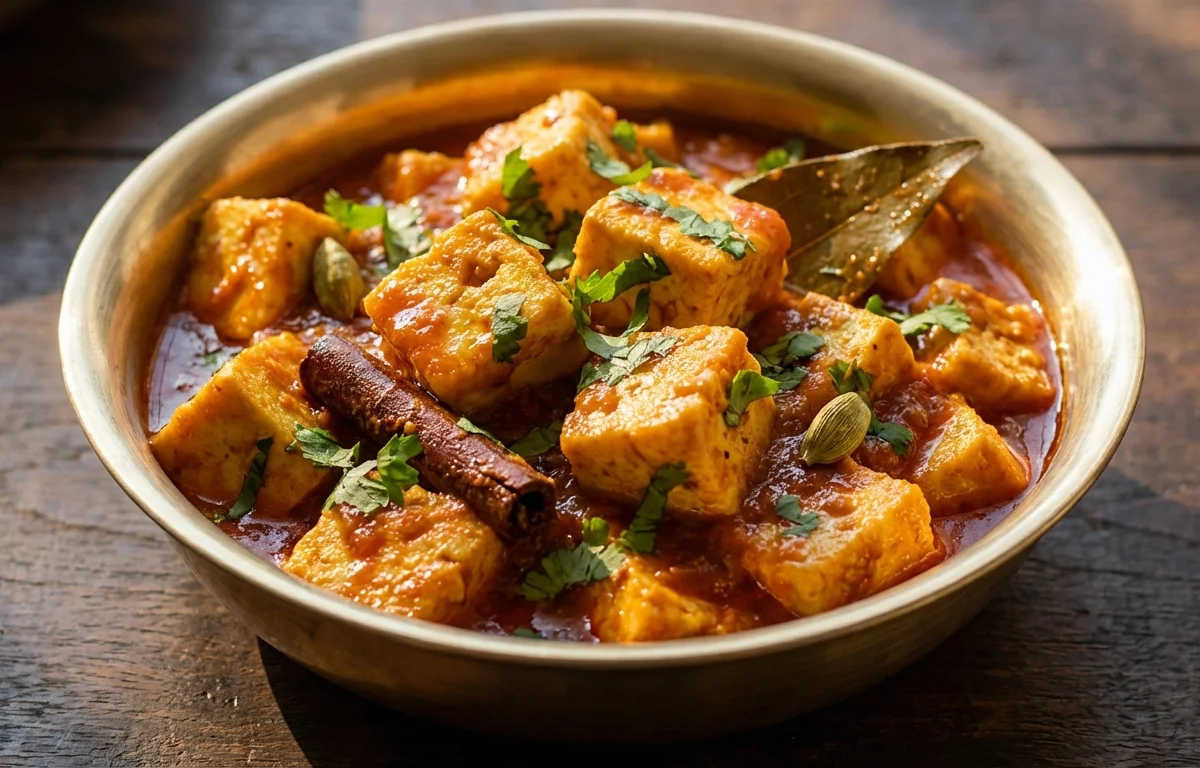
Chhena Tarkari
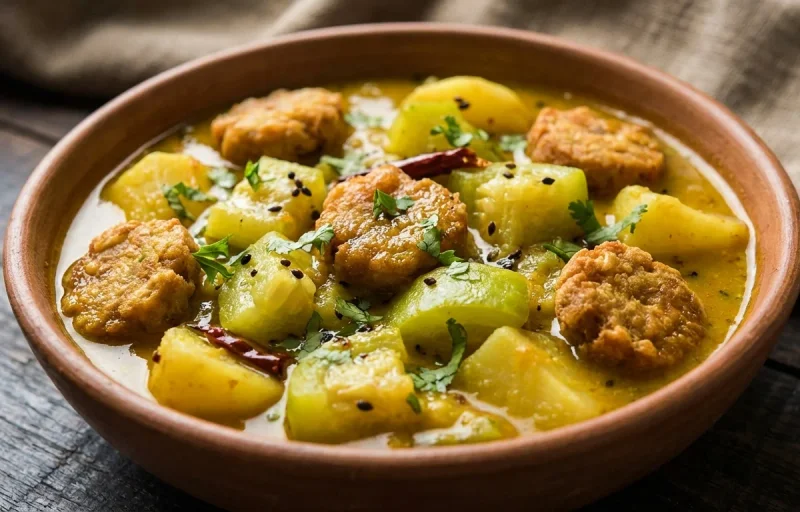
A gentle, home-style Odia curry with soft homemade chhena simmered in a lightly spiced onion-tomato gravy. It is comforting, mildly rich, and especially good with roti, puri, or plain rice.
For 4 servings
- boil · ~8 min
Boil the milk and curdle it.
1.Bring the milk to a gentle boil in a heavy pot.2.Lower the heat and stir in lemon juice mixed with a little water.3.Cook just until the milk splits into curds and whey.4.Turn off the heat as soon as the curds separate clearly.TIPDo not keep boiling after curdling or the chhena turns rubbery. - prep · ~10 min
Drain and shape the chhena.
Strain the curds, rinse lightly under water to remove the sharp lemon taste, and let them drain well. Press gently into a soft block, then cut into medium cubes.
- fry · ~8 min
Lightly fry the chhena and potatoes.
1.Heat the oil in a kadai over medium heat.2.Add the chhena cubes and fry lightly until just pale golden on the edges.3.Remove the chhena carefully so it stays intact.4.In the same oil, fry the potato cubes until lightly golden.TIPFry the chhena gently and turn it carefully so it does not break. - saute · ~10 min
Cook the spice base.
1.Add bay leaf and cumin seeds to the remaining oil.2.Add onion and cook until soft and light golden.3.Add ginger, garlic, and green chili, then cook until the raw smell fades.4.Add tomato, turmeric powder, red chili powder, coriander powder, cumin powder, and salt.5.Cook until the tomatoes soften and the masala looks glossy. - simmer · ~12 min
Simmer the curry.
Add water and bring the gravy to a gentle simmer. Add the fried potatoes first and cook until nearly tender, then add the chhena cubes and simmer a few minutes so they soak up the flavor.
- garnish · ~1 min
Finish with garam masala and coriander leaves.
- serve · ~1 min
Serve hot with roti, puri, or plain rice.
What to keep in mind.
7 tips from the recipe — small details that make a real difference to the final dish.
- 1Rinse the fresh chhena briefly after curdling so the lemon note does not dominate the mild Odia-style gravy.
- 2Drain the chhena well before pressing; excess moisture makes the cubes fragile and more likely to break while frying.
- 3Keep the chhena cubes only pale golden at the edges—deep browning makes them firmer and less delicate in the curry.
- 4Cook the onion-tomato masala until it looks glossy and the oil starts separating slightly; this prevents a raw-tasting gravy.
- 5Add the chhena only after the potatoes are nearly done, so the cubes absorb flavor without overcooking and turning chewy.
- 6If the gravy thickens too much after simmering, loosen it with a splash of hot water rather than boiling hard.
- 7This curry tastes even better after a short rest of 10 to 15 minutes, which lets the chhena soak up the spiced gravy.
Adapt it for your goals.
No-onion-no-garlic
Skip onion and garlic, use extra ginger and tomato for a simpler sattvic-style gravy that still suits the mild character of the dish.
low oilLow-oil
Shallow-sear or skip frying the chhena and potatoes, then simmer gently in the gravy for a lighter everyday version.
spicierSpicier
Add an extra green chili or a little more red chili powder if you want a sharper heat with the soft chhena.
peas addedPeas-added
Add a handful of green peas along with the potatoes for a sweeter, more textured curry that pairs well with roti.
Why this is on our healthy list.
Protein-Rich Fresh Chhena
Homemade chhena from whole milk adds satisfying dairy protein, making the curry more filling than a vegetable-only gravy.
Contains Digestive Spices
Ginger, cumin, garlic, and coriander are traditional warming spices that add flavor depth without making the curry too heavy.
Balanced Comfort Dish
The combination of milk solids, potatoes, tomatoes, and aromatics creates a comforting meal with both richness and gentle freshness.
Frequently asked questions
Usually it was boiled too long after curdling or simmered too long in the gravy. Turn off the heat as soon as curds separate and add the chhena near the end.