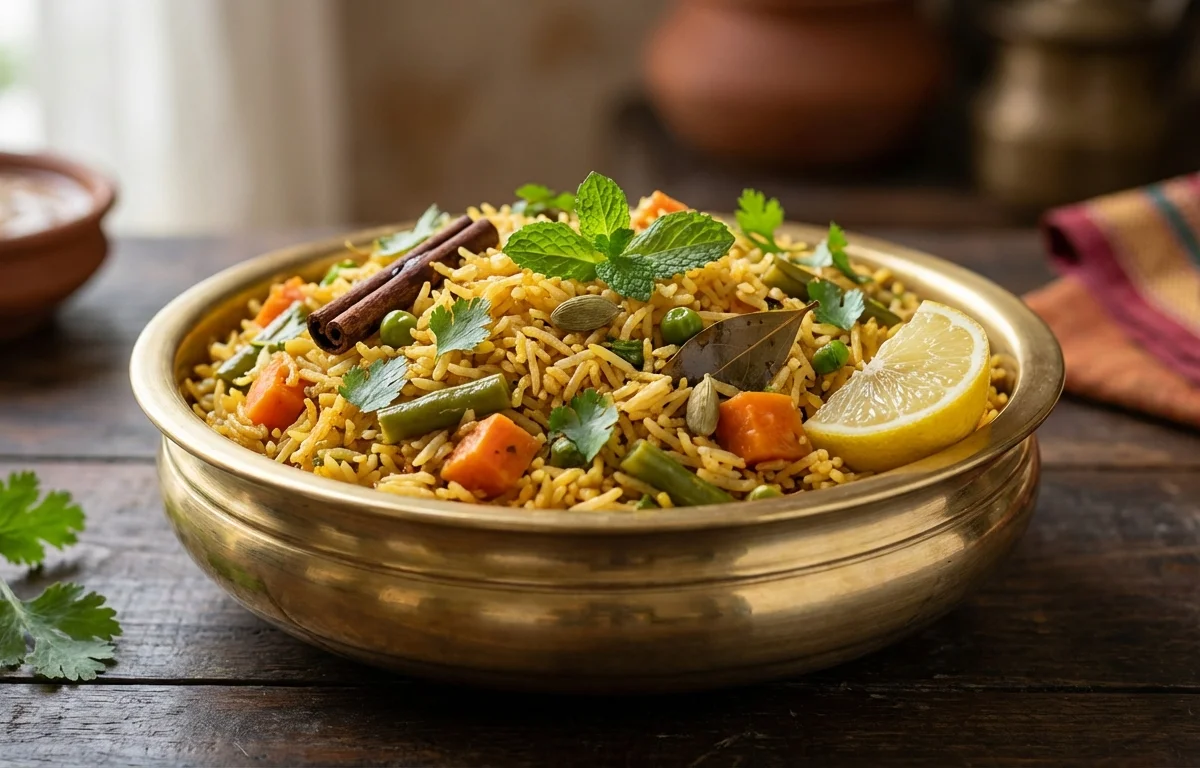
Kaikari Biryani
A fragrant Tamil Nadu-style vegetable biryani where basmati rice and mixed vegetables are cooked together with coconut milk, green chilies, and whole spices. The rice and veggies absorb the flavors from a freshly ground green masala paste, creating a moist, mildly spiced one-pot dish that pairs perfectly with onion raita and brinjal curry.
For 4 servings
- prep · ~20 min
Soak the rice.
Wash the basmati rice in several changes of water until the water runs clear. Soak in fresh water for 20 minutes, then drain completely and set aside.
TIPSoaking helps the rice grains elongate and cook evenly without breaking. - prep · ~3 min
Make the green masala paste.
1.In a grinder, add ginger, garlic, mint leaves, coriander leaves, coconut, and fennel seeds.2.Add 2 tablespoons of water and grind to a smooth paste. Set aside. - saute · ~11 min
Fry the onions and whole spices.
1.Heat oil and ghee in a heavy-bottomed pot over medium heat.2.Add bay leaves, cinnamon, cardamom, cloves, and star anise. Sauté for 30 seconds until fragrant.3.Add sliced onions and cook until deep golden brown, stirring occasionally (8-10 minutes).TIPCaramelizing the onions properly is key — a deep golden color builds the base flavor of the biryani. - saute · ~13 min
Cook the tomato base and vegetables.
1.Add chopped tomatoes and slit green chilies to the browned onions.2.Cook until tomatoes turn soft and mushy (3-4 minutes).3.Add the ground green masala paste and sauté until the raw smell disappears (2-3 minutes).4.Stir in red chili powder, turmeric, garam masala, and salt. Mix well.5.Add cubed potatoes, diced carrots, chopped beans, and green peas. Sauté for 3 minutes to coat the vegetables with the masala.6.Add whisked yogurt and cook for 2 minutes, stirring continuously. - simmer · ~22 min
Add rice and water, then cook.
1.Add the drained basmati rice to the vegetable masala. Gently stir to coat the rice without breaking the grains.2.Pour in 2.25 cups of water and add lemon juice. Stir once gently.3.Bring to a boil, then immediately reduce heat to the lowest setting.4.Cover tightly with a lid. Cook undisturbed for 20 minutes.TIPDo not stir after adding water — this keeps the grains intact and prevents the biryani from becoming mushy. - rest · ~10 min
Rest the biryani off the heat.
Turn off the heat and let the pot rest, covered, for 10 minutes. The steam will finish cooking the rice and infuse all the flavors.
- assemble · ~2 min
Fluff gently and serve.
1.Remove the lid. Use a fork to gently fluff the biryani, lifting from the bottom to mix the vegetables and rice evenly.2.Transfer to a serving platter. Garnish with chopped coriander leaves.
What to keep in mind.
6 tips from the recipe — small details that make a real difference to the final dish.
- 1Soaking basmati rice for 20 minutes ensures each grain elongates and cooks evenly without clumping.
- 2Caramelize the onions until deep golden brown to build the essential flavor base of this biryani.
- 3Grind the green masala paste to a very smooth consistency so it blends seamlessly into the rice and vegetables.
- 4Use a heavy-bottomed pot with a tight-fitting lid to trap steam and cook the rice perfectly without stirring.
- 5Rest the biryani for 10 minutes off the heat so the flavors meld and the rice finishes cooking gently.
- 6Fluff with a fork, not a spoon, to separate the grains and avoid breaking them.
Adapt it for your goals.
High-protein
Add 200g of paneer cubes or chickpeas along with the vegetables for a protein-packed version that keeps you fuller for longer.
veganVegan
Replace ghee with additional oil or coconut oil, and use a plant-based yogurt such as coconut yogurt instead of dairy yogurt.
low oilLow-oil
Reduce the oil and ghee to 1 tablespoon each, and sauté the onions in a non-stick pan with a splash of water if needed to prevent sticking.
Why this is on our healthy list.
Rich in Digestive Spices
Fresh ginger, garlic, fennel seeds, and green chilies aid digestion and add anti-inflammatory properties.
Packed with Vegetables
Potatoes, carrots, beans, and peas provide dietary fiber, vitamins A and C, and essential minerals for a nourishing meal.
Coconut for Healthy Fats
Fresh coconut and coconut milk contribute medium-chain triglycerides (MCTs) that can support metabolism and energy.
Frequently asked questions
Yes, but the fresh green masala gives this dish its signature herbaceous aroma and mild heat; we recommend sticking with the homemade paste for authentic flavor.