
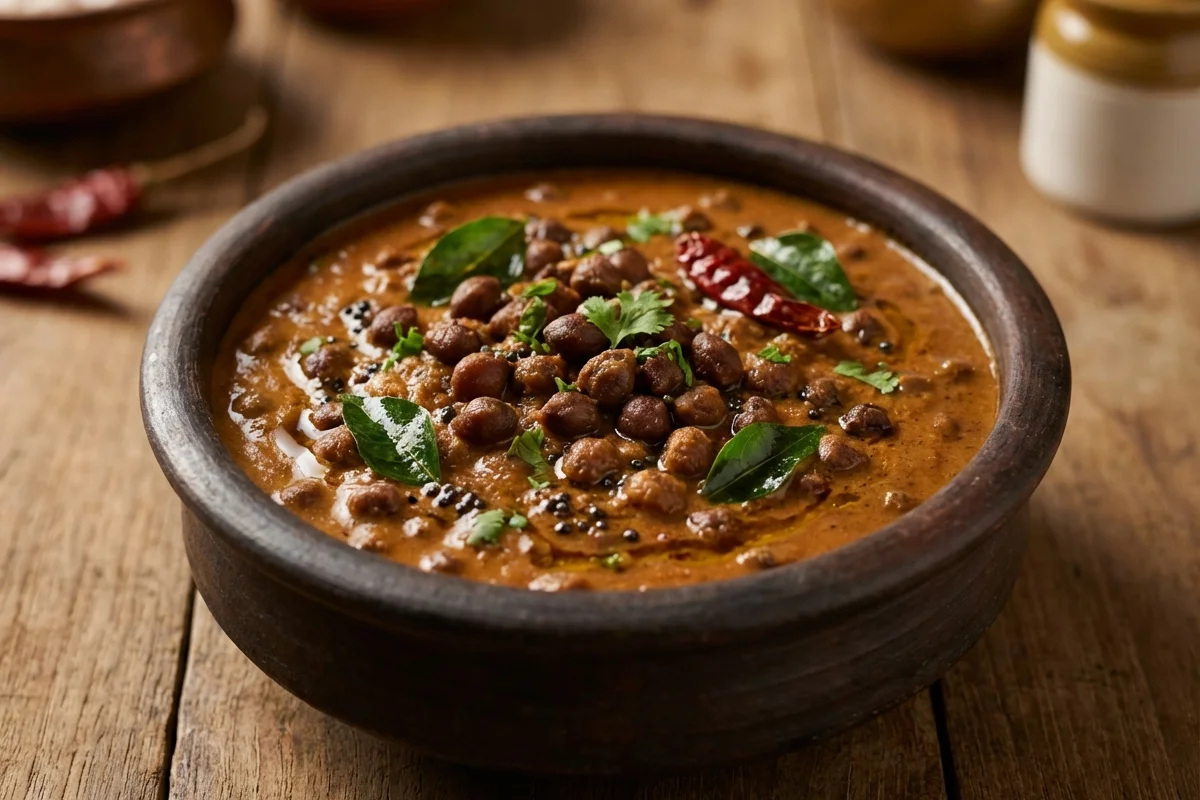
Kerala Kadala Curry
A comforting Kerala-style black chickpea curry with toasted coconut, warm spices, and a rich onion-tomato base. It has deep, earthy flavor and pairs especially well with puttu, appam, or idiyappam.
For 4 servings
- prep · ~480 min
Soak the chickpeas overnight.
Rinse the black chickpeas well and soak them in plenty of water for 8 hours or overnight.
- pressure cook · ~25 min
Pressure cook the chickpeas until tender.
1.Drain the soaked chickpeas and add them to a pressure cooker.2.Pour in 3 cups water and add the salt.3.Pressure cook until the chickpeas are soft and fully cooked, about 20 to 25 minutes after full pressure.TIPOlder chickpeas can take longer, so cook until they mash easily when pressed. - roast · ~6 min
Roast the coconut and whole spices.
1.Heat a small pan over medium heat.2.Add the grated coconut, coriander seeds, fennel seeds, black peppercorns, cinnamon, and cloves.3.Roast, stirring often, until the coconut turns deep golden brown and smells nutty.4.Add the red chili powder at the end and stir for a few seconds.TIPKeep the heat moderate so the coconut browns evenly without turning bitter. - mix · ~3 min
Grind the roasted mixture to a paste.
Cool the roasted mixture slightly, then grind it with a little of the remaining water to make a smooth, thick paste.
- saute · ~10 min
Cook the onion base.
1.Heat the coconut oil in a kadai or deep pan over medium heat.2.Add the curry leaves, sliced onion, green chili, ginger, and garlic.3.Cook until the onion softens and turns light golden.4.Add the chopped tomato and turmeric powder, then cook until the tomato breaks down. - simmer · ~10 min
Combine the curry and simmer.
1.Add the ground coconut paste to the onion-tomato base and cook for 2 minutes.2.Add the cooked chickpeas along with their cooking liquid.3.Pour in the remaining water as needed for a medium-thick gravy.4.Simmer gently until the curry thickens and the flavors come together.TIPMash a spoonful of chickpeas into the gravy if you want a thicker, richer curry. - rest · ~5 min
Let the curry rest for 5 minutes.
- serve
Serve hot with puttu, appam, or rice.
What to keep in mind.
7 tips from the recipe — small details that make a real difference to the final dish.
- 1Cook the black chickpeas until a grain crushes easily between your fingers; undercooked kadala stays hard even after simmering.
- 2Roast the coconut to a deep golden brown, not pale beige, because that darker roast gives the curry its signature Kerala depth.
- 3Add the red chili powder at the very end of roasting so it blooms without scorching and turning bitter.
- 4Grind the roasted coconut mixture quite smooth for a richer gravy that clings well to puttu or appam.
- 5Reserve all the chickpea cooking liquid and use it in the curry; it carries flavor and naturally thickens the masala.
- 6Let the finished curry rest before serving, as the roasted coconut and whole spices taste rounder after a short stand.
- 7This curry tastes even better the next day, so make it ahead if serving for breakfast with puttu or idiyappam.
Adapt it for your goals.
No-onion-no-garlic
Skip onion and garlic, increase ginger and curry leaves, and build the gravy with extra tomato and roasted coconut for a sattvic-style version.
spicierSpicier
Add one more green chili or a little extra red chili powder if you want a hotter curry that stands up well to plain rice.
thicker gravyThicker-gravy
Mash some cooked chickpeas into the simmering curry for a denser, puttu-friendly texture without adding more coconut.
instant potInstant-pot
Cook the soaked chickpeas in an Instant Pot, then finish the roasted coconut masala separately and simmer together for the same flavor profile.
Why this is on our healthy list.
Rich in Plant Protein
Black chickpeas make this curry filling and nourishing, adding plant-based protein that helps turn it into a satisfying meal.
Good Source of Fiber
The black chickpeas contribute plenty of fiber, which supports fullness and pairs well with the hearty, slow-simmered gravy.
Spice-Driven Digestive Support
Ginger, garlic, fennel, black pepper, and curry leaves bring traditional digestive warmth along with layered flavor.
Whole-Food Fat from Coconut
Fresh coconut and coconut oil add richness and help carry the aroma of the toasted spices throughout the curry.
Frequently asked questions
You can, but the taste and texture will be different. For authentic kadala curry, black chickpeas are best because they are earthier and hold their shape better.


