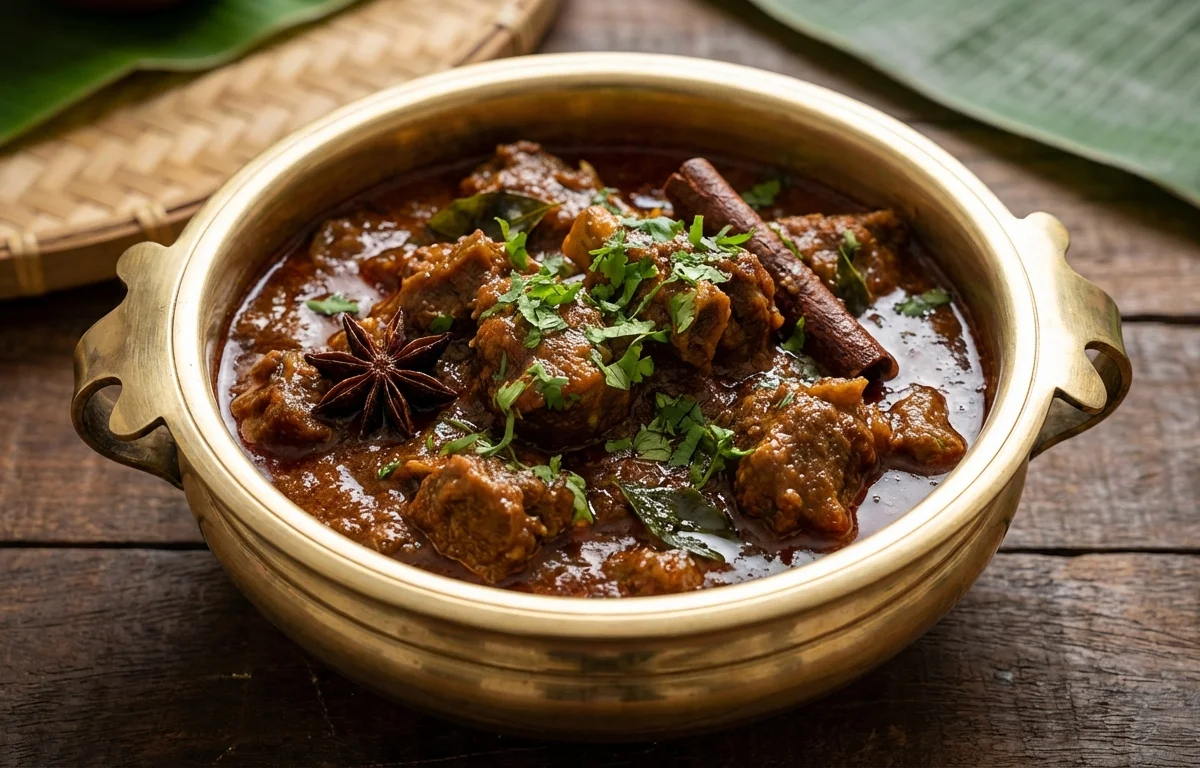
Madurai Mutton Curry
A bold Tamil Nadu style mutton curry with tender goat meat, roasted spices, coconut, and plenty of shallots. It cooks into a rich, peppery gravy that tastes even better with rice, dosa, or parotta.
For 4 servings
- prep · ~10 min
Prep the mutton and aromatics.
1.Clean the mutton pieces well and drain any excess water.2.Peel the shallots and garlic, chop the tomatoes, and slice the onion.3.Keep the ginger, curry leaves, and coriander leaves ready near the stove.TIPBone-in mutton gives the curry a deeper taste and a richer gravy. - roast · ~4 min
Roast the spice mix.
1.Heat a dry pan on low heat.2.Add fennel seeds, cumin seeds, black peppercorns, coriander seeds, dried red chili, and dry coconut.3.Roast gently until the coconut turns light golden and the spices smell fragrant.TIPKeep the heat low so the coconut browns evenly without turning bitter. - mix · ~3 min
Grind the masala.
Cool the roasted mixture slightly, then grind it with ginger and garlic to a smooth paste using a little water if needed.
- saute · ~8 min
Cook the whole spices and onions.
1.Heat oil in a pressure cooker over medium heat.2.Add cinnamon, cloves, green cardamom, bay leaf, and curry leaves.3.Add the sliced onion and shallots, then cook until soft and lightly golden. - saute · ~7 min
Cook the tomatoes and masala paste.
1.Add chopped tomatoes and cook until they break down and turn pulpy.2.Add turmeric powder, red chili powder, and the ground masala paste.3.Cook the mixture until the raw smell fades and the oil starts to show at the edges. - pressure cook · ~20 min
Pressure cook the mutton.
1.Add the mutton and mix well so every piece is coated with the masala.2.Add salt and water, then stir once.3.Cover the cooker and pressure cook until the mutton is tender.TIPOlder mutton may need a little longer, so check tenderness before moving to the final simmer. - simmer · ~10 min
Simmer the curry to finish.
Open the cooker after the pressure drops. Simmer the curry uncovered for 8 to 10 minutes until the gravy thickens slightly and the oil rises on top.
- garnish
Garnish with coriander leaves.
- serve
Serve the curry hot.
Serve Madurai Mutton Curry hot with rice, dosa, idiyappam, or parotta.
What to keep in mind.
7 tips from the recipe — small details that make a real difference to the final dish.
- 1Roast the coconut and spices on low heat only until light golden; dark coconut can make the gravy bitter.
- 2Let the roasted mixture cool slightly before grinding so the masala turns smoother and less oily.
- 3Cook the onion and shallots until lightly golden, not just soft, for the deep Madurai-style base.
- 4After adding the ground paste, fry until oil peeks out at the edges; this removes the raw spice taste.
- 5Pressure-cook only until the mutton is just tender, then finish uncovered so the meat does not break apart.
- 6If the curry tastes flat at the end, add a small pinch of freshly crushed black pepper before serving.
- 7This curry tastes even better after a few hours of resting, when the pepper, fennel, and meat juices meld.
Adapt it for your goals.
Extra-peppery
Increase black peppercorns slightly and reduce red chili for a more classic pepper-forward Madurai profile.
thick gravyThick-gravy
Add a little more dried coconut while roasting for a richer, thicker curry that pairs especially well with parotta.
stovetopStovetop
Cook in a heavy pot instead of a pressure cooker for a slower-developed flavor; ideal if you prefer gentler simmering and more control.
offal styleOffal-style
Use the same masala with mutton liver or mixed offal, but reduce cooking time since these cuts cook much faster.
Why this is on our healthy list.
Protein-Rich Main Dish
Goat meat provides substantial protein, making this curry filling and helpful for building a satisfying meal.
Spice-Based Antioxidants
Black pepper, cloves, cinnamon, cumin, and coriander contribute plant compounds that add both flavor complexity and antioxidant value.
Aromatics with Functional Benefits
Ginger, garlic, shallots, and curry leaves bring traditional digestive and immune-supporting ingredients into the dish.
Frequently asked questions
The pieces should be fully tender when pressed with a spoon or pierced with a fork, but not falling apart into shreds.